2025 Year in Brief: Key events that defined Kazakhstan this year
Qazinform News Agency correspondent presents a look at Kazakhstan’s 2025, a year marked by expanding international ties, advances in technology and infrastructure, and a vibrant cultural and social agenda.

Diplomacy
Kazakhstan strengthened its international profile through active diplomacy led by President Kassym-Jomart Tokayev. His working visit to New York for the 80th session of the United Nations General Assembly produced more than 20 high-level meetings with world leaders, international organizations, and major corporations.
In the same year President Tokayev carried this momentum into a broad series of foreign trips, visiting the United Arab Emirates in January, Jordan in February, Uzbekistan in April, Russia and Hungary in May, Turkiye in July, Turkmenistan and Kyrgyzstan in August, China from late August to early September, Azerbaijan in October, Russia, Uzbekistan, Kyrgyzstan and the U.S. in November, and Turkmenistan and Japan in December.
Promoting peace and dialogue
Kazakhstan promoted UN reform, mediation in global conflicts, nuclear disarmament, and food and water security. The trip also brought concrete results in investment cooperation, including large-scale projects in transport engineering, agriculture, digitalization, energy, and mining, with signed agreements exceeding 5 billion dollars.
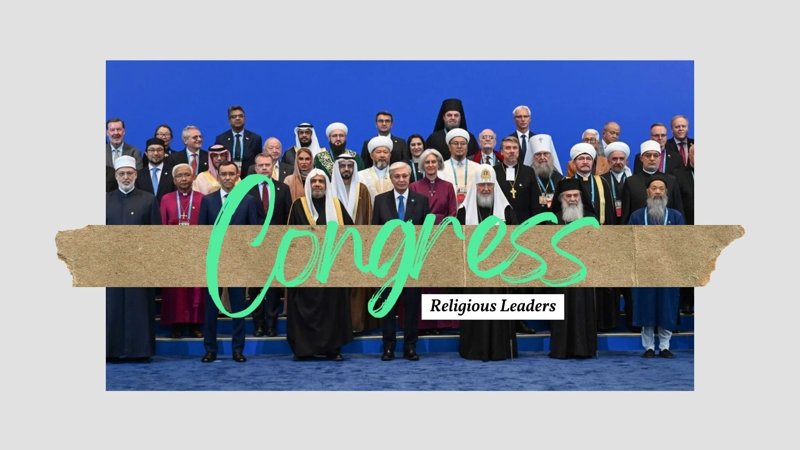
During the year, Kazakhstan also hosted the 8th Congress of Leaders of World and Traditional Religions, where the Astana Peace Declaration was adopted, reinforcing the country’s role as a platform for global interfaith dialogue.
Kazakhstan goes digital
Digital transformation moved to the center of national policy. The President announced the creation of a new Ministry of Artificial Intelligence and outlined plans to make Kazakhstan a fully digital state within five years.
A national Digital Code and a unified Digital Kazakhstan strategy were prepared, alongside the launch of a Digital Assets Fund. The country inaugurated Central Asia’s fastest supercomputer at the Alemcloud center, opened a space telescope facility in Chile as part of an international network, and began using Starlink satellite technology in geological exploration.

In August, Starlink officially launched nationwide satellite internet access, expanding reliable connectivity to remote areas. Kazakhstan deepened cooperation with global technology leaders including Nvidia, Amazon, Microsoft, and Starlink, positioning the country as a future Eurasian information technology hub.
Nuclear and renewable energy push
Energy and infrastructure remained top priorities. Work officially began on Kazakhstan’s first nuclear power plant in the Almaty region, with local companies expected to participate extensively. China was later selected to build the second and third plants, and feasibility studies advanced throughout the year.
Renewable energy development accelerated, with 9 new renewable power plants planned for launch in 2025 and dozens more scheduled by 2030 and 2035.
Transport and infrastructure advances
Major transport projects moved forward, including completion of the key Dostyk Moiynty railway corridor and plans for large scale railway expansion linked to Asia-Europe transit. The government also prioritized the modernization of aviation hubs and logistics infrastructure.
Protecting nature and wildlife
Environmental initiatives advanced on several fronts. Kazakhstan began the second phase of the North Aral Sea conservation project in cooperation with the World Bank, aiming to increase water volume, stabilize ecosystems, and support regional fisheries and tourism.
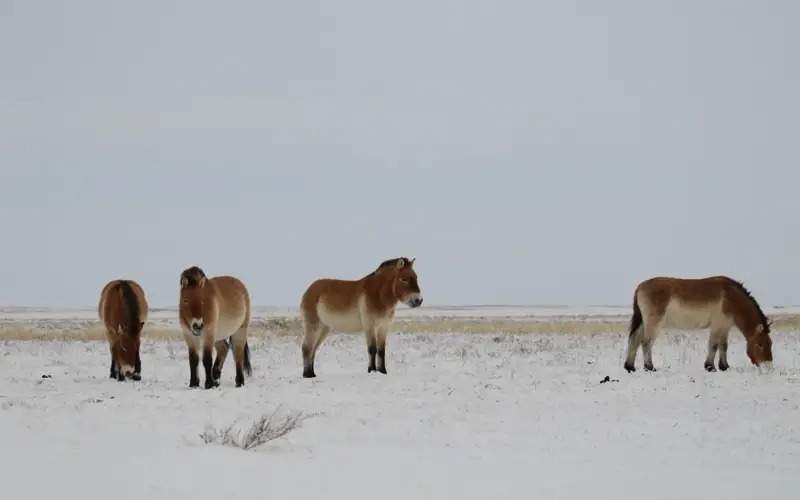
Desertification prevention programs expanded in Mangistau region with large scale planting of saxaul and juniper trees. Wildlife recovery efforts showed progress, as the Przewalski’s horse inhabited 9 regions of Kazakhstan, kulans were reintroduced to rehabilitation reserves, and snow leopard numbers more than doubled nationwide. New animals also arrived at national zoos through international exchange programs, diversifying wildlife conservation work.
Education and academic growth
Education and human capital development gained momentum through the opening of new international branch campuses, including Cardiff University in Astana. In total, 40 foreign university branches were operating in Kazakhstan by year’s end, helping to attract more than 30,000 international students and turn the country into a regional academic hub. The government also allocated thousands of grants for study at these campuses to retain domestic talent.

Social progress
The government launched steps toward official recognition of the national sign language and fingerspelling alphabet, reinforcing commitments under the Convention on the Rights of Persons with Disabilities.
Financial modernization
Financial sector modernization progressed as the National Bank prepared legislation to regulate digital assets and license cryptocurrency exchanges while testing innovations through a regulatory sandbox.
Cultural highlights
Cultural life remained vibrant and increasingly international. Kazakhstan celebrated the 100th anniversary of renowned composer Nurgissa Tlendiyev with a grand concert at UNESCO headquarters in Paris.
Astana hosted major entertainment events, including a sold-out Backstreet Boys concert that drew fans from dozens of countries, while Comic Con Astana welcomed international film stars.
Global cinema also turned attention to Kazakhstan as Jackie Chan visited Almaty to scout locations for a joint film production. On the lighter side of cultural news, a viral social media moment followed Jennifer Lopez’s Almaty concert.

Celebrating 105 years of Kazinform
The year also held special importance for Kazinform News Agency itself, which marked its 105th anniversary with a major ceremony in Astana, launching a documentary film, a commemorative book, and archival exhibitions, including a nationwide photo display honoring 80 years since the Great Victory and Kazakhstan’s contribution to World War II.
You can read last year’s key developments shaping Kazakhstan here.