

Unique Andronovo archaeological complex discovered in Kazakhstan
The Alekseyevka archaeological site near the city of Rudny is considered one of the most unique monuments of the Andronovo culture ever discovered, Qazinform News Agency correspondent reports.

Archaeologists uncovered three Bronze Age objects at a single location: a burial ground, a sacrificial mound and an ancient settlement. Experts say this combination has not been found elsewhere in either Kazakhstan.
The history of Andronovo culture dates back more than a century. In 1914, archaeologists discovered a Bronze Age settlement near the village of Andronovo in Russia’s Chelyabinsk Region. Similar finds were later identified across a vast territory stretching from the Southern Urals and northern Kazakhstan to the Caucasus, giving rise to what became known as the Andronovo cultural horizon.
According to Alexander Kurguzkin, a methodologist at the Rudny Museum of History and Local Lore, the discovery of the Alekseyevka site happened by chance. In 1921, a geology student named Sokolov arrived in Alekseyevka during a holiday break. While walking along the left bank of the Tobol River, he noticed fragments of pottery and ancient tools being washed out of the sandstone by the water.
Initially, the student assumed the artifacts were linked to an old Kazakh cemetery located nearby. Nevertheless, he brought several well-preserved objects back to his institute. Due to the political turmoil of the period, however, the finds remained largely unstudied for years.
Research resumed only a decade later. In 1931, renowned Soviet archaeologist Olga Krivtsova-Grakova arrived in Alekseyevka and conducted several excavation seasons, often working under police protection because of the nearby cemetery. It was during those excavations that archaeologists uncovered the unique complex, including Andronovo-era burials, a sacrificial mound and the remains of a dwelling.
“Neither in Russia nor in Kazakhstan has such a complex been found elsewhere. In some places archaeologists discovered only burial grounds, in others settlements or sacrificial mounds. Here, all three were found together,” Kurguzkin said.
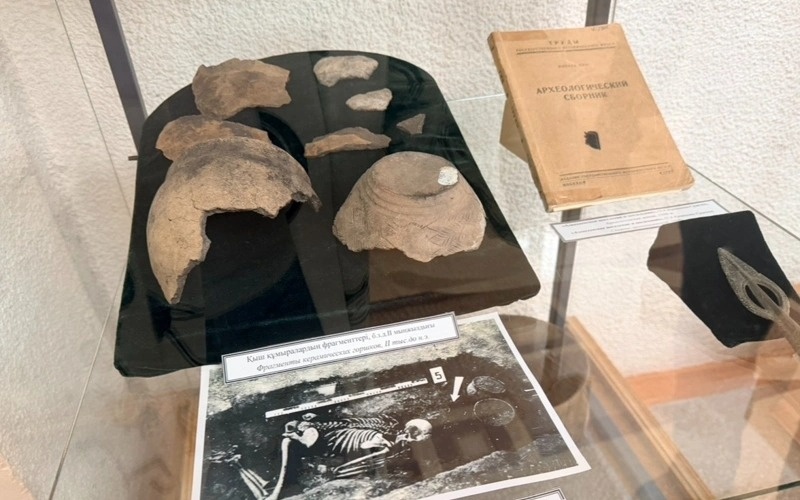
Excavations revealed 21 burials. One discovery, however, stood out from the rest — a woman buried at the center of the cemetery. According to Kurguzkin, most members of the Andronovo culture were relatively short, averaging around 130–140 centimeters in height. Based on skeletal remains, however, this woman may have stood nearly two meters tall.
She was also buried differently from the others. While most individuals were laid on their left side, she was buried on her right side. Eight ceramic vessels were placed beside her: four near her head and four near her feet.
“Usually, only highly significant individuals were buried at the center of a cemetery. Her height alone suggests that she was an unusual person,” he explained.
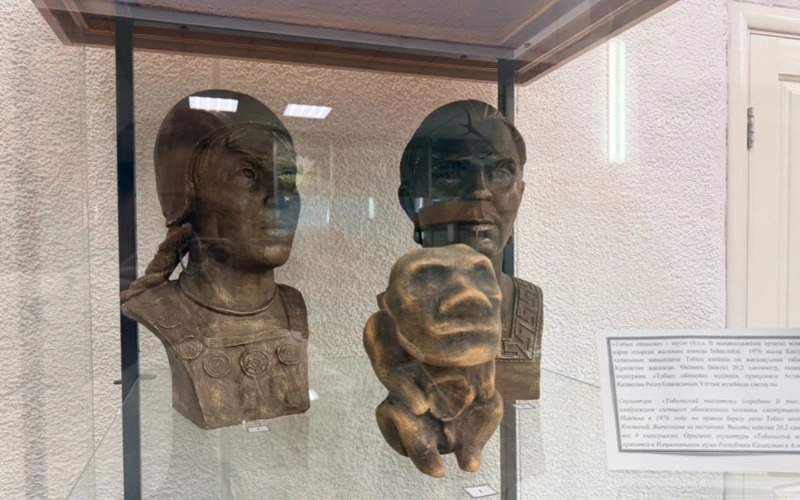
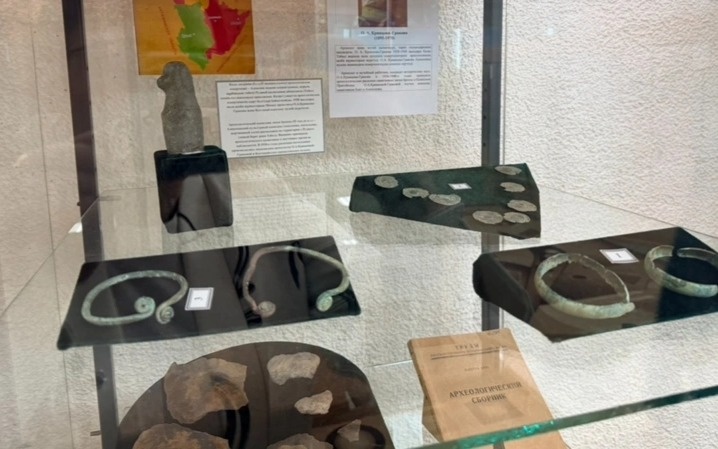
The woman’s skull was exceptionally well preserved and was later sent to Moscow, where renowned anthropologist Mikhail Gerasimov reconstructed her likely appearance. Archaeologists also uncovered numerous bronze, silver and gold ornaments, weapons and large quantities of pottery.
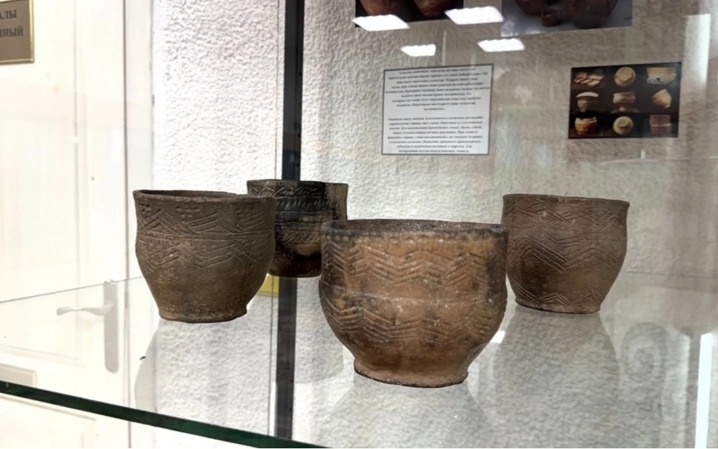
Particular attention was given to the sacrificial mound, which stood approximately nine meters high. Along its perimeter, researchers discovered more than 50 vessels containing remnants of sacrificial meals, including meat from both wild and domesticated animals. Most of the pottery had been handmade. Despite the relatively simple production techniques, the vessels proved remarkably durable.
“One local resident told us he found such a vessel while doing excavation work in his garden. It stood alongside a modern jug for 20 years. Ironically, the modern one eventually crumbled, while the ancient vessel remained intact,” Kurguzkin recalled.
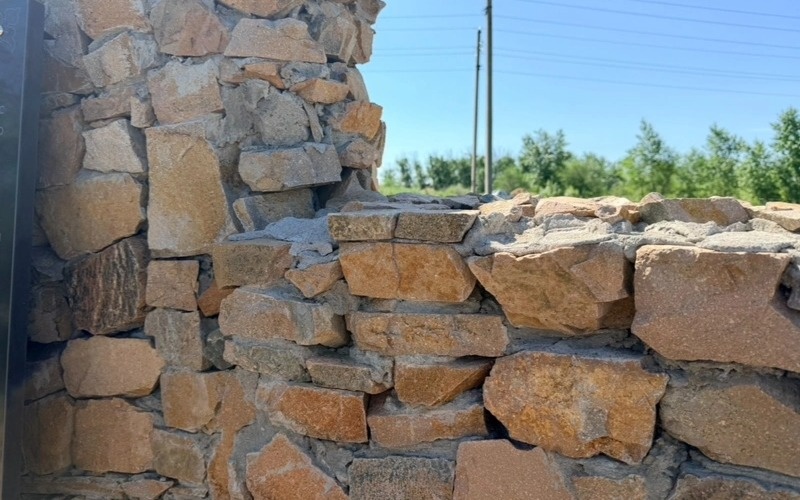
Archaeological work continued after World War II, with the last major excavations carried out in 1968. Today, only a small fragment of the famous sacrificial mound remains. Nevertheless, the site continues to be regarded as an important historical monument.
“It is essentially Arkaim’s sister. Both monuments belong to the same era and are considered highly significant for the study of Andronovo culture,” Kurguzkin said.
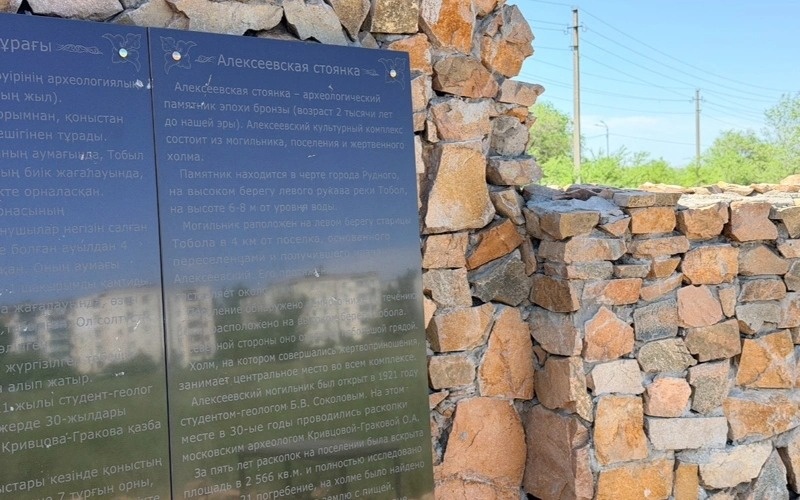
A memorial marker now stands at the site, providing visitors with a brief history of the excavations. It serves as a reminder that one of the largest Late Bronze Age settlements once existed on the territory of modern-day Rudny.
As Qazinform reported earlier, archaeological excavations started at the medieval settlement of Zhankent in Kazaly district of Kyzylorda region.