Rare Kimak-Kipchak-era dwelling unearthed in Pavlodar region
Archaeologists have uncovered a remarkably well-preserved mobile dwelling dating to the Kimak-Kipchak period at the Baidala burial complex in Pavlodar region, Qazinform News Agency reports, citing the regional akimat.

Located in the Kenzhekol rural district near Pavlodar, the site is regarded as one of the most important archaeological monuments of the Kimak Khaganate and is expected to provide new insights into the history of the Great Steppe.
According to 10th-century Arab maps, the area is believed to have been the site of Imakia, the political center of the Kimak Khaganate. Archaeologists led by Timur Smagulov have been conducting rescue excavations there for more than two decades.
This field season, researchers have continued work on one of the remaining burial mounds, uncovering the remains of a burial ditch and the bones of sacrificial animals. Excavation of the main burial is scheduled for August or September.
Among the expedition's most significant discoveries is a fully preserved mobile wooden dwelling mounted on a wheeled platform and covered by a tent-like structure resembling a traditional Kazakh yurt. According to archaeologists, no comparable find has ever been documented in the archaeology of the Eurasian steppe.
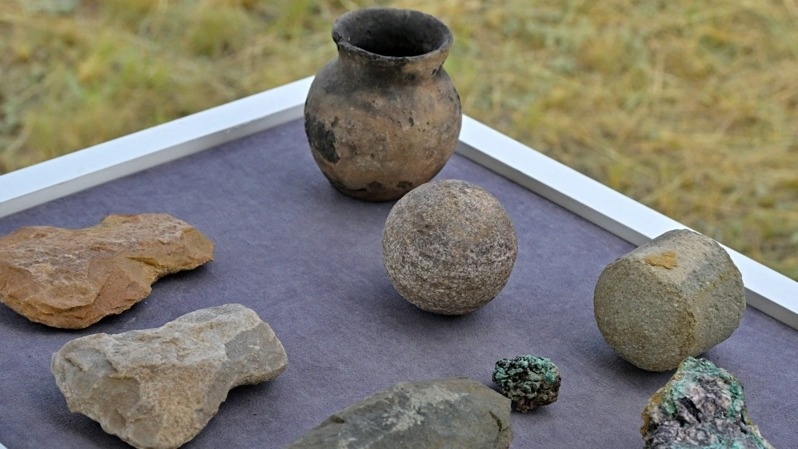
The find also included a wooden saddle, stirrups, bits, weapons, jewelry, silk textiles, and other artifacts, offering new insights into the daily life and culture of medieval nomads. Previously, such "houses on wheels" were known only from written records and schematic illustrations.
The project's next phase will focus on further archaeological research, as well as the conservation and restoration of the artifacts. Plans also call for developing the site into a museum complex and promoting it as one of Kazakhstan's key historical and cultural heritage landmarks.
Earlier, Qazinform reported unique Kangju-period artifacts had been unearthed in Turkistan region.