Medieval mosque, rare artifacts unearthed at Kazakhstan's ancient Otyrar settlement
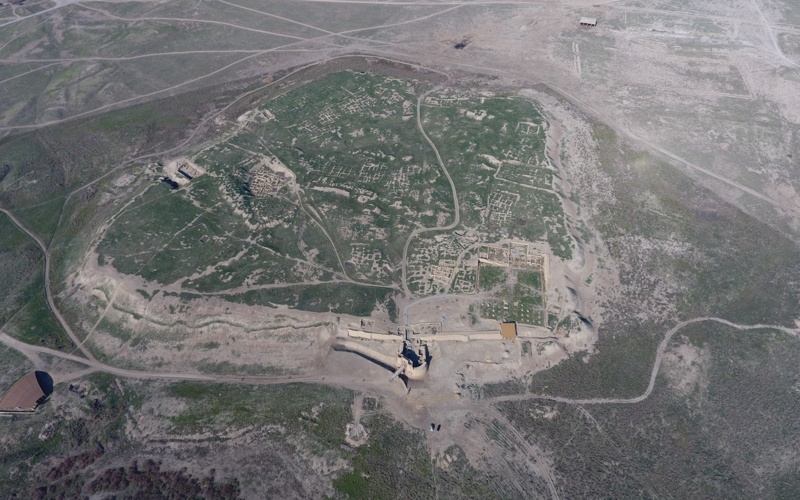
Archaeologists excavating the ancient settlement of Otyrar in southern Kazakhstan have uncovered a series of significant historical structures and artifacts dating from the 13th to the 18th centuries, Qazinform News Agency correspondent reports.
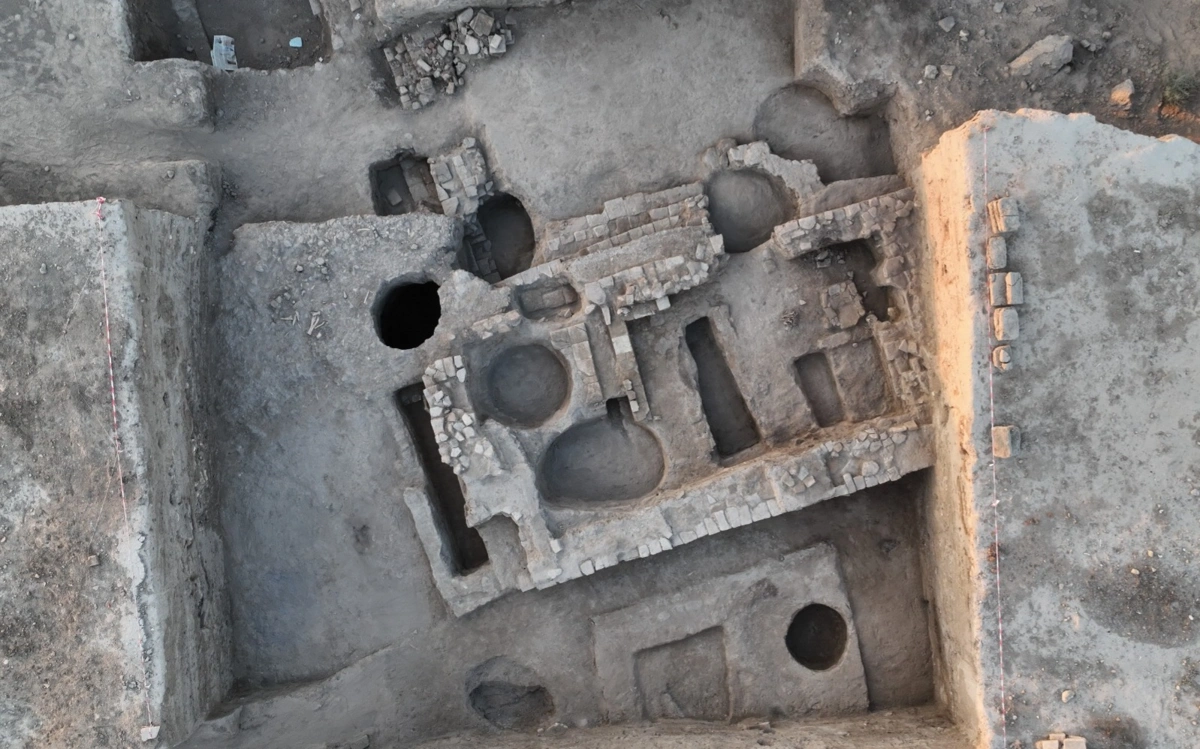
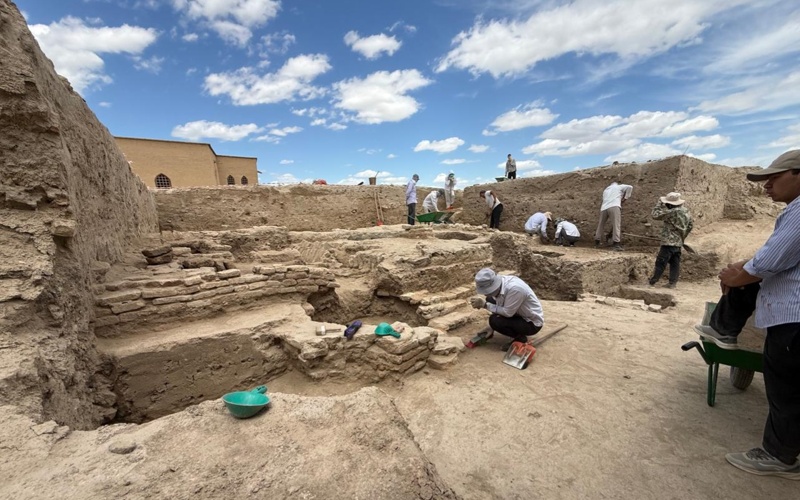
The excavation, led by Professor Mukhtar Kozha, chief research fellow at the Institute of Archaeology of the Khoja Akhmet Yassawi International Kazakh-Turkish University, is being carried out with the support of the International University of Tourism and Hospitality.
Research began in June and has revealed archaeological remains spanning five construction layers. The upper layers contain residential and utility buildings, brick kilns and brick-paved streets, while the fourth construction horizon yielded Otyrar's first known collective burial site of the dakhma type.
At the deepest excavation level, archaeologists uncovered the walls of a mosque dating to the Golden Horde period, along with an adjoining street paved with large mountain stones.
This year, we uncovered the walls of an ancient mosque in Otyrar. Based on ceramic evidence, the structure dates to the 13th-14th centuries, Kozha said. "In front of the building was a street paved with large stones that led to a staircase constructed of fired bricks. A stone-paved street of this scale has never before been discovered in Otyrar."
The excavation also produced a number of valuable artifacts, including a painted window grille, fragments of an inkwell and metal hinges believed to have belonged to doors or gates.
Near the mosque, archaeologists discovered the remains of about 50 individuals. The bones will undergo anthropological analysis before being reburied. Researchers say only part of the mosque has been excavated so far, and they expect its historical significance to grow as work continues.
Further study of the stone-paved street could also reveal its full route and identify former commercial and public spaces that once lined it.
According to Bagdaulet Syzdykov, associate professor and leading research fellow at the university's Institute of Archaeology, the excavation uncovered ceramic fragments decorated with Chinese motifs, Chinese coins and coins minted in the names of Golden Horde khans, providing further evidence of Otyrar's extensive international trade links.
Among the most notable discoveries is an inscribed ring believed to have served as a personal seal during the medieval period.
One of the most remarkable finds is a ring bearing an inscription. In the Middle Ages, such rings functioned as seals. This is one of the first artifacts of its kind discovered in Otyrar. The inscription can be read as 'Al-Magdi' or 'Al-Muluk,' Syzdykov said.
He also highlighted findings from excavations carried out in Otyrar's suburbs in 2025, where archaeologists uncovered several residential buildings, two of which contained mihrabs. The houses also featured raised platforms, tandoor ovens, storage areas and ritual elements, while sanitation facilities included cesspits and ceramic plumbing components, indicating a highly developed domestic culture and sanitation system in medieval Otyrar.
Radiocarbon analysis of wood ash collected from one of the tandoor ovens and tested in a laboratory in Türkiye dated one of the residential buildings to the mid-eighth century.
Archaeologists also recovered vessels with zoomorphic handles, embossed lids, lamps and fragments of large storage jars and pitchers that closely resemble artifacts previously found at archaeological sites in Sogdiana, Tashkent, the Ferghana Valley and Zhetysu.
Researchers believe the newly discovered archaeological complex has considerable tourism potential. The stone-paved street and brick staircase offer valuable insight into the architectural layout of the medieval city, while conservation and preservation work is already underway to protect the site.
The project has brought together Kazakhstani and international researchers, including archaeologist Dr. Katie Campbell of King's College, University of Cambridge. The research team, led by project director Dosay Kenzhetay, is also compiling materials from domestic and international archives and conducting a comprehensive historical and archaeological analysis.
The team plans to present the excavation results at an international scientific conference in Cambridge, United Kingdom, in September.
Earlier, Qazinform reported the rare Kimak-Kipchak-era dwelling had been unearthed in Pavlodar region.