Astana-Ankara: From brotherhood to a pragmatic Eurasian alliance
On May 13-14, at the invitation of President Kassym-Jomart Tokayev, President of Türkiye Recep Tayyip Erdoğan will pay a state visit to Astana. Earlier, the heads of state highlighted the importance of the upcoming high-level talks in Astana for further strengthening bilateral cooperation. What connects Kazakhstan and Türkiye, and what common goals unite the leaders of two major centers of the Turkic world, is explored in this article by a Qazinform News Agency correspondent.

Institutional partnership
Kazakh-Turkish relations are one of the few examples where historical and cultural closeness has transformed into a full-fledged strategic architecture of cooperation. Over more than three decades, the dialogue between Astana and Ankara has evolved from recognition of independence into a complex system of political, economic and infrastructure ties that today shape the contours of a new Eurasian space.
Türkiye became the first country to recognize Kazakhstan’s independence on December 16, 1991. Diplomatic relations were established on March 2, 1992, and Kazakhstan’s first foreign embassy was opened in Ankara.
According to Almat Toekin, an expert at the Institute for Foreign Policy Studies under Kazakhstan’s Foreign Ministry, over the past 30 years Kazakh-Turkish relations have evolved from ethnically and historically close friendly ties into an institutionalized strategic partnership with a broad economic agenda.
This transformation took place in stages. The first phase, from the 1990s to the early 2000s, focused on building a political foundation and cultural integration. The second phase, from 2009 to 2022, involved the signing of the Strategic Partnership Agreement and the launch of the High-Level Strategic Cooperation Council. Since 2022, the third phase has begun, marked by an expanded strategic partnership focused on transport and logistics, energy, the defense industry, IT, AI, education, healthcare and tourism.
“According to 2025 data, mutual trade increased to $5.4 billion. The two countries aim to raise bilateral trade turnover to $10 billion. More than 5,000 companies with Turkish capital operate in Kazakhstan, while Turkish investments in Kazakhstan over the past 20 years have amounted to nearly $6 billion, and Kazakh investments in Türkiye exceeded $2.5 billion,” the expert said.
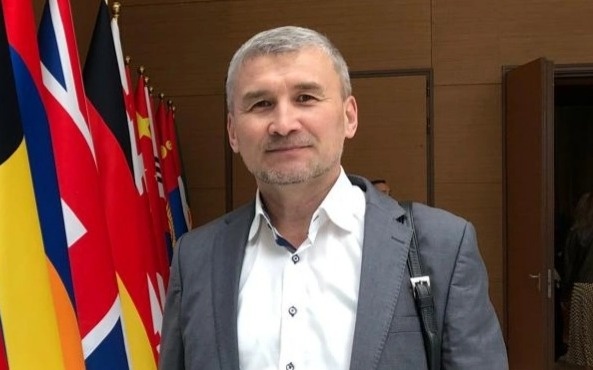
In his view, relations between the two countries have moved beyond rhetoric about brotherhood and acquired a practical, pragmatic character.
“Over three decades, Kazakhstan and Türkiye transformed their relations from a model of historical and cultural solidarity into an expanded strategic partnership combining political trust, growing trade and economic cooperation, and collaboration within the Organization of Turkic States. Among all member states of the organization, Kazakhstan and Türkiye hold leading positions in terms of GDP and economic scale,” Almat Toekin emphasized.
Political synchronization and the multi-vector factor
The rapprochement between Kazakhstan and Türkiye is largely explained by the similarity of their foreign policy models. Both countries pursue flexible interaction with global centers of power while avoiding rigid alignment with any single bloc.
“What Kazakhstan and Türkiye have in common is a focus on pragmatism and national interests, which helps both sides better understand each other’s decision-making logic and creates a natural basis for closer ties between Astana and Ankara,” Almat Toekin noted.
The Organization of Turkic States has also become an important institutional factor. In recent years, it has evolved from a cultural platform into an instrument for coordinating economic and transport policy, where Astana and Ankara are gradually becoming the main drivers of coordination.
“The alignment of the core principles of multi-vector diplomacy, flexibility and pragmatism strengthens Kazakh-Turkish cooperation. It reduces political risks, facilitates coordination on international platforms and creates a basis for joint initiatives, including within the Organization of Turkic States. The partnership is becoming more sustainable and adaptable to the rapidly changing international environment,” the expert said.
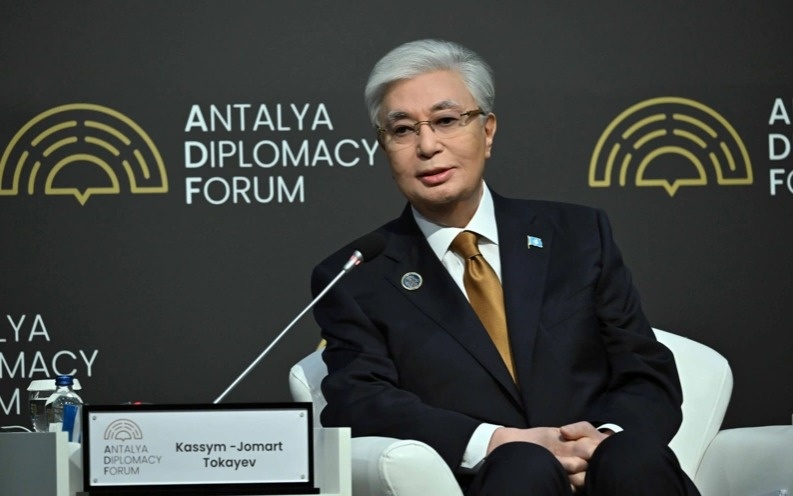
This qualitative shift became especially evident at the Antalya Diplomacy Forum, a platform traditionally focused on global issues, but in 2026 it also became a venue demonstrating the new role of Kazakhstan and Türkiye.
“I believe our countries can play a very positive, indeed significant role in resolving the most pressing problems that unfortunately periodically arise in our region,” President Kassym-Jomart Tokayev said during a panel session at the Antalya Diplomacy Forum.
Rapid trade growth
Economic cooperation between Kazakhstan and Türkiye in 2026 has demonstrated notable acceleration. Unlike some other areas of Kazakhstan’s foreign trade, where growth remains limited, the Turkish direction has shown a sharp expansion in trade turnover and stronger strategic interdependence between the two economies.
In January-February 2026, mutual trade between Kazakhstan and Türkiye reached $1.13 billion, up 44.9% year-on-year. During the same period in 2025, the figure stood at $777.6 million. A key feature of the current growth was the sharp increase in Kazakhstan’s exports.
Kazakhstan’s exports to Türkiye rose by 66.1%, from $551.7 million to $916.4 million. Imports from Türkiye, meanwhile, decreased by 6.7%, from $225.9 million to $210.8 million. As a result, Kazakhstan’s trade surplus more than doubled, rising from $325.8 million to $705.6 million.
The main feature of the current growth is its high concentration around several major export commodities. More than 90% of Kazakhstan’s exports to Türkiye consist of copper and oil. Supplies of copper and copper cathodes increased 2.3-fold, from $224.8 million to $515.7 million. The share of this product category reached 56.3% of Kazakhstan’s total exports to Türkiye. At the same time, crude oil exports rose by 31.7% to $314.5 million, accounting for another 34.3% of supplies.
In effect, two commodity groups, copper and oil, account for around 90% of Kazakhstan’s export trade with Türkiye.
On one hand, such concentration supports rapid trade growth amid strong external demand. On the other hand, it makes trade vulnerable to fluctuations in raw material prices and limits the sustainability of long-term growth. This is why export diversification remains the key condition for achieving the declared target of $10 billion in trade turnover.
Supplies of unwrought aluminum also increased sharply, rising 80-fold to $22.4 million, while exports of unwrought zinc surged nearly 184-fold to $20 million. Growth was also recorded in more technologically advanced and industrial categories: electric motors increased 26.8-fold, pipeline fittings eightfold, and automatic control instruments 7.3-fold.
At the same time, several traditional export categories declined significantly. Petroleum product supplies fell by 80.7%, cotton fiber by 92.6%, propylene polymers by 84.5%, natural gas by 58.2%, and coal by 44.2%.
Imports from Türkiye, meanwhile, showed a more diversified structure. Consumer and industrial goods dominate, including pharmaceuticals, food products, equipment, textiles and machinery.
Despite the overall 6.7% decline in imports, several categories demonstrated steady growth. Pharmaceutical supplies increased by 26% to $24.3 million. Imports of chocolate and prepared food products rose 2.3-fold, electric generating sets 3.6-fold, and specialized industrial equipment fourfold.
This indicates that Türkiye is gradually strengthening its position as a supplier of finished goods and industrial equipment to the Kazakh market. At the same time, imports of construction structures, refrigeration equipment, automotive components, paper packaging and cable products declined sharply.
Investment and business
The investment component shows a trend toward growing Kazakh investment. Between January and September 2025, Turkish investment in Kazakhstan totaled $191 million, down 2.3-fold, while Kazakh investment in Türkiye reached around $1 billion, increasing 31.7-fold. At the same time, the number of companies with Turkish capital declined to around 3,700 at the beginning of 2026, down 7.5%.
These figures demonstrate a gradual transformation in the economic model of bilateral relations. The traditional presence of Turkish business, especially in the construction sector, is no longer showing its previous momentum, while Kazakhstan is increasingly investing in the Turkish economy.
Against this backdrop, it is possible to speak about a gradual shift in focus from investment and industrial cooperation toward trade and logistics integration. At the same time, as expert Almat Toekin emphasized, economic ties are strengthening and have long gone beyond political declarations, relying instead on real business, investments and mutually beneficial joint projects.
To achieve the declared $10 billion target, it is necessary to diversify exports, develop processing industries, deepen industrial cooperation and remove logistical barriers, the expert stressed. This is where the transport agenda becomes critical, particularly the Middle Corridor, which is expected to reduce costs and expand supply geography.
“At present, the transport and logistics sector appears to be the fastest-growing and most strategic area, becoming a driver of bilateral partnership. Our countries are focused on increasing the capacity of the Middle Corridor, which is becoming a key route connecting Central Asia, the South Caucasus, Türkiye and Europe along the East-West direction. According to World Bank estimates, by 2030 cargo volumes along this route could triple, while transit times could be cut in half,” Almat Toekin noted.
However, further growth will largely depend on the ability of both sides to reduce logistics costs, expand infrastructure capacity and diversify the export basket. For now, a significant share of trade remains dependent on a limited number of raw material commodities, creating volatility risks despite overall growth.
The upcoming state visit of President Recep Tayyip Erdoğan to Astana is becoming not only an important diplomatic event, but also another stage in the institutional rapprochement between Kazakhstan and Türkiye. Over recent decades, relations between the two countries have evolved from symbolic Turkic solidarity into a model of pragmatic strategic partnership, where transport, energy, investments and coordination of foreign policy interests are playing an increasingly important role.
The practical dynamics of bilateral relations also support further deepening of cooperation: in 2025 alone, the two sides signed 20 interstate and intergovernmental agreements covering key sectors such as energy, transport and logistics.
At the same time, the sustainability of the new partnership model will depend on how successfully the sides manage to diversify trade, expand industrial cooperation and transform the Middle Corridor into a genuinely functioning economic driver. This will determine how soon the declared goal of increasing bilateral trade turnover to $10 billion becomes a reality.
Earlier, Qazinform News Agency reported that the Akorda press service had announced preparations for the visit of the President of Türkiye and the Informal Summit of the leaders of the Organization of Turkic States. Turkish President Recep Tayyip Erdoğan is set to pay a state visit to Astana on May 13-14 at the invitation of Kassym-Jomart Tokayev.
The two leaders are expected to discuss the current state and future prospects of bilateral relations, according to the Akorda press service. They will also hold the sixth meeting of the High-Level Strategic Cooperation Council between Kazakhstan and Türkiye.
On May 15, another major event - the Informal Summit of the leaders of the Organization of Turkic States - will take place in Turkistan.