The great steppe: A new agenda for Astana and Ulaanbaatar
The state visit of Mongolian President Ukhnaagiin Khurelsukh to Kazakhstan, scheduled for April 20 to 23, could become a turning point in relations between the two countries. Despite political closeness and the status of a strategic partnership, the economic potential of cooperation between Kazakhstan and Mongolia remains largely untapped. Why trade turnover still falls short of expectations and what role shared history plays in bringing the countries closer is examined by a Qazinform News Agency correspondent.
From diplomacy to strategic level
Kazakhstan and Mongolia established diplomatic relations on January 22, 1992. Over more than three decades, an extensive institutional framework has been formed, with over 60 agreements signed, an intergovernmental commission in place, and political dialogue established.
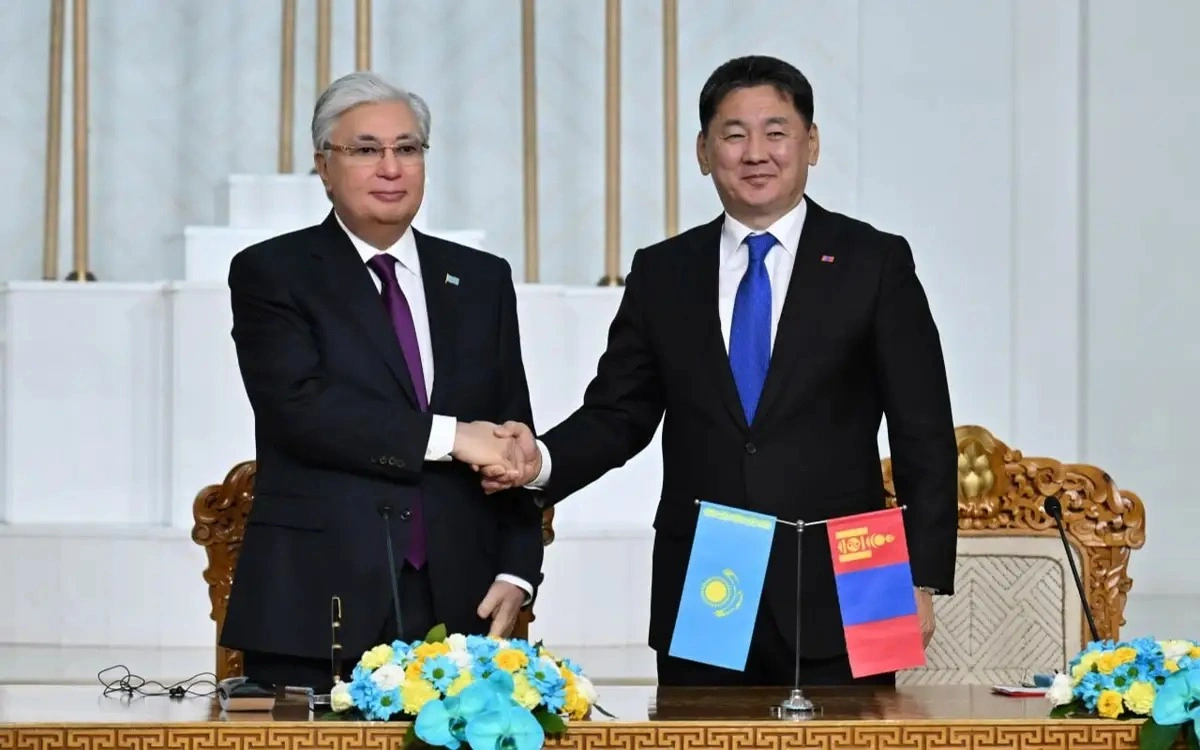
A turning point came with the state visit of President Kassym-Jomart Tokayev to Mongolia in October 2024, during which the parties signed a Joint Declaration on Strategic Partnership, concluded 11 interstate and interagency documents, and outlined priority areas for growth: transport, agriculture, energy, logistics, and investment.
“During the Head of State’s visit to Ulaanbaatar, a Roadmap for the development of trade and economic cooperation for 2025–2027 was agreed, and the intention to accelerate the conclusion of an agreement on the promotion and mutual protection of investments was outlined,” said political analyst Yersultan Zhansseitov.
Against this backdrop, the Mongolian leader’s state visit to Kazakhstan can be seen as an opportunity to give additional momentum to the agreements already reached.
The key question is whether the sides can move from political declarations to tangible results, primarily in the economy. So far, indicators remain modest, even considering recent growth in trade turnover.
Economy: Growth exists, but scale remains limited
Trade between Kazakhstan and Mongolia in 2024–2026 shows growth and forward movement, but this is gradual development rather than large-scale expansion. In 2024, total trade stood at about $150 million, with $83.9 million recorded from January to August. In 2025, the trend continued without sharp increases, reaching $121.5 million from January to November, up 5.5% year on year.

Growth is therefore moderate and reflects inertia in existing flows rather than structural change. This is especially evident in early 2026: trade totaled $20.1 million in January to February, compared to $22.4 million a year earlier, marking a 10.3% decline. The drop was mainly due to a 16.1% fall in Kazakhstan’s exports to $18.5 million, while imports from Mongolia surged nearly fivefold, from $0.31 million to $1.56 million. As a result, Kazakhstan’s traditionally high surplus narrowed from $21.8 million to $17 million.
The main feature of trade is its pronounced asymmetry. Around 90 to 93% of turnover is generated by Kazakhstan’s exports, effectively forming a “supplier-consumer” model. Any fluctuation in key goods immediately affects overall dynamics. For instance, a 25.1% drop in tobacco exports, from $4.5 million to $3.37 million, reduced overall figures in early 2026. Supplies of chocolate and cocoa products fell by 72.7%, equipment and electronics by over 90% in some categories, and bakery products by 12.3%.
At the same time, new growth points are emerging: pharmaceutical supplies increased 15-fold, plastic packaging nearly 13-fold, and pasta products almost doubled. This indicates gradual diversification, although the export base remains narrow.
Imports from Mongolia in 2026 show the opposite trend: sharp growth driven almost entirely by one category. Meat supplies rose from $0.3 million to $1.45 million, accounting for more than 93% of imports. Other categories, including juices and textiles, remain marginal.
As long as trade relies on a limited range of goods, it will remain sensitive to fluctuations. Achieving the stated target of $500 million requires diversification, removal of barriers, and development of stable logistics chains.
Structurally, Kazakhstan exports higher value-added products such as machinery, electronics, food, and petroleum products, while Mongolia mainly exports raw materials, including meat, cashmere, and wool. This asymmetry also represents potential, particularly in agriculture.
Financial analyst Aibar Olzhayev noted that Mongolia has significant livestock resources, while Kazakhstan offers a market and processing infrastructure.
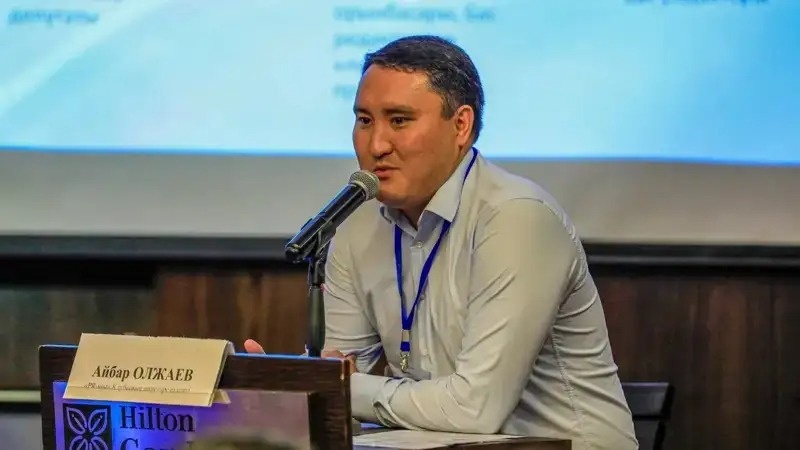
“Kazakhstan already purchases live cattle, but volumes are limited by veterinary and sanitary requirements. If these are harmonized and procedures simplified, it would be possible to stabilize the market and contain meat price growth,” he said.
Zhansseitov added that during the Kazakh foreign minister’s visit to Mongolia in June 2025, a pilot project was discussed involving the possible purchase of up to 500,000 head of livestock for export-oriented cooperation in deep processing.
“In general, the visit is likely to result not in a single major document, but in a package of agreements across transport and logistics, trade and investment, as well as agriculture, veterinary cooperation, and industrial collaboration,” he noted.
Olzhayev also highlighted growing importance of investment cooperation. Kazakh businesses are already present in Mongolia, particularly in mining.
“Kazakh entrepreneurs operate in Mongolia, including in the coal sector. Certain investments have already been made. Financial companies also view the country as a promising market for expansion,” he explained.
New areas of cooperation are also being discussed, including security and defense, with Kazakhstan ready to offer modern equipment and share experience in digitalization and personnel training.
“Kazakhstan has practical experience in implementing e-government, pension systems, and digital administrative solutions. These developments may be of interest to Mongolia, including in a commercial format. There is similar potential in the IT sector,” Olzhayev added.
The sides are also considering creating a joint satellite constellation for monitoring natural resources and supporting agriculture.
“Middle powers” between two major centers
Geography remains a key factor: Kazakhstan and Mongolia do not share a border, complicating logistics and increasing dependence on third countries. Trade routes pass through Russia or China, adding costs and reducing flexibility.
Political analyst Burikhan Nurmukhamedov noted the importance of transport infrastructure development.
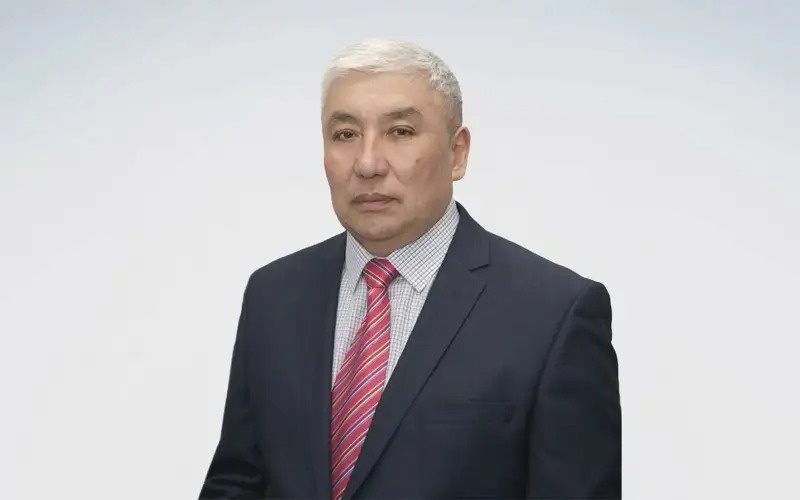
“Mongolia is landlocked and relies on Russia and China for transport. Kazakhstan is a key Eurasian transit hub linking China, Russia, the Caspian region, and Europe. By combining efforts, the countries can develop new transport routes,” he said.
Zhansseitov emphasized the potential of a new corridor through eastern Kazakhstan and Russia to Mongolia.
“Firstly, the Kazakhstan–Russia–Mongolia highway project, which received particular attention in June 2025, could shorten routes by more than 800 kilometers and boost trade to $500 million. Secondly, Mongolia’s access to the Trans-Caspian corridor via Kazakhstan is under consideration. Thirdly, the development of direct flights between Astana and Ulaanbaatar has been agreed,” he said.
Both countries are located between Russia and China, shaping a shared foreign policy approach based on balance and multi-vector engagement. This gives bilateral relations not only economic but also strategic significance.
“Kazakhstan became Mongolia’s first strategic partner in Central Asia. This means the current visit will likely focus on practical implementation of this status,” Zhansseitov stressed.

He identified three foundations of relations: political stability, cultural proximity, and alignment of foreign policy interests.
Migration and diaspora
Human ties also play a stabilizing role. A significant Kazakh diaspora in Mongolia serves as a natural bridge, strengthening trust through shared culture and language.
Educational cooperation is developing steadily. Kazakhstan hosts over 30,000 foreign students, around 1,000 of whom are from Mongolia, with plans to increase this number, especially in technical fields. The opening of a branch of a Kazakh university in Mongolia is also under consideration.
Tourism is another important area, with joint routes including the Khoja Ahmed Yasawi Mausoleum in Turkistan and the Jochi Khan Mausoleum in Ulytau.
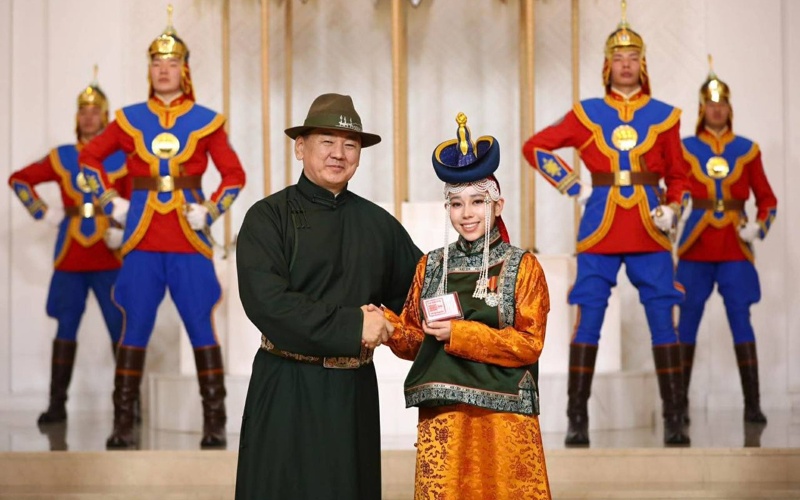
The victory of Mongolian singer Michelle Joseph in the Silk Way Star project in Kazakhstan became a symbol of cultural unity. She was awarded the Order of Dostyk II degree on behalf of the President of Kazakhstan and Mongolia’s Order of the Polar Star by President Khurelsukh.
Migration flows remain stable, with many arrivals in Kazakhstan being ethnic Kazakhs returning to their historical homeland. Measures to simplify pension arrangements and recognize work experience show efforts to support these individuals.
Cultural, educational, and media initiatives serve as instruments of soft power, strengthening ties beyond economic interaction.
Turning potential into results
Despite these factors, the main challenge remains transforming potential into concrete outcomes. Economic indicators are growing, but not at a pace that could fundamentally change the situation. Infrastructure projects require time and investment, and political dialogue needs consistent practical follow-up.
The current state visit of the Mongolian President to Astana is therefore of particular importance. It may mark the point where accumulated ideas and agreements move into implementation. If the sides agree on concrete steps to expand trade, remove barriers, and launch joint projects, the pace of rapprochement could significantly accelerate.
In the long term, Kazakhstan and Mongolia have the opportunity to occupy a unique niche in Eurasia, shaped not by the size of their economies but by geography and their ability to connect regions.
Today, Kazakh-Mongolian relations are in a transitional phase. They have moved beyond symbolic partnership but have yet to reach full economic integration. The success of current initiatives will determine whether historical closeness can be transformed into a modern competitive advantage.
Earlier, Qazinform News Agency reported that Mongolian President Ukhnaagiin Khurelsukh will pay a state visit to Kazakhstan on April 20 to 23 at the invitation of Head of State Kassym-Jomart Tokayev.