The Brussels dialogue: A new agenda for Kazakhstan and Europe
On June 23-24, President of Kazakhstan Kassym-Jomart Tokayev will pay an official visit to Belgium. The significance of this trip goes far beyond bilateral relations. Brussels remains the political center of the European Union, while Kazakhstan is becoming an increasingly important partner for Europe in logistics, energy, and the supply of critical minerals. Why the Belgian direction is gaining particular importance for Astana is examined in this article by a Qazinform News Agency correspondent.

At the intersection of Kazakhstan's and Europe's interests
Belgium is not always considered among Kazakhstan's key European partners. However, the importance of this country for Astana extends far beyond direct interaction between the two states. Brussels is the political center of the European Union, home to the EU's main institutions, international organizations, and major industry associations. Therefore, cooperation with Belgium effectively provides Kazakhstan with additional opportunities to engage with European structures and promote its interests at the pan-European level.
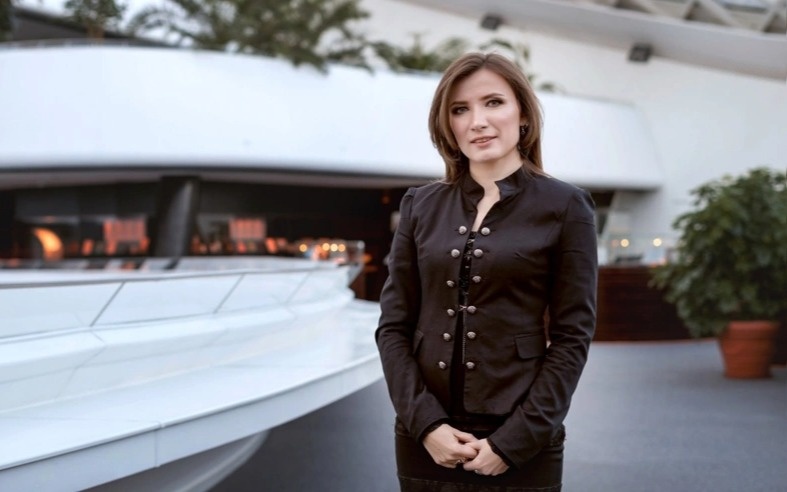
According to Lydia Parkhomchik, an expert at the Institute of World Economy and Politics, Brussels is of particular interest to Kazakhstan as one of Europe's main decision-making centers.
"Belgium is geopolitically a center of decision-making in Europe. It hosts the main EU institutions, around 38 international organizations, and more than 30,000 employees of European structures. This makes Belgium one of the key centers of political and geopolitical activity in the region," the expert emphasizes.
The importance of such a partnership is growing today as the global economy undergoes major transformation. The restructuring of trade chains, the development of new transport routes, and Europe's growing demand for strategic resources are strengthening mutual interest between Kazakhstan and the European Union. Under these conditions, Belgium is becoming not only an important bilateral partner for Astana but also a kind of gateway to Europe's political and economic system.
From diplomacy to strategic partnership
Diplomatic relations between Kazakhstan and Belgium were established on August 25, 1992. Kazakhstan opened its embassy in Brussels in 1993, while Belgium's diplomatic mission in Kazakhstan began operations in 2006.
Over more than three decades, cooperation has expanded beyond the traditional format and is now increasingly integrated into Kazakhstan's broader engagement with the European Union.
Kazakhstan became the first Central Asian country to sign the Enhanced Partnership and Cooperation Agreement (EPCA) with the EU. The agreement, which entered into force in 2020, covers 29 areas ranging from trade and investment to transport, energy, and digitalization. As a result, many projects between Astana and Brussels today are effectively part of the EU's broader strategy for cooperation with Central Asia.
A high level of political dialogue has been maintained for many years. In 2021, President Kassym-Jomart Tokayev visited Brussels and held talks with King Philippe of Belgium, Prime Minister Alexander De Croo, President of the European Council Charles Michel, and President of the European Commission Ursula von der Leyen. Discussions covered not only bilateral issues but also prospects for Kazakhstan's cooperation with the European Union as a whole.
In recent years, Europe's interest in Central Asia has increased significantly. While the region was previously viewed largely as a peripheral direction of EU foreign policy, it is now becoming an important element of Europe's long-term strategy.
The reasons include the search for new transport routes, the need to diversify raw material supplies, and growing interest in critical minerals, notes political analyst Murad Shamilov.
"After 2022, Kazakhstan's importance for European countries increased substantially. Europe is actively seeking new transport routes and reliable suppliers of strategic resources. Kazakhstan has found itself in a unique position. On the one hand, the country is becoming a key link in the Middle Corridor connecting Europe and Asia through the Caspian Sea, the South Caucasus, and Türkiye. On the other hand, Kazakhstan possesses significant reserves of critical minerals needed for the digital and green transformation of the European economy," the expert notes.
Economy: The numbers speak for themselves
The economic dimension of cooperation confirms steady growth. According to Lydia Parkhomchik, trade turnover between Kazakhstan and Belgium amounted to about $456 million in 2024 and grew to $582 million in 2025.
Positive dynamics have continued this year. According to Kazakhstan's Ministry of Trade and Integration, mutual trade reached $179.5 million in January-April 2026, up 1.5% year-on-year. Kazakhstan's exports increased by 10.1% to $100.4 million, while imports declined by 7.7% to $79 million. As a result, the trade surplus improved nearly fourfold, from $5.6 million to $21.4 million.
An important trend is the gradual diversification of Kazakhstan's exports. While metals and raw materials previously dominated supplies, agricultural products are now playing an increasingly important role. Flax exports have shown particularly strong growth and now account for about two-thirds of Kazakhstan's exports to Belgium.
At the same time, the structure of imports is changing. Alongside machinery and equipment, imports of high-tech products, pharmaceuticals, and industrial goods are increasing.
However, investment remains the main foundation of bilateral relations. According to Lydia Parkhomchik, Belgian investment in Kazakhstan's economy has approached $15 billion since independence.
"We see sustained interest from Belgium. Over recent decades, investment has reached around $14 billion, while annual inflows amount to about $1 billion. For Central Asia, this is a very significant figure and serves as an important stabilizing factor in bilateral relations," the expert notes.
Today, dozens of enterprises with Belgian participation operate in Kazakhstan in the fields of chemicals, logistics, infrastructure, energy, and water treatment. For Belgian businesses, Kazakhstan is attractive not only as an independent market but also as a regional platform for working across Central Asia.
Antwerp, the Middle Corridor, and Eurasia's new logistics
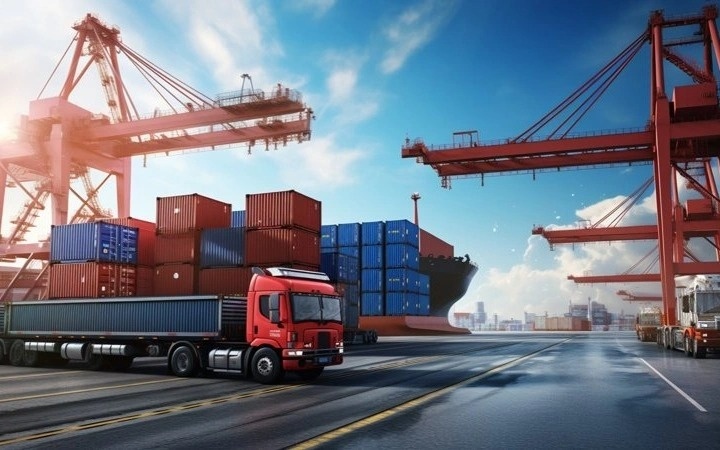
While Kazakhstan-Belgium cooperation was primarily associated with investment and political dialogue just a few years ago, transport and logistics are now gaining increasing importance. One notable event was the first delivery of Kazakh products to the Belgian port of Antwerp via the Trans-Caspian International Transport Route.
"At the beginning of the year, KTZ Express completed a shipment via the Trans-Caspian International Transport Route from Kyzylorda through the port of Aktau, then to the port of Alat, onward to the port of Poti, and finally through the Mediterranean Sea to the Belgian port of Antwerp," said Lydia Parkhomchik.
At first glance, this may seem like just one commercial route. However, its significance goes far beyond a single shipment. Antwerp is one of Europe's largest logistics hubs, while the Middle Corridor is gradually becoming one of the key alternatives to traditional routes between Asia and Europe.
"Belgium has unique experience in managing port infrastructure and international logistics networks that could be valuable for Kazakhstan," Murad Shamilov emphasizes.
From uranium to rare earth metals
Alongside logistics, critical minerals are becoming a promising area of cooperation between Kazakhstan and Europe. Against the backdrop of the accelerating green transition and technological transformation, the European Union is seeking to diversify sources of raw materials needed for batteries, microelectronics, renewable energy equipment, and other high-tech products. In this context, Kazakhstan's importance for Europe continues to grow. The country possesses large reserves of strategic raw materials, is Central Asia's largest economy, and is a key EU partner in the region.
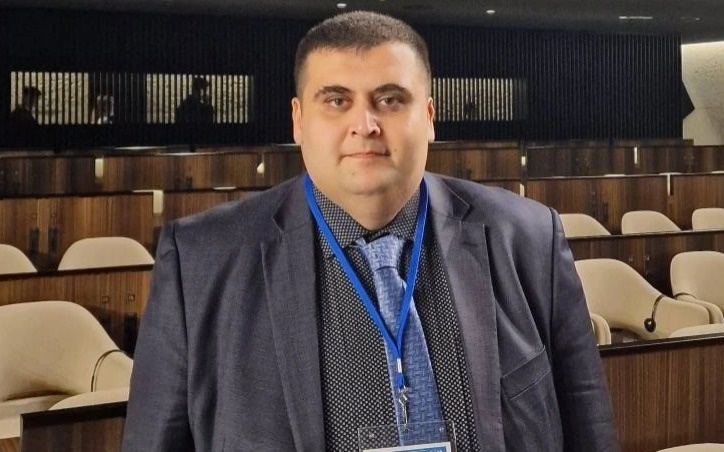
According to Murad Shamilov, critical minerals and rare earth metals are of particular interest to European countries.
"For the European Union, the reliability of supplies of such raw materials is becoming one of the key elements of industrial policy," the expert emphasizes.
Energy cooperation also remains important. Kazakhstan continues to be the world's largest producer of uranium, while many European countries view nuclear energy as an important element of energy security.
As a result, Kazakhstan's cooperation with European partners, including Belgium, is gradually moving beyond traditional raw materials trade. Increasingly, the focus is on long-term projects in technology, scientific research, workforce training, raw material processing, and nuclear safety.
Humanitarian cooperation
Humanitarian cooperation is an important complement to the political and economic interaction between Kazakhstan and Belgium. Public, expert, and cultural contacts play a significant role in strengthening mutual understanding between the two countries.
In March, the Shanyraq Dialogues project was launched in Brussels as a discussion platform for exchanges among government representatives, experts, and civil society on issues related to Kazakhstan.
The platform became an important step in strengthening dialogue and trust between Kazakhstan and its European partners by expanding interaction at the expert and public levels.
The Shanyraq Fest festival, held in Brussels on April 8-11, 2026, became the first festival of Kazakh culture in Belgium. More than 40 Kazakh artists participated, while folklore, classical music, and traditional music were presented.
The main event was the concert "A Musical Bridge from Astana to Brussels," held at the Saint-Gilles Town Hall. As part of the festival, Kazakhstan also donated a zhetygen instrument to Belgium's Royal Museum of Musical Instruments, highlighting cultural exchange between the two countries.
New emphases in relations between Astana and Brussels
Belgium occupies a special place in Europe's architecture not only as a country but also as one of the EU's decision-making centers, enhancing its importance for foreign policy partners. Against this backdrop, relations between Kazakhstan and Belgium are gradually moving beyond the classical model of interaction and becoming part of a broader European strategy for engagement with Central Asia.
As Murad Shamilov notes, Kazakhstan is increasingly perceived in Europe as an independent regional actor and the EU's key partner in Central Asia.
That is why President Kassym-Jomart Tokayev's upcoming visit to Belgium carries strategic significance. It takes place amid the restructuring of global trade, changing logistics routes, and growing competition for access to critical resources.
Under these conditions, the development of cooperation between Astana and Brussels is increasingly defined not only by trade volumes but also by joint participation in shaping a new economic architecture for Eurasia, from transport corridors and investment to technology and energy security.
Earlier, Qazinform News Agency reported that the Embassy of Kazakhstan in Belgium, with the support of the Astana city administration, officially launched the Shanyraq Fest Brussels cultural festival on April 8 at the prestigious Cercle Royal Gaulois in Brussels.