Seven interesting facts about Astana that may surprise you

1. It is one of the world's youngest capital cities
Astana became Kazakhstan's capital on December 10, 1997, when the government relocated the seat of power from Almaty to the then modest city of Akmola. The new capital was officially introduced to the international community on June 10, 1998. At the time, the city had a population of just under 327,000. Today, it is home to more than 1.67 million residents, making it one of the fastest-growing capital cities in the world.
2. A modern capital built on the open steppe
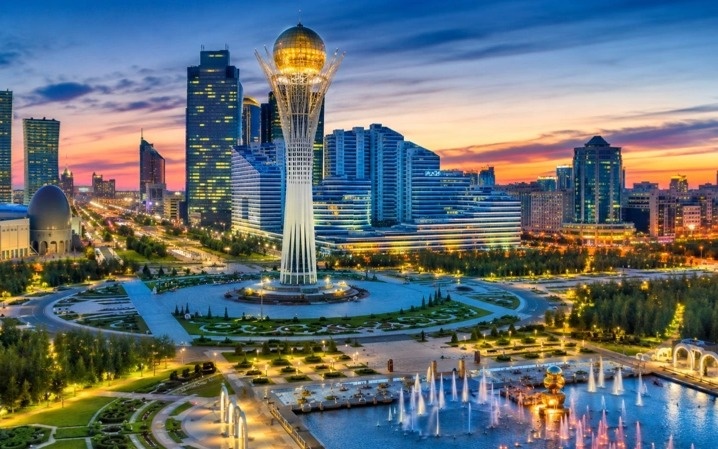
Astana rises from the vast Kazakh steppe on the banks of the Ishim River, which divides the city into two distinct parts. The historic right bank preserves much of the original city, while the left bank, once open grassland, has been transformed into a district of futuristic architecture that is now home to many of the capital's most iconic landmarks. Surrounding the city is Astana's Green Belt, a massive afforestation project where millions of trees have been planted to help reduce strong steppe winds and create a greener urban environment.
3. A city shaped by architectural icons
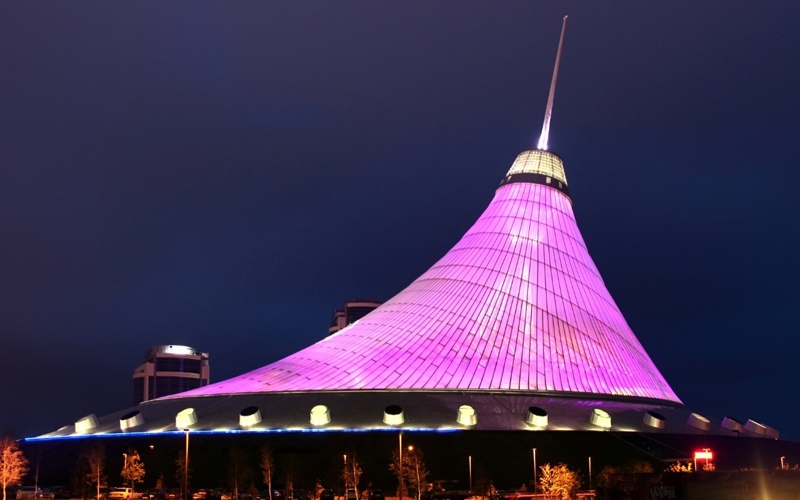
Much of modern Astana was shaped by internationally renowned architects. Japanese architect Kisho Kurokawa developed the city's master plan, envisioning a capital that could evolve organically alongside the surrounding steppe. Meanwhile, British architect Sir Norman Foster designed several of Astana's most recognizable landmarks, including the Palace of Peace and Reconciliation, known as the Pyramid, and the tent-shaped Khan Shatyr Entertainment Center, one of the city's architectural icons.
4. Winters here can reach minus 40 degrees Celsius
Astana is regularly ranked among the coldest capital cities in the world. Winter temperatures have historically fallen below minus 40 degrees Celsius, while summer heat can exceed 35 degrees. In recent years, however, residents have noted that winters have become noticeably milder, a trend that has also been reflected in data published by Kazakhstan's national weather service, Kazhydromet.
5. Astana's architecture is full of hidden meanings
Many of the city's landmarks were designed to reflect Kazakhstan's history, culture, and ambitions. The Bayterek Monument represents the mythical Tree of Life from Kazakh folklore, while its golden sphere symbolizes the egg of the sacred Samruk bird. The Palace of Peace and Reconciliation, built in the shape of a pyramid, stands for harmony among cultures and religions and hosts the Congress of Leaders of World and Traditional Religions every three years. Khan Shatyr, one of the city's most recognizable landmarks, was inspired by the traditional tent used by the nomads of the Great Steppe.
6. Home to one of the world's most remarkable spherical buildings
Built as the centerpiece of EXPO 2017, the 80-metre-high Nur Alem Pavilion is one of the world's largest spherical buildings and one of Astana's defining landmarks. Its architect conceived the glass sphere as the last drop of oil, symbolizing the transition from fossil fuels to renewable energy in line with the exhibition's theme, Future Energy. Today, the eight-story building has been transformed into the Alem AI International Center for Artificial Intelligence.

7. Central Asia's largest mosque stands here
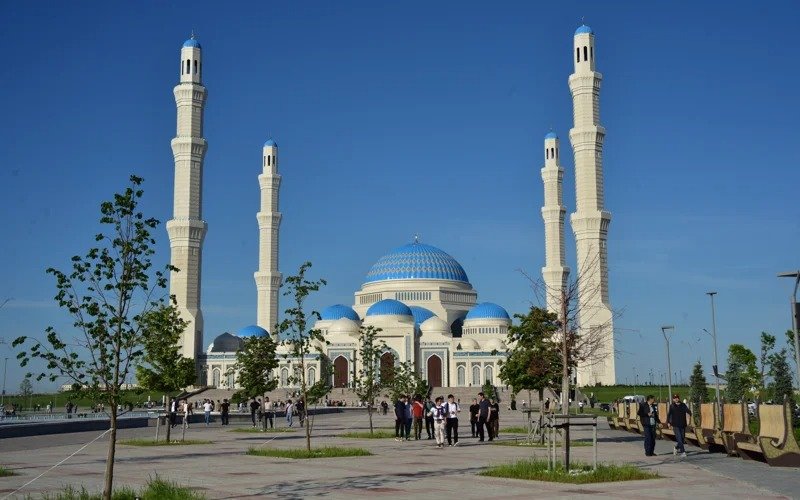
The Central Mosque of Astana, opened in 2022, is the largest mosque in Central Asia. It can accommodate around 30,000 worshippers indoors, while the entire complex holds more than 200,000 people. Inside, the main prayer hall features a hand-decorated wall stretching more than 100 meters in length and 26 meters in height, displaying the 99 names of Allah illuminated by soft golden light.
The mosque's main dome, measuring 62 meters in diameter and more than 83 meters high, is among the largest in Islamic architecture. Visitors are also greeted by one of the world's tallest wooden doors, a 12.4-meter handcrafted entrance made from African iroko wood and weighing 1.5 tonnes.
Earlier, Qazinform News Agency reported that Astana was named among the safer cities in global Crime Index.