Scientists reconstruct the face of one of the earliest humans
An international team of researchers has reconstructed the possible appearance of one of the earliest representatives of Homo sapiens using fossil finds from Morocco, Qazinform News Agency reports.

The study was published in the journal Heritage. Its authors include digital facial reconstruction specialist Cicero Moraes and researchers from universities in Australia, Italy, Poland and Malaysia.
Prominent brow ridges, a broad nose and an elongated head define the reconstruction. The color images depict a person with dark hair, a thick beard and pronounced facial features. Several views reveal both traits familiar to modern humans and distinctive features of the ancient skull.
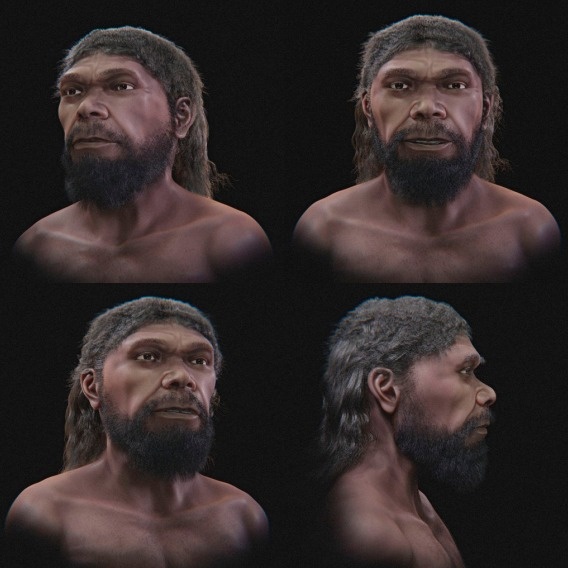
The reconstruction is based on fossils from Jebel Irhoud in Morocco, estimated to be approximately 315,000 years old. The study describes them as the oldest known remains attributed to Homo sapiens.
Their story began with a chance discovery. In the early 1960s, a worker found a skull during mining operations. It was initially identified as an African Neanderthal specimen dating back around 40,000 years. As dating methods improved, however, estimates pushed its age further back in time.
A turning point came in 2017, when two papers published in Nature classified the remains as Homo sapiens and dated them to approximately 315,000 years ago.
For the new study, the researchers used a digital composite skull combining remains from several individuals found in the same archaeological layer. Its main component was the Irhoud 1 skull, discovered in 1961. Missing parts were filled in using other finds from the site.
The resulting face therefore cannot be considered an exact portrait of a particular person. It is a scientifically informed approximation of a possible appearance, based on the surviving skeletal structures.
To give the skull a face, the specialists used forensic facial reconstruction techniques. They first created a three-dimensional model from published images and video footage. They then adapted a digital model of a modern human head, derived from a CT scan, to match it.
The soft tissues were adjusted to reflect the structure of the ancient skull and data on tissue thickness in modern humans. Skin details, hair and lighting were added in the final stage.
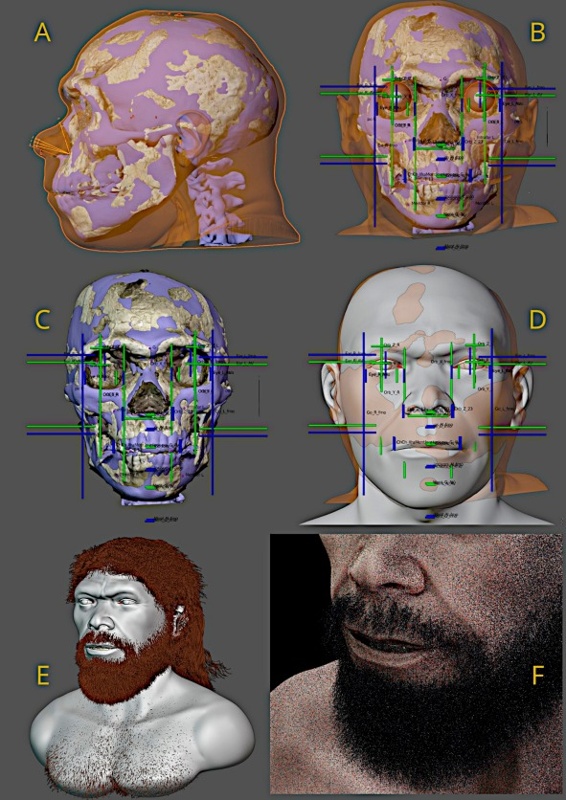
The authors produced two versions of the reconstruction. The first is presented in grayscale, without hair or a beard, to focus attention on the anatomy. The second, in color, is intended to make the findings more accessible to a wider audience.
Skin tone, hairstyle and facial hair cannot be reliably reconstructed from these remains. The researchers emphasize that these details are artistic additions rather than features directly supported by the fossils.
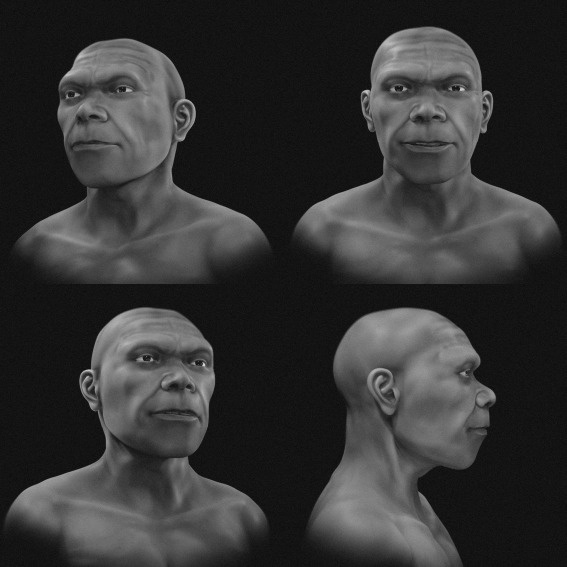
In addition to reconstructing the face, the specialists estimated the volume of the skull’s internal cavity. At approximately 1,364 cubic centimeters, it falls within the range observed in modern humans and is close to the results of previous studies of the remains.
Earlier, Qazinform News Agency reported that workers at a sand quarry near Beskol in North Kazakhstan discovered human remains and a skull believed to belong to an Ice Age woolly rhinoceros.