
Raushan Kazhibayeva on TRC’s 30th anniversary, its media outlets and creating content about the President
The Television and Radio Complex of the President of Kazakhstan is marking its 30th anniversary. In an interview with Tengrinews.kz, TRC Director General Raushan Kazhibayeva spoke about how the media organization is changing, discussed Kazakhstani content and shared her views on the impact of artificial intelligence, reports a Qazinform News Agency correspondent.

- Thirty years is a considerable age for a domestic media organization. How has it changed over these three decades?
The Television and Radio Complex of the President of the Republic of Kazakhstan was established by a government resolution on December 29, 1996, just before the New Year.
In its early years, the Television and Radio Complex mainly filmed official events, prepared video materials for state and commercial channels, and began filling what used to be called the “archive shelves.” At the time, production was analogue, and footage was stored on tapes. Today, we are completing the digitization of the archive, with servers and metadata offering descriptions and convenient searches replacing shelves of tapes and index cards.
By the late 1990s, TRC had begun making its first documentaries and videos, which were broadcast on Kazakhstani television channels. This new area of activity was formalized by a separate government resolution dated August 17, 1999. At the same time, TRC was transformed from a state institution into a closed non-commercial joint-stock company.
- TRC has changed its status several times over the past 30 years. Was this a search for the ideal management model?
I believe this was primarily related to changes in the country’s legislation. TRC has been a state institution, a closed non-commercial joint-stock company and simply a non-commercial joint-stock company.
Since 2019, work to develop TRC has been underway on the President’s instructions, with systematic support from the Presidential Administration of Affairs, of which TRC is a part.
- TRC is described as a presidential media resource. What meaning do you attach to this definition? Does it reflect the scale of production or new approaches to your work?
Above all, it means a systematic approach. TRC is a factory producing content about our President. And our main newsmaker is the President!
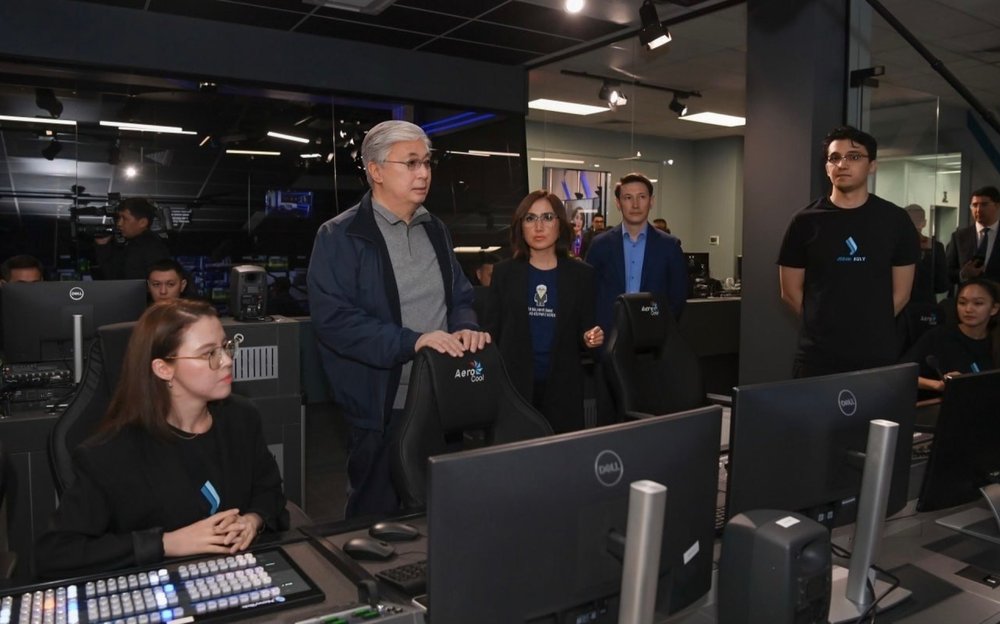
For me, a strong media system is one in which speed, editorial work, visual quality and distribution do not exist separately. They are linked by a shared responsibility for results. TRC is a cross-media company that, without false modesty, sets trends in television, international media and the digital space. We film, write and distribute content both in Kazakhstan and abroad.
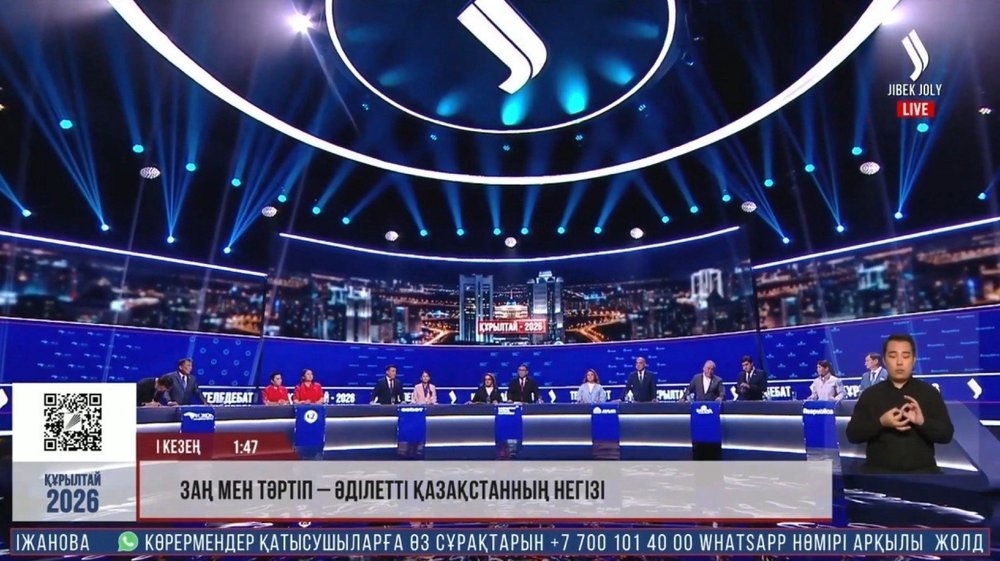
Our main television outlet is Jibek Joly. Like TRC itself, Jibek Joly is a unique channel. Around a quarter of its daily airtime is broadcast live.
We were the first in Kazakhstan’s market to stop importing foreign series carrying an ideology alien to us. Their place in the broadcasting schedule was taken by our own original projects: Zhaña Uaqyt; Novoye Vremya; Taldau: Analytical Review; Bügin.Live; Senim Studiyasy; Dämdi.Life and others. Audiences have grown to love our projects, and the channel has retained its position among the country’s leading television channels.
We have accepted that one-way communication with audiences is gone for good. Today, viewers want to interact with the media outlet they have chosen. Live projects make precisely this possible. We are pleased that our audience does not watch passively but actively participates in creating content. Viewers become studio guests, can ask questions in real time and interact with presenters and show participants. In some projects, we have replaced traditional sets with live, dynamic footage from the capital’s streets.
Of course, we also remember that television remains the most widespread and accessible form of family leisure. Original shows, large-scale projects, films and animation bring thousands of viewers together every day in front of screens showing Jibek Joly.
This combination of live broadcasting, sought-after content and a balance of subjects and genres builds what matters most: viewers’ trust, which we value.
Our organization comprises six media outlets. Jibek Joly television’s work in the domestic market is complemented by a radio station of the same name, which also broadcasts in an interactive format. Listeners to our radio station, which broadcasts in Astana on 101.4 FM and is available online, also become guests in the studio and on air.
In recent years, Qazinform International News Agency has regained its status as the country’s leading news agency. Today, it ranks among the top three news outlets and has restored and expanded its network of international partners. It has become the region’s principal trusted hub, with its materials cited daily by global media from Japan to the United States.
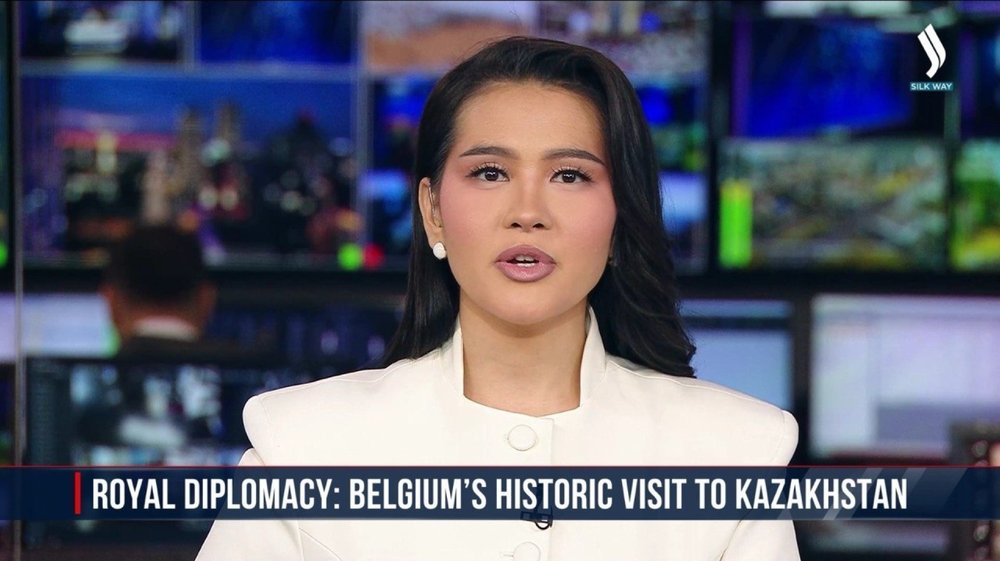
Alongside Qazinform International News Agency, the channels under the Silk Way umbrella brand, Silk Way, Silk Way Cinema and Silk Way Prime, operate in the international information space.
These are the only international channels not only in Kazakhstan but throughout Central Asia, broadcasting abroad in six languages and reaching more than 120 countries. The channels have around 300 rebroadcasters and 22 official distributors abroad.
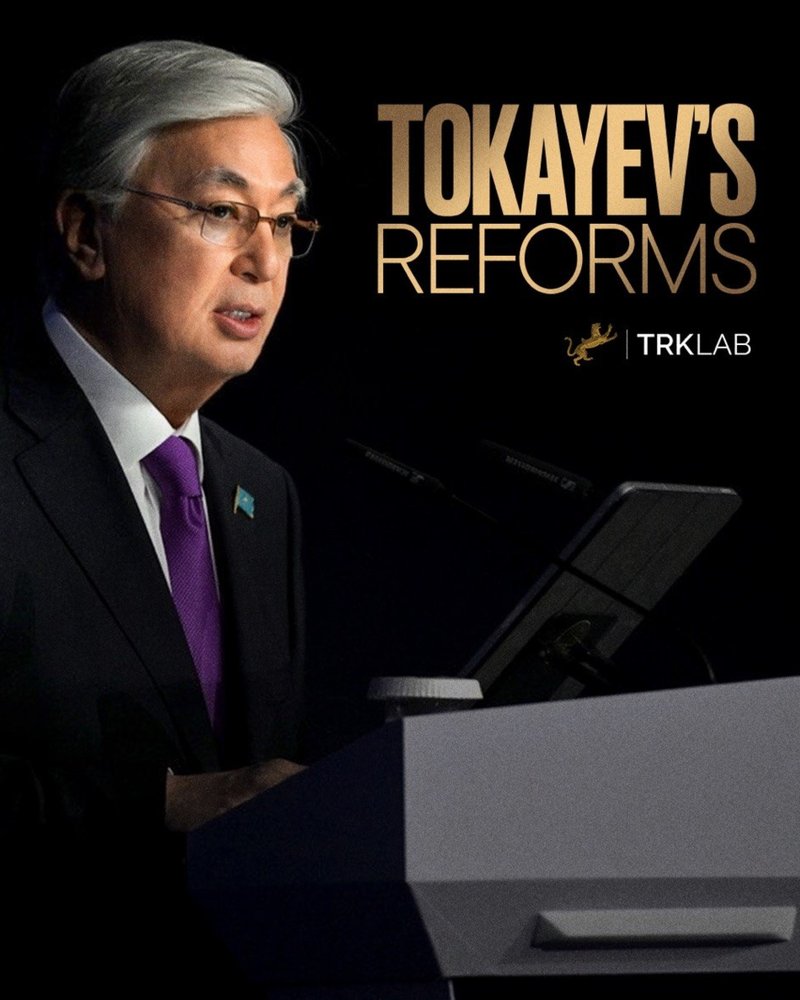
We also have a digital laboratory, a team of professionals of a new generation. They understand an audience that grew up with smartphones in their hands. Under the TRKLAB brand, they create vertical content, generate unique projects using AI and interact with readers across all relevant platforms. In total, we have several dozen accounts.
Our Documentary Film Center has also been modernized. For us, the center is the heart of our company, our qara shañyraq.
The team makes films for festivals, produces original content in foreign languages and was the first in the Central Asian market to release documentaries in a vertical format, an area it continues to develop.
Documentary projects in English, Chinese and French are broadcast by our foreign partners, while those in Kazakh and Russian are shown not only on national channels but also on more than three dozen regional channels.
- At the recent Astana Media Week, there was active discussion about how to make Kazakhstani content global and why translating it into a foreign language does not work. What do you think?
For us, this has been standard production practice since the launch of Silk Way. Since the revamped channel launched in 2022, all new projects for its broadcasts have been produced originally in English. We clearly understood that literal translation was a thing of the past and assembled a team of professionals who became the first in Kazakhstan and Central Asia to produce studio news and analysis in English.
In 2024, Qazinform’s English-language news moved to a global domain, qazinform.com. As the saying goes, “Content is King, but distribution is Queen.”
This year alone, materials produced by Silk Way and Qazinform have been cited by media in dozens of countries. Alongside neighboring Russia, Uzbekistan, Kyrgyzstan and Turkmenistan, these include the United States, China, Japan, Korea, India, Germany, France, the United Kingdom, Spain, Czechia, Hungary, Serbia, Bulgaria, Türkiye, Indonesia, Pakistan, the UAE, Qatar and many other countries in Europe, Asia and the Middle East, and even media in Peru, Chile, South Africa and Togo.
In total, content from our English-language media outlets, Silk Way and Qazinform, has been cited by foreign media around 6,000 times in 2026.
- Traditional television channels, news agencies and conventional media in general are often fairly conservative organizations that approach new technologies, especially artificial intelligence, with caution. How do things stand at TRC?
TRC combines the best traditions of conventional media, new media and technology, current trends and content formats, which together give us a cross-media approach and the ability to work across multiple formats.
Neural networks help us optimize routine tasks, freeing up time for creativity, and create unique content for broadcast and online platforms. The possibilities here are truly limitless.
Back in 2024, TRC was the first to make a short film in a vertical format. The capabilities of neural networks, unique at the time, allowed us to “bring to life” photographs of our President, many of which had originally been taken on ordinary photographic film.
Responsible and sensible use of AI allows us to accomplish a wide range of tasks for the public good. Last year, we used AI to create sign language interpretation for the animated series The Fixies for our broadcasts. This was our way of caring for our youngest viewers with special needs.
In addition, Jibek Joly aired 100 video lessons on digital literacy in 2025. All 100 episodes were created entirely through generation, without a single frame of live footage.
At Qazinform and in our newsrooms, AI searches for and initially processes information, transcribes audio and video, and creates images to illustrate articles. AI helps analyze large volumes of information, monitor foreign-language sources, conduct basic fact-checking and perform technical checks to ensure texts comply with the rules of the publication language.
At TRKLAB, our newsroom of a new generation, work with neural networks focuses on creating generative content and adapting materials from the news agency and television channels for a new type of reader who quickly tires of long articles and tends toward click-driven, short-form media consumption. AI helps shorten narratives and make them more concise without making them any less informative.
It is important to say that AI-based projects require substantial human involvement and are not created using just one neural network. We follow the Head of State’s principle: “Intelligent systems should not replace humans; they are intended to complement and enhance their capabilities.”
- What does “responsible and sensible use of AI” mean to you?
Our President has declared 2026 the Year of Digitalization and Artificial Intelligence, and Kazakhstan is one of just five countries in the world [Editor’s note: the others are the UAE, the United Kingdom, Canada and Albania] where a Ministry of Artificial Intelligence has been established on the President’s instructions.
Meanwhile, many of our colleagues around the world are debating the future of journalism. They ask whether neural networks will replace humans and whether news journalism will become overwhelmed by synthetic content. Will we find ourselves immersed in an endless expanse of deepfakes?
We see AI as offering enormous potential and opportunities, rather than threats and scare stories. Of course, all these risks can materialize if we fail to exercise reasonable caution and approach our profession carelessly. But that is in our hands.
- Astana recently hosted the first global generative film festival, the Astana AI Film Festival. We watched the finalist entries and, we must say, were impressed. This is further evidence that Kazakhstan is one of the pioneers in adopting and using AI.
The idea for the festival belongs to Vice President Erlan Karin, while its implementation was the work of Almas Zhali and Aizatulla Khusein, young and talented leaders in Kazakhstan’s creative industry.
The festival received a total of 8,067 entries from 125 countries, amounting to more than 100,000 minutes of generative content. This is a truly world-class event with a substantial prize fund.
Without a doubt, this global project will become a regular event, as will the international televised music competition Silk Way Star, the first project by Kazakhstani creators to reach a global level. The first season attracted more than one billion viewers worldwide and was broadcast in nine countries. Citizens of 43 countries took part in the voting, while media in 60 countries cited news about the competition.
This year, together with our partners at China Media Group (CMG), we completed filming the second season in Yiwu, China. It will soon air on Jibek Joly. In China, the project is already being broadcast by two of the country’s leading television channels, CCTV 3 and CCTV 15.
The third season will be filmed in Kazakhstan next year.
- In your previous interview, you spoke about a regional television channel for Central Asian countries based on Silk Way. This October, at the Consultative Meeting of the Heads of State of Central Asia and Azerbaijan in Awaza, our President emphasized the importance of creating a shared information space. How is this project progressing?
A regional channel for Central Asian countries based on Silk Way is one of our promising projects.
Today, colleagues from Uzbekistan, Turkmenistan, Kyrgyzstan and Tajikistan are working alongside us to provide regional content for Silk Way. We have signed several bilateral agreements with national broadcasters and the relevant authorities of partner countries.
In October, on the sidelines of the Consultative Meeting of the Heads of State of Central Asia and Azerbaijan and the CIS Council of Heads of State in Awaza, Turkmenistan, we signed a historic agreement establishing a permanent Kazakh-Turkmen media council. This is the first document of its kind in the history of media cooperation between the two countries and in the region as a whole.
The pace of cooperation naturally varies, but it is sufficient to fill the first dedicated programming block on Silk Way devoted to Central Asia.
We continue working on a comprehensive interagency agreement between the relevant authorities of the region’s countries that would pave the way for systematic coordination and a full-fledged intergovernmental agreement. I hope we can bring this unfinished task to completion together with our colleagues at the Ministry of Culture and Information and the Ministry of Foreign Affairs.
- This year, Astana hosted two major events: CMG Week and the second Al Jazeera Week. On what terms do you work with the world’s largest media companies?
Today, we have 70 agreements with television and radio companies and news agencies from around the world. Our partners include Al Jazeera, China Media Group, TRT, Xinhua, Jiji Press, Kyodo, Yonhap, Aju News Corporation, Anadolu Agency, Agenzia Nova, Adnkronos, Belga News, VNA, ANI, Azertac, Petra, IRNA, WAM, Saudi Press Agency and many others.
We are also members of several international industry organizations and associations. TRC is a member of the technical committee of the Organization of Asia-Pacific News Agencies, the Council of Heads of State and Public Television and Radio Organizations of CIS Member States, and the Interstate Information Pool. It is also an active participant in the Union of News Agencies of the Organization of Islamic Cooperation.
For our partners, TRC has become a hub for reliable and timely news from Kazakhstan and Central Asia, and this is their main reason for working with us.
To answer your question directly, we do not buy airtime or print space abroad. We have no financial relationships with any of our partners, and we have not paid for a single news story picked up by global agencies.
- In our previous conversations, you repeatedly spoke about problems in the country’s media market. You raised the near-monopoly in television advertising, weaknesses in the television audience measurement system and the need to protect domestic broadcasters. What is the situation now?
Indeed, over decades of operation, the country’s television, advertising and broader media markets accumulated numerous imbalances. Some have been eliminated through joint efforts, primarily by the regulator and market participants.
The television advertising market has become competitive, new players have emerged, and channels now have a genuine choice between advertising sales companies and the ability to negotiate terms. We have also significantly improved the television audience measurement system.
Thanks to the efforts of the National Media Association, of which TRC is an active member, audience measurement now covers the entire country, from major cities to small towns. We finally know what all Kazakhstanis watch and prefer, rather than only residents of large cities. Work is underway to integrate data from cable television operators into the audience measurement system.
- What, then, is the problem? Why are television channels complaining about falling revenues, while ratings are steadily declining? What needs attention?
The regulatory framework needs fine-tuning to protect the domestic information space in a rapidly changing market.
Today, domestic television operates under fairly strict regulation. We have requirements concerning the volume of domestic programming, language balance, and limits on the amount of advertising per day and per hour, as well as its content.
These requirements do not apply to foreign broadcasters. Yes, they do not earn advertising revenue in Kazakhstan, as this is prohibited. But they compete for our viewers’ attention while earning incomparably greater sums in their much larger home television advertising markets and receiving state support from their own countries.
There are no restrictions at all on the internet. We all watch content on YouTube, and what do we see? The number and duration of advertisements keep growing without any limits. This is despite the fact that most videos also contain advertising integrated by the creators themselves.
In practice, this means that a domestic advertiser paid the video hosting platform for an advertisement, the platform placed it, and a Kazakhstani viewer saw it, while YouTube itself and the content creator received the money. In other words, the money left Kazakhstan’s market and went abroad. Essentially, we are subsidizing content production by foreign creators while domestic producers are forced to cut costs, reduce spending on programming and face another wave of viewers leaving.
Domestic online outlets face a similar situation. We visit a foreign website and see advertisements for Kazakhstani companies. The advertiser has reached its audience, but the money has once again gone abroad, to the foreign outlet and the Google or Meta advertising network.
Numerous foreign online streaming services operating in Kazakhstan also remain outside the regulatory framework.
E-commerce platforms are a separate issue. E-commerce aggregators, which have never been media outlets, provide advertising services while producing no content for audiences. The advertising revenues of some are already comparable to the size of the entire television advertising market.
- But this is a global trend. The boundary of the information space is gradually disappearing and content is becoming a global product…
The trend is that content is becoming global while advertising money remains national. We have already discussed that trying to stop progress is impossible. We need to manage it properly, create a legal framework suited to current realities and fine-tune regulation in the interests of domestic media.
- How are you celebrating your anniversary?
We are trying to make our anniversary year beneficial to society and the industry as a whole. As you noted earlier, this year TRC organized two large-scale projects for media professionals and future journalists: CMG Week and Al Jazeera Week.
Leading professionals from two of the world’s largest media organizations spent a week sharing their experience and best practices, delivering lectures and conducting practical sessions.
From May to September, a nationwide film screening and lecture program was held in every region, allowing audiences to watch around 30 of our best documentaries free of charge on the big screen. Particular emphasis was placed on regional screenings, where, with the support of local administrations, projects about the Head of State’s activities and working people in Kazakhstan were shown. There was not a single empty seat at any screening.
Throughout the year, TRC’s senior managers delivered lectures to future journalists at the country’s leading universities, including Al-Farabi Kazakh National University, L.N. Gumilyov Eurasian National University and Maqsut Narikbayev University.
An exclusive photo exhibition featuring more than 200 unique photographs of the President’s activities, along with several other large-scale events, is planned before the end of the year.
- And a final question. Working alongside our President allows you to see things that do not always appear in official coverage. Which personal qualities of the Head of State particularly impress you?
I admire his rare combination of intellectual depth and tact. The President sees issues in a broad context while always paying attention to details that may affect an individual’s life. His incredible capacity for work and exceptional breadth of knowledge cannot fail to impress.
The task of the President’s TRC creative team is to strive to meet the high standard personally set by the Head of State.
Earlier, Qazinform News Agency reported that Kazakhstan’s President Kassym-Jomart Tokayev will deliver his annual State-of-the-Nation Address on October 28.