

Rafael Grossi: Kazakhstan is a key partner of the IAEA in nuclear safety issues
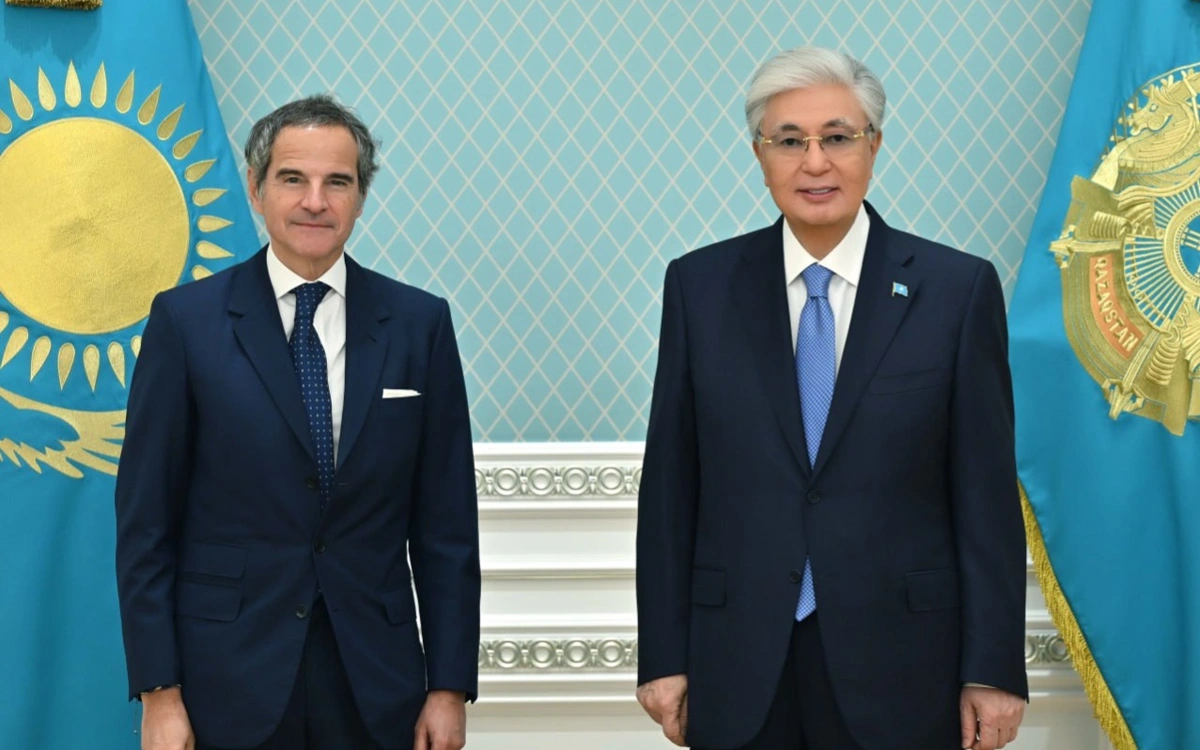
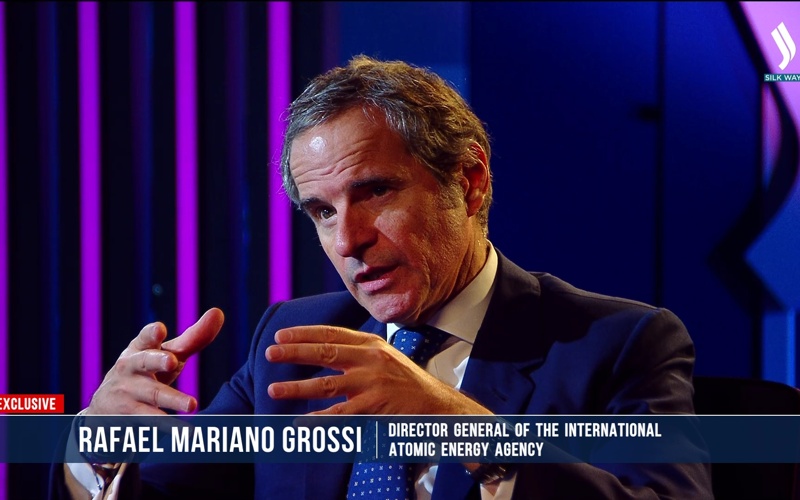
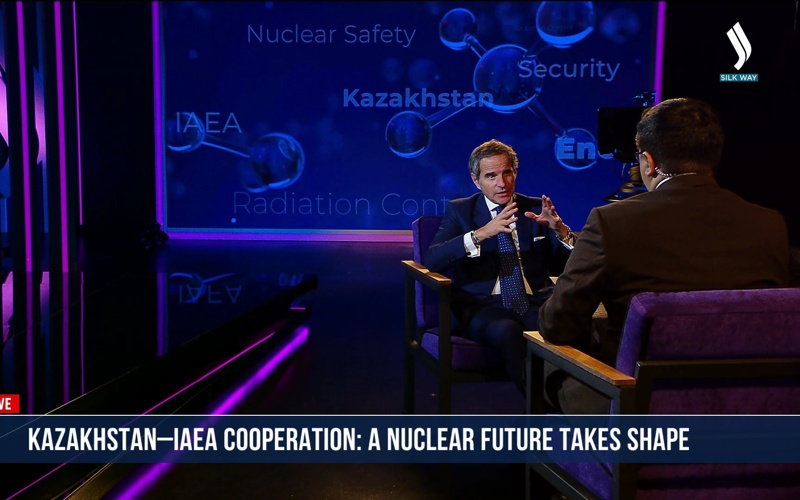
President Kassym-Jomart Tokayev received the Director General of the International Atomic Energy Agency, Rafael Grossi. Speaking in an interview with Silk Way TV Channel, the IAEA chief discussed prospects for cooperation with Kazakhstan, noting that the Agency sees the country not only as the world’s largest uranium supplier but also as a future player across the full nuclear fuel cycle, Qazinform News Agency correspondent reports.
— Since your last visit to Astana around three years ago, cooperation between Kazakhstan and the Agency has certainly deepened. We’ve seen you sign several major documents, including the 10-year roadmap for enhanced cooperation. How would you assess the current level of the relationship between Kazakhstan and the Agency?
Well, absolutely, just as you said. And this is not because of any bureaucratic reason - it reflects the reality of the country truly moving forward with its nuclear program. When I came here last time, in 2023, a number of things were announced. In particular, regarding the civilian nuclear power program, the President announced his intentions, including the idea of holding a national referendum, and all of these steps have since been implemented.
Now the program is moving forward, which means that our work with Kazakhstan - already important in this area and in others - is going to expand significantly. Kazakhstan is an important country in uranium production, we have the low-enriched uranium bank here, and many other areas of cooperation. But now the country is also going to have several nuclear power plants. So this represents a quantum leap in terms of the work we will have to carry out together.
I think there is also another reason, related to the international situation. Kazakhstan, and in particular President Kassym-Jomart Tokayev, has the rare ability to serve as an interlocutor accepted by all sides internationally. The idea of this visit was precisely to discuss the next steps and how the International Atomic Energy Agency will support this program. There are projects involving two groups of nuclear power plants, and possibly small modular reactors as well. All of this, of course, requires a significant IAEA presence and support from the Agency.
— Last year, Kazakhstan joined the Agency’s Far East Regional Group, which is probably opening the possibility for future membership in key decision-making bodies, including the Board of Governors. How do you see Kazakhstan contributing to the Agency’s governance and global nuclear agenda through a possible seat on the Board?
I think it is only logical that this should happen. Sometimes in international organizations, regional arrangements - particularly in a world that is changing so quickly - no longer reflect reality. Even the structures and groupings within international organizations often fail to reflect the world as it is today.
Finally, we were able to find a solution, and I think it makes perfect sense that a country with such global importance, especially in the nuclear field, should have the opportunity to hold a seat within the policy-making bodies of the global nuclear watchdog, the IAEA.
— Obviously Kazakhstan is now preparing to build its first nuclear power plants in cooperation with international partners. From the Agency’s perspective, what are the most critical priorities that Kazakhstan should focus on, especially at the early stages of the process?
Kazakhstan already has a number of advantages. In many countries entering nuclear energy, institutions and regulatory bodies have to be built from scratch. Kazakhstan is in a very unique position because it already has considerable nuclear experience, including operating a nuclear power plant in the Caspian region, as you well know.
Kazakhstan is also one of the world’s largest uranium mining, production, and conversion countries. So, in a sense, the only missing element was nuclear power plants themselves. That means Kazakhstan already has a strong foundation.
The IAEA provides advisory and peer-review services for countries building nuclear power plants so they can assess whether they are moving in the right direction.
— What do those services look like?
For example, licensing a nuclear power plant is a highly meticulous process. Every system, design element, functionality, and piece of equipment must be carefully checked. It is an extremely systematic and detailed process.
We provide services that help countries evaluate whether they are on the right track. Then, during the pre-operational phase, when a country is preparing to commission a nuclear power plant, we conduct what is essentially a dress rehearsal. We assess whether everything is ready and whether the project can move forward safely.
All of these are services the Agency provides to member states, and we will be carrying out this work here in Kazakhstan as well.
— So basically, the Agency is going to be there every step of the way for us.
Exactly. We have done this successfully in other countries that introduced or reintroduced nuclear power, ensuring that it is implemented safely and securely.
— Nuclear power projects are often viewed not only as energy infrastructure but also as catalysts for much broader regional development. Are there any international examples of that?
Nuclear energy is an industrializing industry. Within nuclear energy, many fields converge: artificial intelligence, engineering, mining, mathematics, and chemistry. It is a remarkable hub unlike any other energy source.
If you look at fossil fuels or even renewables, the principle is relatively simple - you are either burning something or harnessing something from nature. Nuclear energy, however, is the result of the human mind creating something that does not naturally exist. And to achieve that, you need highly skilled people.
You need thousands of engineers, technicians, operators, welders - an entire community of professions working together. By taking this step, Kazakhstan is truly expanding and diversifying its technological base in a way that will have an impact on many other industries.
As you know, in many emerging countries, nuclear energy has become the foundation for satellite industries, space industries, and a number of cutting-edge technologies. So this opens an entire world of opportunities for the country.
— Kazakhstan has repeatedly stated its ambition to move beyond being primarily a uranium supplier and develop a full nuclear energy cycle. What role can the IAEA play in supporting Kazakhstan in areas such as fuel cycle development, advanced nuclear technologies, scientific research, and, perhaps most importantly, human capital training?
Well, training and capacity-building are fundamental. As I mentioned earlier, none of this is possible without a strong human resource base.
Through its capacity-building programs, training initiatives, educational opportunities, scholarships, and fellowships, the Agency organizes and facilitates this work. Importantly, the Agency also ensures that international safety standards are properly applied. We help facilitate activities that fully comply with international standards and ensure the protection of local populations.
We also support interaction through consultative mechanisms. For example, I established what is called the Group of Vienna, in which Kazatomprom participates. It brings together the world’s leading companies for informal dialogue, cooperation, and the exchange of experience.
The IAEA is the global nuclear house where regulators, producers, companies, governments - everyone - comes together. Of course, it is technically possible to pursue a nuclear program without this kind of support, but in practice, nobody does so. That is why this cooperation makes perfect sense.
And as I said, the relationship between the IAEA and Kazakhstan is very strong and friendly.
Earlier, Qazinform News Agency reported that Kassym-Jomart Tokayev met with visiting IAEA Director General Rafael Grossi.