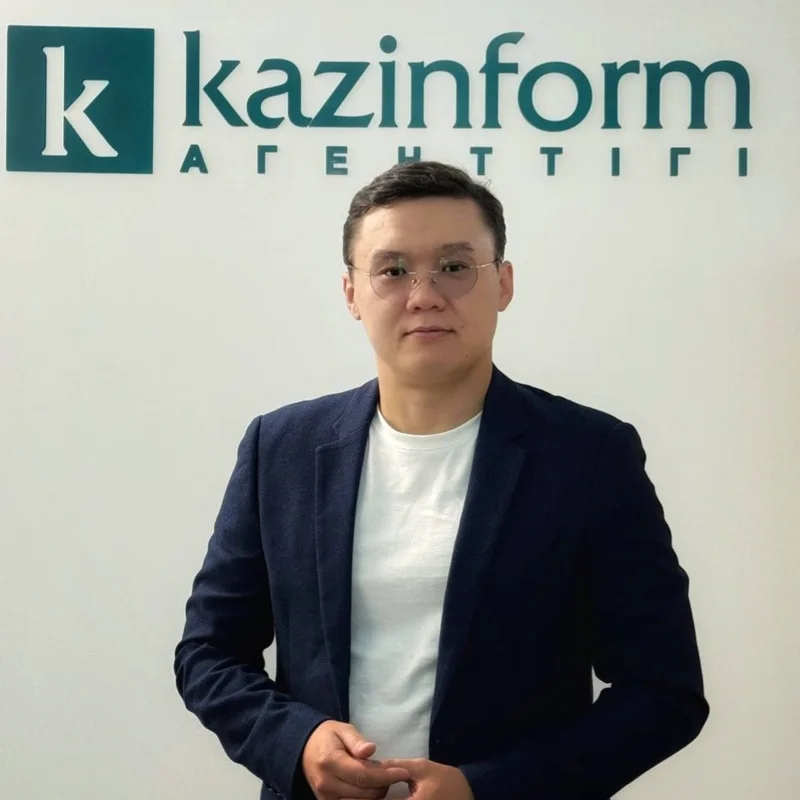

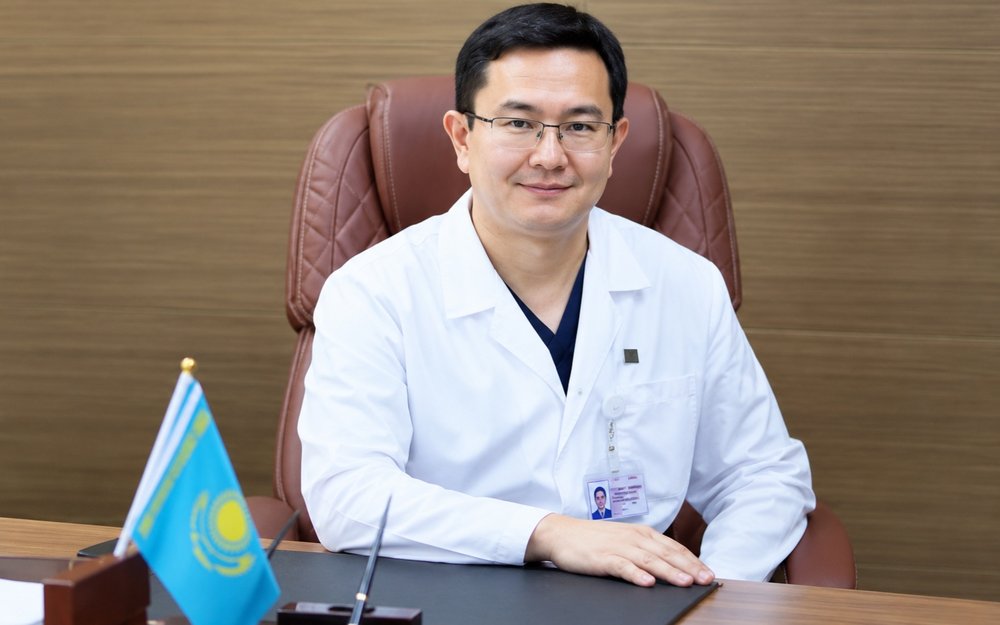
People of the Republic: The Kazakhstani neurosurgeon whose operations are watched by doctors from Paris and Tokyo
Mynzhylky Berdikhodzhayev has performed more than eight thousand brain operations, was among the first in Kazakhstan to introduce advanced stroke treatments, and has neurosurgeons from around the world watching his work live. He could have built a career in Germany but chose to return home.

Today, he not only saves patients but also helps develop high-tech medicine in the country’s regions, trains young doctors and shapes a new generation of Kazakhstani neurosurgeons. A Qazinform News Agency correspondent tells the story of a man for whom medicine has become a lifelong calling.
An operation impossible to forget
In 2010, a complication occurred during a complex operation on the brain’s blood vessels. A blood clot formed, blocking an artery. The surgeons tried to restore blood flow, but all their efforts were unsuccessful. The patient suffered an ischemic stroke. Ten days later, he died.
Mynzhylky Berdikhodzhayev still remembers this case. For the young neurosurgeon, the tragedy became both a difficult professional ordeal and the starting point in a search for new solutions. He wanted to understand why a clot could not be mechanically removed from a brain artery to restore blood supply before irreversible damage occurred. In search of an answer, he went abroad to study. He explored new technologies, observed leading specialists at work and refined his own skills.
Three years later, in 2013, Berdikhodzhayev performed Kazakhstan’s first mechanical thrombectomy, an operation that removes a blood clot from a brain vessel and restores blood flow. This technology subsequently developed within the country’s medical practice, opening up new treatment opportunities for patients with ischemic stroke. A tragic case the doctor could not forget gave rise to one of the most important areas of his professional work.
This reflects a defining quality of Mynzhylky Berdikhodzhayev: he strives to turn even the most difficult ordeals into experience that will later help others.
A choice that shaped his life
In the late 1990s, the medical profession in Kazakhstan was going through difficult times. Medical workers could go unpaid for months, hospitals lacked modern equipment, and the prospects for many specialties remained uncertain. It was then that a young man from Kyzylorda enrolled at Karaganda State Medical Academy.
There had been no doctors in his family before him. Mynzhylky became the first to choose a life in medicine. He was drawn to neurosurgery, one of the most complex fields of modern medicine. The opportunity to explore the mysteries of the human brain, the need to make decisions carrying great responsibility and the chance to help critically ill patients determined his choice.
He performed his first operation in 2004, at the age of 23. The patient had been admitted with a severe traumatic brain injury. The technical resources available at the time were far more limited than today, and much had to be done manually.
“I performed my first operation in 2004, when I was 23. The patient was admitted with a severe traumatic brain injury. There was very little technology then, and we did much of the work manually. The operation was successful, and I realized that this was what I would do for the rest of my life,” the neurosurgeon recalls.
He later continued his professional training at the S.M. Kirov Military Medical Academy in St. Petersburg under the Bolashak program, completed placements in Germany, South Korea and other countries, and mastered modern vascular and endovascular surgical techniques. Every opportunity for an international career seemed to be open to him. In 2011, while in Germany, Berdikhodzhayev received an offer to stay and work at a major foreign clinic.
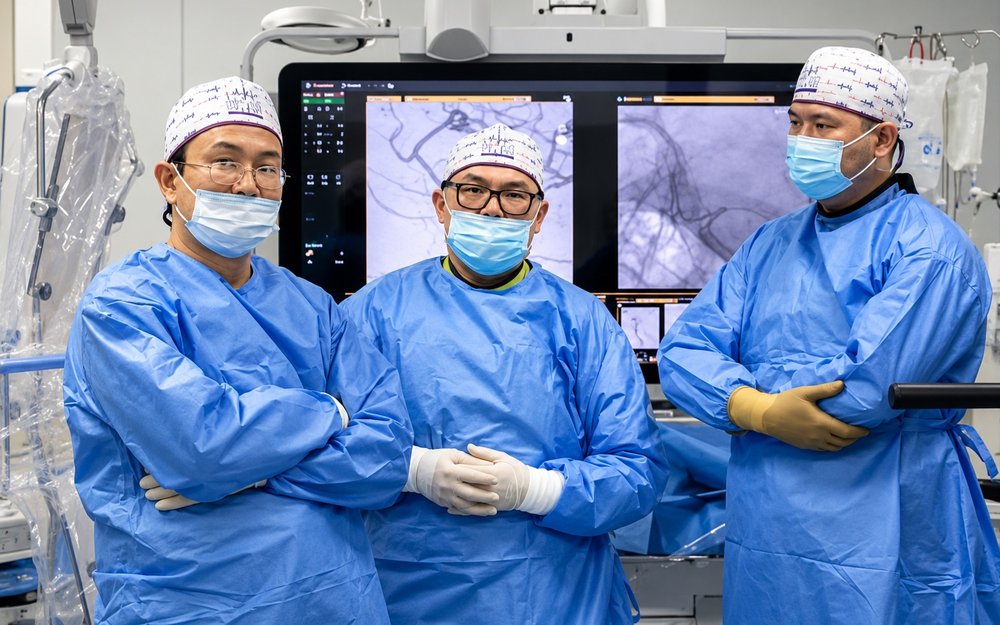
He faced a difficult choice: pursue a career in one of the world’s most advanced medical systems or return home, where many modern technologies had yet to be introduced. He chose Kazakhstan. His decision was linked to a simple but fundamental question: if all talented doctors, scientists and teachers leave the country, who will treat our parents and teach our children?
He returned home to apply his knowledge where it was particularly needed. More than 15 years have passed since then. During that time, his professional work has become part of the history of neurosurgery’s development in Kazakhstan.
Eight thousand operations and technologies that are changing medicine
Today, Mynzhylky Berdikhodzhayev is one of Kazakhstan’s leading specialists in vascular and endovascular neurosurgery. He heads the Neurosurgery Center at Almaty’s Central Clinical Hospital, serves as Deputy Director for Surgery at the Medical Center of the Presidential Administration of Affairs of the Republic of Kazakhstan, and participates in professional medical associations. He has performed more than eight thousand operations on the brain and blood vessels and carries out hundreds of high-tech procedures every year. Behind these figures, however, are thousands of individual lives rather than simply professional records.
Patients with brain aneurysms, vascular malformations, the consequences of strokes and other serious conditions have an opportunity to return to a full life thanks to technologies that were unavailable just a few decades ago. Endovascular neurosurgery has become one of Berdikhodzhayev’s main areas of work.
Its distinguishing feature is that complex procedures on the brain’s blood vessels can, in many cases, be performed without traditional open surgery. Special instruments are inserted into a blood vessel through a small puncture, allowing the surgeon to reach the affected area and provide the necessary treatment. Such operations require exceptional precision, a thorough understanding of anatomy and advanced technical expertise.
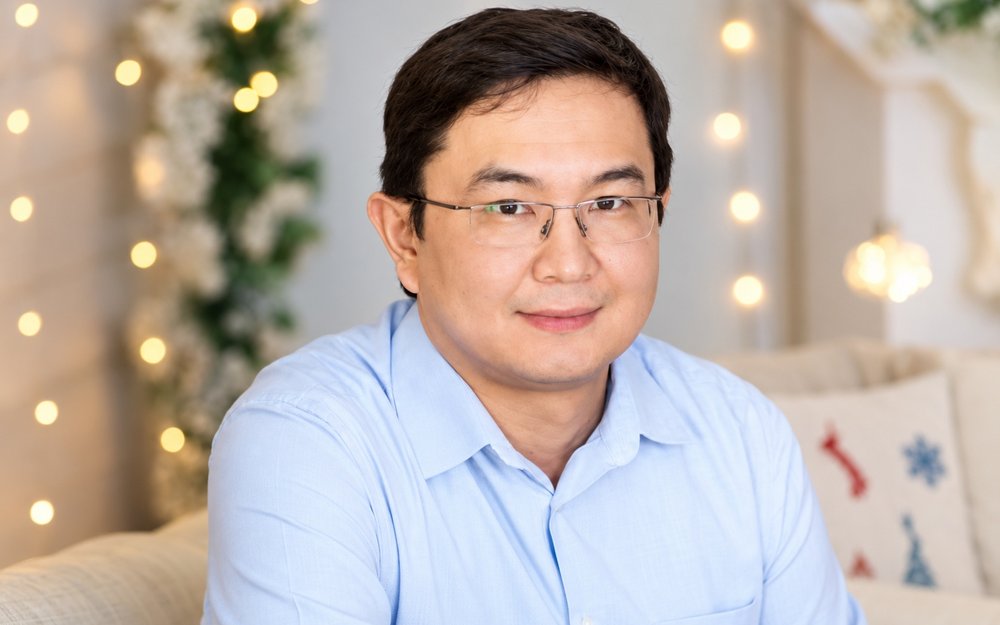
Berdikhodzhayev was among the first in the country to introduce modern endovascular treatments for brain aneurysms and arteriovenous malformations. But the main outcome of this work went beyond one specialist mastering complex technologies. Gradually, the new methods began to spread throughout the country’s medical practice, laying the foundation for the further development of an entire field of neurosurgery.
Making advanced medicine accessible to everyone
For Mynzhylky Berdikhodzhayev, the development of neurosurgery extends beyond the achievements of leading medical centers. He devotes a substantial part of his professional work to developing high-tech medical care in Kazakhstan’s regions.
For many years, the neurosurgeon has regularly visited regional medical institutions, where he performs highly complex operations on the brain’s blood vessels, consults patients and shares his experience with local specialists. His work includes high-tech procedures to treat aneurysms, arteriovenous malformations and vascular conditions that can cause strokes, including procedures to insert vascular stents and restore impaired blood flow.
For patients, these visits mean an opportunity to receive specialized care closer to home, without having to travel hundreds of kilometers to major medical centers. For regional doctors, they offer a chance to work alongside one of the country’s leading specialists, learn from his experience and master modern surgical approaches.
Berdikhodzhayev does more than demonstrate new technologies. He takes part in joint procedures, helps colleagues analyze complex clinical cases and improve their practical skills. In this way, knowledge accumulated at leading clinics around the world gradually becomes part of everyday practice in Kazakhstan’s medical institutions. His professional experience is also sought after abroad. Foreign colleagues invite him to participate in masterclasses, joint operations and international educational programs.
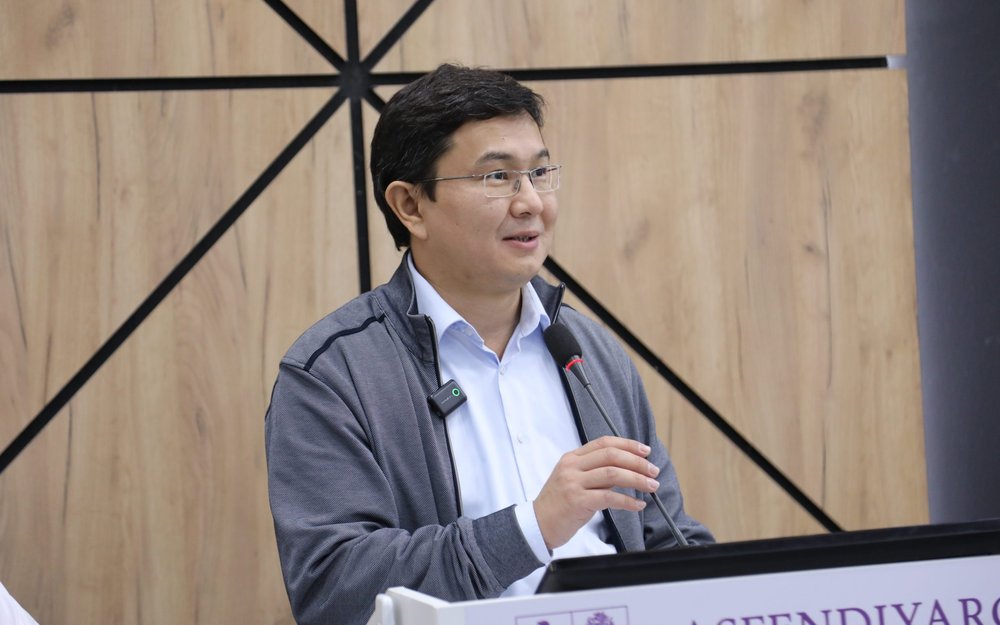
Yet he considers the development of Kazakhstan’s own school of neurosurgery an equally important outcome of his work: creating an environment in which modern treatments become accessible to an increasing number of patients. For him, it matters not only to save someone today but also to pass on knowledge to those who will save lives tomorrow.
When Kazakhstani surgeons train foreign colleagues
Today, Mynzhylky Berdikhodzhayev’s name is well known in the international professional community. He regularly participates in scientific conferences, performs demonstration operations and conducts masterclasses, exchanging experience with colleagues from different countries. In June 2025, two complex operations on the brain’s blood vessels were performed under his guidance at an international conference in Paris. One patient had an arteriovenous malformation with bleeding, while the other had an aneurysm and severe narrowing of the arteries.
Leading endovascular neurosurgery specialists watched the procedures live. Both operations were completed successfully.
For Berdikhodzhayev, such events are primarily an opportunity for professional exchange, discussion of complex clinical decisions and demonstrations of technologies used in Kazakhstan. He shares his knowledge beyond international conferences as well. In 2014, the neurosurgeon began performing operations with video broadcasts for the professional community. His YouTube channel contains hundreds of recordings of surgical procedures with commentary in English.
The operations are available to doctors from different countries, who can observe how complex procedures are performed, study clinical approaches and discuss unconventional solutions.
“We started this to exchange experience. After one broadcast, colleagues from Paris and Tokyo contacted me. They wanted to come and see how our team works,” Berdikhodzhayev told students at Kazakh National Medical University.
In this way, an operating room in Kazakhstan became both a place for treating patients and an international educational platform.
Seven operations in one night and life outside the operating room
Behind the neurosurgeon’s professional achievements lies demanding work that patients rarely see. There are days when he must perform several highly complex operations in succession. Sometimes, emergency procedures continue throughout the night. Every operation requires complete concentration, the utmost precision and the ability to make quick decisions. Yet Berdikhodzhayev admits that he does not regard his work solely as a demanding obligation.
“The most wonderful thing is when your work becomes your hobby. I never get tired of operating. On the contrary, when I see the results of the procedures I have performed, I feel a surge of energy,” he told students.
There are days when a flight between cities is his only opportunity to get some rest. Even with such a schedule, however, he tries to find time for his family.
“There are days when I only get enough sleep on a plane. But at home, my wife’s cooking, which I love, and my children’s hugs restore my strength,” the neurosurgeon admitted.
He says the profession requires both advanced qualifications and a willingness to devote a substantial part of one’s life to it. Emergency neurosurgery does not follow a normal schedule. If a patient needs urgent help, the doctor must be ready to act regardless of the time of day. At the same time, Berdikhodzhayev stresses that even years of experience do not justify stopping one’s professional development.
He continues to study new technologies, participate in international educational events and analyze complex clinical cases. In neurosurgery, it is impossible to complete one’s training once and assume that one knows everything.
One meeting that changed a young doctor’s life
Perhaps one of the most revealing stories of Mynzhylky Berdikhodzhayev’s influence on the younger generation concerns Shayakhmet Makhanbetkhan, a graduate of Asfendiyarov Kazakh National Medical University.
Several years ago, as a sixth-year student, Shayakhmet was preparing to become a surgeon but had not yet chosen a specific specialty. One day, the university’s student community organized a meeting with Mynzhylky Berdikhodzhayev. The renowned neurosurgeon spoke about his profession, complex operations and the possibilities of modern medicine. For one member of the audience, the meeting proved life-changing. Shayakhmet became so interested in neurosurgery that he decided to change his professional plans and devote himself to the specialty. He subsequently trained in Moscow, completed placements in the United States and Japan, and mastered modern minimally invasive surgical techniques.
Today, Shayakhmet Makhanbetkhan himself takes part in complex brain and spinal operations, helping patients with tumors, vascular conditions and severe pain syndromes. Mynzhylky Berdikhodzhayev remains among his mentors.
“I respect them not only as neurosurgeons but also as leaders in this field. They combine clinical practice with teaching, demonstrate their expertise and share their knowledge so that the field develops as a whole,” Shayakhmet says of his teachers.
This is how the power of professional mentorship reveals itself. One meeting in a university lecture hall can influence a young person’s choice. Years later, that person is saving patients, applying new technologies and continuing the work of their teachers.
“Medicine is a marathon, not a sprint”
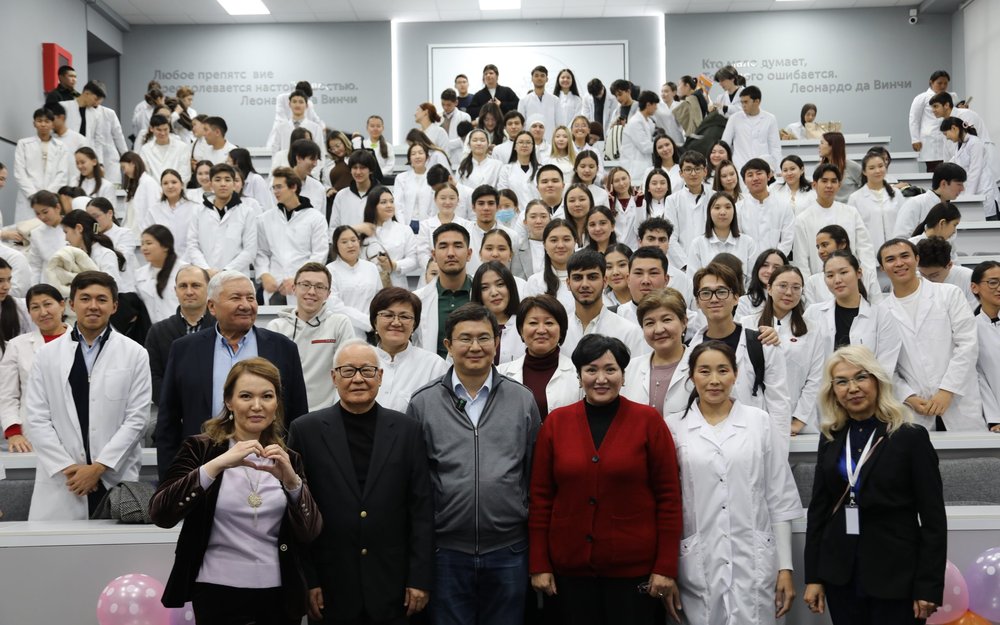
Speaking with students and young doctors holds a special place in Berdikhodzhayev’s life. At one motivational meeting at Kazakh National Medical University, future doctors asked him about his first operations, professional fears, failures and the challenges of his work. The neurosurgeon did not try to present his career as a story of uninterrupted success.
Instead, he recalled his own mistakes, years of intensive study and moments when he doubted his abilities.
As a young man, he was criticized for having a “heavy hand” and had to practice his surgical skills repeatedly. He told students how he learned to tie surgical knots, spent his free time reading medical books and gradually mastered a profession in which every detail matters.
“I never went to nightclubs, did not know what discos were, and spent all my free time reading books. But one day I realized that this was my life, and I had chosen it consciously,” the doctor recalled.
He believes that, for a young specialist, patience, professional discipline and the ability to maintain respect for patients matter more than pursuing quick success.
“Do not be afraid of mistakes. In the first few months, you are still learning, and that is normal. The main things are patience and respect for life. To become a good surgeon, you must be prepared to sacrifice most of your personal interests. You also need to be bold, brave and ready to make quick decisions,” Berdikhodzhayev said.
After the meeting, students lingered for a long time. They asked questions, thanked the doctor, took photographs and wrote down his advice. One piece of advice captures his attitude toward the profession particularly well: “Medicine is a marathon, not a sprint. The main things are patience and respect for life.”
The man who chose to stay
Mynzhylky Berdikhodzhayev is a participant in the national project “100 New Faces of Kazakhstan,” a recipient of the Altyn Skalpel professional award, and a doctor whose achievements have been recognized at home and abroad.
But his story is about more than awards and professional titles. It includes an important choice once made by a young specialist who had an opportunity to pursue a career in Europe.
He chose to return to Kazakhstan.
Today, that decision has led to thousands of operations, the introduction of medical technologies, visits to regional hospitals, joint work with colleagues and young doctors who call him their mentor.
He continues to operate, learn, pass on knowledge and contribute to the development of neurosurgery in Kazakhstan. Every time his students independently perform a complex operation, or a patient in a region receives care that would previously have required traveling to another city, the far-reaching effects of a single professional choice become clear.
Mynzhylky Berdikhodzhayev once asked himself: who will treat our parents if all the specialists leave? Perhaps his entire life since then has become the answer. A doctor’s true achievement lies not only in the lives they save but also in the knowledge they leave behind, the people they inspire and the opportunities they create for medicine in their country.
Earlier, Qazinform News Agency featured the story of powerlifter David Degtyarev, a two-time Paralympic champion and Asian Para Games winner, highlighting his motivation and sporting philosophy.