Human inspiration remains vital in the age of AI, says Crimson Education CEO
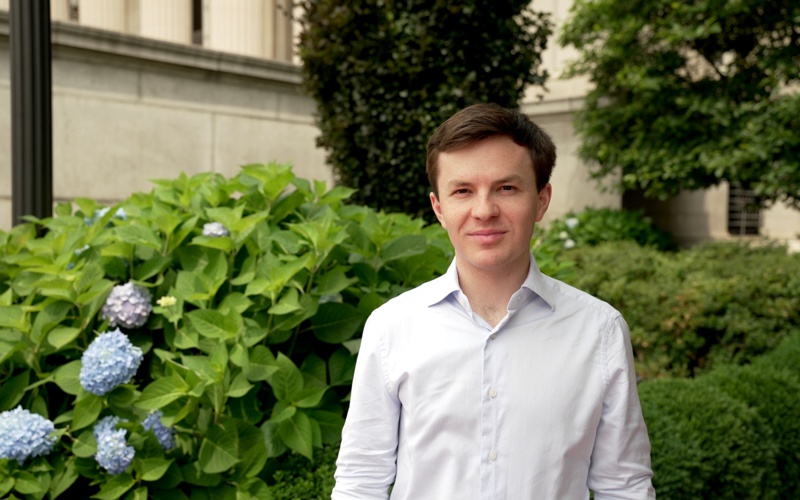
Artificial intelligence can help students prepare for exams and university admissions, but the motivation to pursue ambitious goals often comes from a person they can relate to, according to Dr. Jamie Beaton, CEO and Co-Founder of Crimson Education. In an exclusive interview with Qazinform News Agency, he discusses the challenges facing applicants from Kazakhstan and Central Asia, the potential of international university campuses in Kazakhstan, and what it takes to build a company beyond its home market.

Artificial intelligence is rapidly changing the way students approach learning and university admissions. At Crimson Education, you use AI alongside human expertise and the analysis of large amounts of data. Where do you see the greatest potential for AI to transform education, and in which areas will human expertise remain indispensable?
The most powerful aspect of human expertise is the ability to trigger inspiration and motivation in a young person. Being inspired is a deeply human experience. Often you meet a mentor who you can relate to who has achieved great things. In my case, I met a student called Ben Kornfeld who had gotten into Yale. Hearing that someone from my school and my country had been able to get into a global university made it possible for me to believe I could do it as well. AI and broader technology offerings historically has struggled to drive action and inspiration in students, but much of what motivates a student to be exceptional is being inspired.
AI can transform many aspects of the delivery of content and the preparation for academics. It can generate practice questions tailored to your ability level and stage so you can be as efficient as possible in every hour of studying. Ironically, with all the great technology we have, students today are roughly 1 year behind the academic ability of students 20 years ago. The biggest risk is that AI makes a highly distracted world full of addictive social media algorithms, curated content and other entertaining experiences that distract you from the hard work of education excellence.
Kazakhstan is seeing a growing generation of ambitious students who aspire to study at leading universities around the world. Based on your experience, what are the main challenges students from Kazakhstan and Central Asia face when applying to top universities worldwide?
Students from Kazakhstan and Central Asia face challenges on a range of fronts. They often need to develop their skills in English and enhance them across activities like debating and Model United Nations. They have less familiarity with global extracurricular competitions, summer programs and honors than applicants from traditional study abroad hubs like Singapore and Korea. There is also limited knowledge of the unique quirks and 'personalities' of the top universities to inform personalized admissions strategies. In saying this, applicants generally have strong academic foundations and can conquer all the above challenges with strong admission guidance.
If AI becomes accessible to every university applicant, will the very concept of a “competitive advantage” in admissions disappear? What will truly distinguish a strong candidate from the rest in the future, and will algorithms be able to identify those qualities?
AI is already accessible to every university applicant and it doesn't dramatically change admissions for most students. This is because most of the hard work is execution. Everyone knows you should study for the SAT but how many people have the patience to spend 150 hours perfecting their score. People know they should try and complete research papers, but after a hard day at school, how many people want to log in and begin developing novel insights on this "extra assignment"? Ultimately, college admissions tests agency, willpower and capacity to keep challenging and pushing yourself to new frontiers.
Strong candidates will show unusual academic advancement, success in external competitions, leadership initiatives, peer recognition and creative, insightful, humanistic essays that capture attention in a sea of AI slop. Algorithms will definitely be able to play a role in identifying top talent. The creation of a strong admissions profile is a human growth journey but the evaluation of it doesn't need to be. In saying this, universities will be slow and resistant to changing their human admissions process.
Over the past three and a half years, 40 branches of leading universities from around the world have opened in Kazakhstan, while six of them have decided to build their own campuses, including Coventry University, Cardiff University, Queen’s University Belfast, City University of Hong Kong, Université de Lorraine and Woosong University and etc. Based on your experience of building a global education company, do you think the arrival of universities of this caliber can help Kazakhstan attract more international students, researchers and entrepreneurs?
Yes, global universities opened up in Kazakhstan are a strong endorsement of the country's economic strength and perceived future growth opportunities. Similar expansion initiatives across the Middle East like New York University Abu Dhabi have indeed attracted global students to new hubs they wouldn't have otherwise had exposure to. Education is a critical part of someone's life which often results in the formation of strong social ties. Many of my groomsmen at my wedding were friends I made in my undergraduate degree at Harvard. This "social glue" means that foreign students are more likely to continue living in Kazakhstan or have a permanent connection that sees them regularly returning. Research and entrepreneurship networks are essentially local social networks and they are often anchored by a good university.
You founded Crimson Education at a young age and turned it into a global company. In your view, what is the key difference between having a promising startup idea and building a company capable of scaling internationally? And what advice would you give young entrepreneurs in Kazakhstan who want to take their startups beyond the domestic market?
In the age of AI, ideas are almost worthless because it is so easy to generate many possible business concepts. Execution is almost everything. Focus on speed and velocity of execution. We expanded Crimson to more than 15 countries within the first 3 years and as New Zealanders pushed into markets like Thailand and Russia that were quite unusual to enter for entrepreneurs from our part of the world. Scaling internationally is important but keep in mind that some huge businesses get built focusing only on a couple of major markets and excelling.
Think about businesses like Grab in Singapore which was able to fend off Uber and remain the locally dominant ride-sharing option. For Kazakhstan entrepreneurs, one good thing is many American companies do not aggressively enter the CIS region and so there is plenty of capacity to build local champions that have a strong hold across the region. This can make for an interesting regional acquisition target for a global company or a source of cash flow that can fund international expansion.
Earlier, Qazinform News Agency reported that OpenAI had introduced GPT-6 Sol and GPT-6 Luna, two lower-cost models designed to make its latest AI capabilities available for a wider range of professional and everyday uses.