Events, people and phenomena that changed the world in 2025
Kazinform sums up the results of 2025 and launches a new project - a ranking of individuals, events and trends that had the greatest impact on the world. The assessments were formed on the basis of opinions from international and Kazakhstani experts, a Qazinform News Agency correspondent reports.

Person of the Year: Donald Trump
According to the majority of experts, the 47th President of the United States became the main newsmaker of the year, around whom the international agenda was built in one way or another. At the same time, the title of “Person of the Year” is not always about achievements with a positive sign, but more often about influence, scale and the impossibility of being ignored.
As political analysts note, Donald Trump consistently positioned himself as the chief peacemaker, creating the image of an unpredictable politician who keeps the entire world on edge. The US president spoke about peace, negotiations and his exceptional role, and did not even hide his claims to the Nobel Peace Prize.
“How does he see himself? A lone hero. A lonely cowboy from the Wild West transplanted into the 21st century to restore order in a world gone mad. The image of a ‘tough guy’ is Trump’s political capital. His partners on the world stage are puzzled: what if, having taken a strong offense at someone, he suddenly decides to press the nuclear button? Trump is comfortable with such a reputation: let them be nervous - they will be more compliant,” reasons Russian TV host, writer and historian Leonid Mlechin.
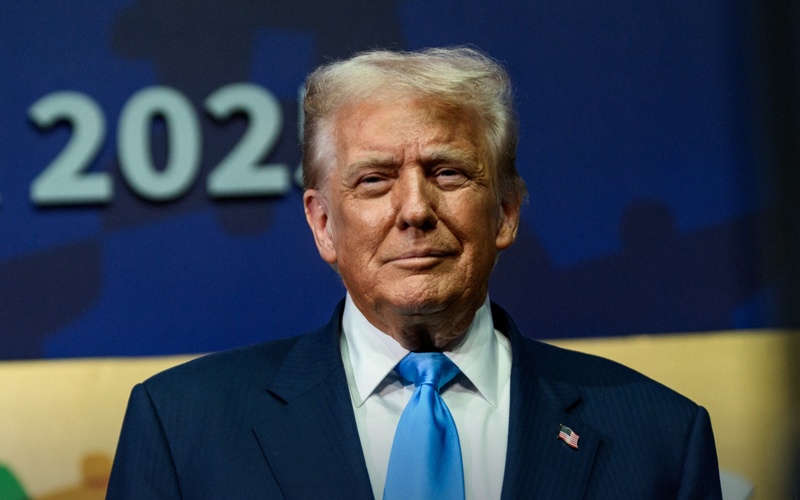
Undoubtedly, Donald Trump’s inauguration in January 2025 became the starting point for numerous important political processes.
“First, the United States remains the most influential country in the world. Second, Donald Trump himself is an extremely flamboyant and media-driven figure. And third, global events of recent years objectively attract heightened attention from the world’s media. It is precisely the combination of these factors that made him the central figure of the global agenda,” explained political scientist Gaziz Abishev.
Upon assuming office, Donald Trump immediately launched a large-scale tariff war. These measures affected not only economic and geopolitical rivals such as China, but also US allies. At the same time, he actively participated in attempts to resolve conflicts in the Middle East and Ukraine. The president continues this course today.
“His return undoubtedly changes the international system, alters Europe’s approaches to security and attitudes toward Russia, and forces China to reconsider its long-term strategy of economic development in the West. The understanding of free trade, protectionism, the role of America in the international economic system and foreign policy is also changing,” commented Wesley Alexander Hill, Deputy Director of the Energy, Economic Growth and Security Program at the International Tax and Investment Center (USA).
The American expert particularly highlighted Trump’s negotiations with NATO at a security conference held several months after his inauguration, when collective security guarantees first became the subject of tough political bargaining.
Trump also became one of the key initiators of the escalation of confrontation with Venezuela, including in the waters of the Caribbean Sea. As a result, he emerged as a central figure around whom much of the global agenda was built.
Observers note that power-based methods of pressure are returning to international relations, including elements of so-called “gunboat diplomacy”. What was considered characteristic of global politics before the 20th century - realpolitik and the demonstration of force - is once again being actively used in global politics and economics.
“Pragmatism comes to the forefront. National interest is once again declared the highest value, and it is precisely this that sets the rules of the game for at least the next few years. We observe the same logic in the economy,” said Sanat Kushkumbayev, Chief Research Fellow at the Kazakhstan Institute for Strategic Studies under the President of the Republic of Kazakhstan.
Trump openly demonstrated his adherence to an isolationist course, focusing primarily on the internal development of the United States, where economic and trade priorities increasingly replace social and political norms.
“We are talking about an approach in which each state acts on its own, solves its problems independently and does not rely on external players. This is accompanied by a certain de-ideologization of international politics,” commented Tair Nigmanov.
This approach is most evident in the economy: Trump introduced tariffs, brought production back to the United States and protected the domestic market, positioning himself against globalization and free trade.
“His trade war, in essence, turned out to be successful. Trump gained tangible benefits. The ‘horror’ that many expected because of the tariffs never materialized. Although his actions were widely considered unbalanced, the facts show the opposite - he achieved many of his goals without serious losses for the US economy,” said analyst Andrey Chebotarev.
Experts explain that globalism, which dominated the world for the past three decades, blurred boundaries between states and cultures. Symbols of this process included the internet, global brands and universal consumption models. Notably, it was the United States - until recently a key engine of globalization - that began reversing this trend after Trump’s rise to power.
“His policy is built on protecting his own cultural code, a cautious attitude toward foreign cultures and strict restrictions on migration. Moreover, he criticizes not only US migration policy, but also open borders in Europe, considering them excessively liberal,” added Tair Nigmanov.
Thus, the decisions of the old-new US president reflect a broader trend - growing demand for isolationist and nationalist policies, which experts say is no longer unique to the United States.
“Donald Trump has changed the rules of the game very significantly, not only in economic trade but also in politics. The events unfolding are transforming the familiar logic of international processes and directly affecting the global system,” believes Kazakhstani historian and political scientist Sultan Akimbekov.
Event of the Year: Kazakhstan’s success in new foreign policy realities
Confirmation of the isolationist trend in global politics was the adoption of a new US National Security Strategy, which significantly affected the global political configuration.
“Everything that previously seemed impossible became possible, including the imposition of US sanctions against the European Union or its key countries,” noted economist Olzhas Khudaibergenov.
One of the key trends of the year was a shift in political communication. According to economist Eldar Shamsutdinov, public statements are increasingly used as instruments of pressure, while harsh rhetoric has become commonplace.
“Markets began reacting not so much to decisions as to signals and rhetoric. States started incorporating scenarios of informational shocks into their strategies. Society adapted to a constant state of uncertainty, where a politician’s words can be no less significant than a signed document,” he said.
Experts note that trade wars effectively marked the end of the long period of globalization dominance.
“Behavior and communication have changed. Declarations and slogans have faded into the background, while analytical frameworks have come to the fore,” said Taisiya Marmontova, Head of the Institute for the Study of Regional Integration.
Against this backdrop, Kazakhstan steadily increased its foreign policy activity throughout the year, participating in Central Asia+ format summits with China, Japan, Russia, the United States and the European Union, as well as in SCO meetings and regional consultations.
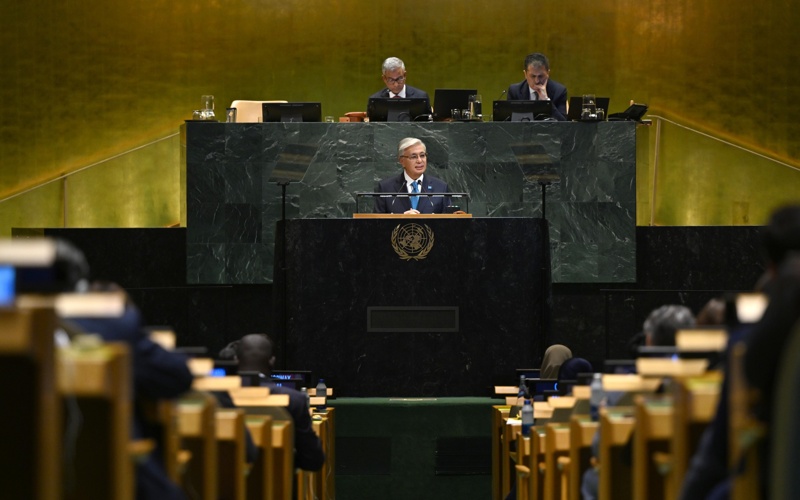
Experts particularly highlight Kazakhstan’s participation in the presidential “C5+1” summit in Washington as confirmation of its multi-vector foreign policy.

According to analysts, under President Kassym-Jomart Tokayev, Kazakhstan has strengthened its role as a pillar of stability and a platform for dialogue in the region.
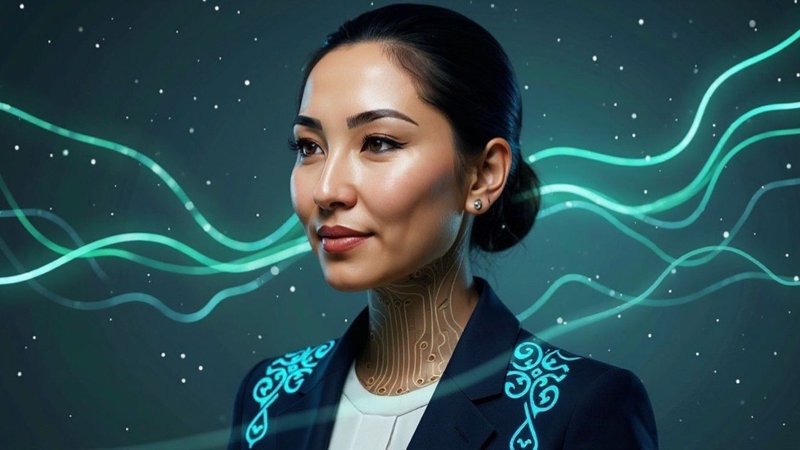
Phenomenon of the Year: AI integrated into the legal system
Significant changes also occurred in information technology, primarily driven by artificial intelligence. AI increasingly penetrated areas previously considered exclusively human, including public administration and jurisprudence.
Electronic notaries, courts and other digital solutions are gradually becoming standard practice. AI’s influence is now comparable in scale to the invention of the internet or mobile communications, experts say.
Artificial intelligence models such as ChatGPT are shaping technological and social trends, while efforts to regulate AI at the institutional level are intensifying worldwide. In Kazakhstan, this resulted in the adoption of a dedicated Law “On Artificial Intelligence”.
Experts note that 2025 was not a year of reforms, but a year of stabilizing complex systems.
“This year became a turning point because AI entered public administration, education, defense and medicine. States moved from ethical debates to legal and economic frameworks,” concluded Taisiya Marmontova.
Summarizing expert assessments, the Ranking of the Year project delivers an authoritative summary of the outgoing political and economic period, outlining its key trends and reference points. The project is based on the opinions of around 30 Kazakhstani and international experts and will become an annual tradition of Kazinform.
Earlier, Qazinform News Agency shared a review of the global scientific landscape in 2025.