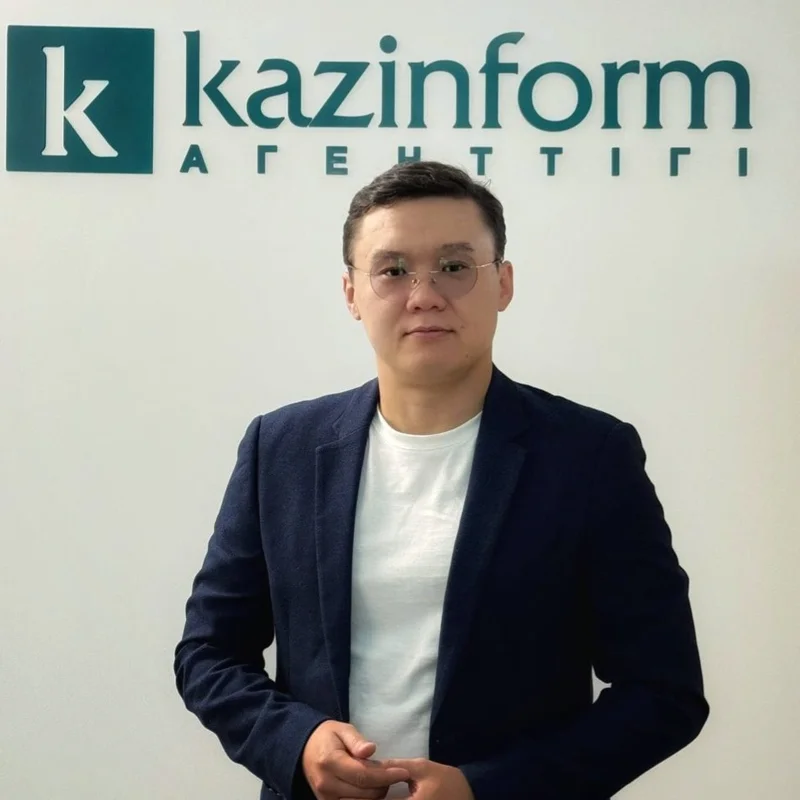
Civil society is a genuine partner in Kazakhstan’s sustainable development, says UN Resident Coordinator
Civil society's role in advancing the Sustainable Development Goals, Kazakhstan's progress towards the SDGs and cooperation between the United Nations and non-governmental organizations were among the key topics discussed by UN Resident Coordinator in Kazakhstan Sarangoo Radnaaragchaa in an exclusive interview with Qazinform News Agency.

She highlighted the growing involvement of civil society in decision-making, outlined promising areas for further cooperation and shared examples of how civic initiatives have contributed to systemic changes in Kazakhstan.
– Civil society plays an important role in achieving the Sustainable Development Goals. How does the UN in Kazakhstan currently build cooperation with non-governmental organizations, youth associations, the expert community and volunteers?
Civil society is one of the key partners in achieving the Sustainable Development Goals. First and foremost, civil society organizations are involved from the very beginning of the development support process. They influence the identification of priorities and the UN's work plans in Kazakhstan, for example, the preparation of the UN Cooperation Framework for 2026-2030, the common work plan of the entire UN family in Kazakhstan. Through their work on the ground, NGOs help ensure that the voices of those who are often left unheard, especially vulnerable groups, are heard.
Together, we also implement specific, practical projects: we develop recommendations and promote changes across various policy sectors, conduct research and training, and provide support to different groups, such as refugees, migrants, rural women, young people and others who need assistance. For example, the United Nations Population Fund (UNFPA) cooperates with the Shyrak Association of Women with Disabilities on inclusion, reproductive health and expanding the participation of persons with disabilities. UNHCR cooperates with a number of civil society organizations on the protection of refugees, asylum-seekers and stateless persons, ranging from legal and social support, access to services and monitoring respect for rights to advocacy and efforts to improve protection mechanisms. In turn, UNOPS, with the support of the European Union, implements the "Civil Society Facility for Central Asia" project, aimed at strengthening the capacity of civil society organizations and expanding their participation in decision-making processes.
Finally, NGOs help us be more open and accountable: they participate in monitoring and evaluating the results of our work, provide feedback and help us see where we can do better.
Civil society is part of the UN decision-making mechanism. Some UN agencies have civil society advisory councils, while the UN Country Team has a Youth Advisory Council. The UN is like a large orchestra of agencies working in different areas: health, education, agriculture, environmental protection, gender equality, human rights, crime prevention and much more. That is why we cooperate with dozens of organizations from a wide range of fields.
Volunteering is a separate area of cooperation: since 2020, UNICEF, together with the National Volunteer Network of Kazakhstan, has engaged more than 10,000 volunteers, reaching more than 100,000 children and parents in areas such as adolescent mental well-being, anti-bullying, online child safety, education, climate change and disaster risk reduction.
In short, civil society for us is not simply a recipient of assistance, but a genuine partner. It is not an object of our work, but an active participant in it. Together, we are working to bring the Sustainable Development Goals closer to people and ensure that they bring real changes to their lives.
– Which areas of this partnership do you consider the most promising? What opportunities are available for civil society representatives to participate in the development and implementation of UN initiatives in Kazakhstan? What needs to be done to make this cooperation even broader and more effective?
I believe that all areas of cooperation are promising, both in terms of the issues themselves and the role of civil society. These include, for example, digitalization, environmental protection, social protection, human rights, work with young people and support for vulnerable groups. But it is important to emphasize that targeted assistance without systemic change rarely produces long-term results.
Just recently, a roundtable was held with the participation of more than 70 representatives of civil society, organized by the Ministry of Culture and Information of the Republic of Kazakhstan and other partners, with our support. We discussed progress on the Sustainable Development Goals and jointly prepared recommendations. For example, one of them concerns the inclusion of civil society in the SDG Coordination Council. These recommendations will be submitted to the Government. It is precisely such systemic changes, even if they require more time and are not always immediately visible, that create the conditions for sustainable improvements in people's lives.
It is important to note that the Government of Kazakhstan is already doing a great deal to support civil society. There are public councils, mechanisms for consultations on draft legislation, the state social order and other forms of cooperation. Therefore, opportunities for participation do exist. Our common task is to expand these opportunities, involve organizations at earlier stages of developing solutions, and make cooperation more practical and results-oriented.
Of course, civil society organizations also face challenges. These often include unstable funding, staff shortages and heavy workloads for their teams. At the same time, this sector is made up of people who sincerely believe in what they do and help others every day. Therefore, it is important to continue strengthening their capacity, create platforms for continuous dialogue, support the exchange of experience and, where possible, provide more predictable resources for long-term work. Civil society organizations can and should be entrusted with tasks related to services for vulnerable groups, as well as with the development of sectoral policies.
– Looking at international recommendations on the SDGs, they are often formulated on a very broad scale. What is the most successful and practically applicable civil society initiative in Kazakhstan that the UN could highlight as an example in recent years? Have there been cases when an idea proposed by local activists turned into a specific government decision or law?
It would be wrong for me to single out just one example or one organization because there are many such initiatives in Kazakhstan. More than 20,000 civil society organizations operate in the country. They support children with serious illnesses, protect the Aral Sea and the Caspian Sea, help women affected by domestic violence, campaign against tobacco smoking and address many other important issues. I know of several cases where the ideas of civil society organizations were ultimately reflected in legislation. For example, the law criminalizing domestic violence, which many specialized organizations had advocated for over the course of many years. The same can be said about the ban on vapes and other decisions that were made possible to a large extent thanks to the persistent efforts of civil society.
Another good example of systemic partnership is the European Union and United Nations regional Spotlight Initiative to prevent violence against women and girls. As part of the initiative, a regional network was created, bringing together more than 500 civil society representatives across Central Asia; more than 4,000 activists received training, while grassroots organizations received grant support to work directly with communities.
– Kazakhstan recently ranked 67th out of 169 countries in the global SDG Index 2026. How do you assess Kazakhstan's progress in achieving the SDGs?
I assess Kazakhstan's progress in achieving the SDGs positively. In the SDG Index, Kazakhstan moved up three positions compared with last year, from 70th to 67th place among 169 countries. Positive dynamics are observed across six SDGs, including health, water supply and sanitation, decent employment and economic growth, infrastructure and innovation, sustainable urban development, and partnerships for sustainable development.
At the same time, it is important to understand that the SDG Index is not part of the United Nations' official SDG monitoring system. In other words, the UN does not compile this ranking. The authors of the ranking, an independent group of experts, use both official SDG indicators and additional data sources. Therefore, it should be regarded as a useful international benchmark, but not as a comprehensive assessment of progress towards all the SDGs.
According to the SDG Index, Kazakhstan is among the countries demonstrating a very high level of support for multilateralism within the UN. This reflects the consistent position of the President of Kazakhstan in support of the UN and multilateral cooperation, backed by concrete initiatives, including the establishment of the UN Regional Centre for the Sustainable Development Goals for Central Asia and Afghanistan, as well as the Asia-Pacific Centre for Digital Solutions for Sustainable Development in Almaty within ESCAP. And this is only part of Kazakhstan's broader contribution to strengthening multilateral cooperation.
We also welcome the Government's decision to prepare an annual national report on monitoring and evaluating progress towards the SDGs. Such a mechanism will provide a more comprehensive picture of progress, taking national priorities into account, and will make it possible to identify in a timely manner the areas requiring additional attention. The UN Country Team stands ready to provide comprehensive expert support in preparing this report.
Earlier in March, Qazinform News Agency reported that Kazakhstan’s Foreign Ministry hosted a meeting of the Steering Committee of the United Nations Sustainable Development Cooperation Framework for 2026-2030.