
Bridging climate ambition and capital gaps — a new phase in global climate action
Mobilizing private investment and scaling innovation are becoming central to closing the gap between climate ambition and real-world implementation, as Valerie Hickey, Director for Environment at the World Bank Group, outlined in an exclusive interview with Qazinform News Agency, highlighting both the progress achieved and the structural challenges that continue to shape global climate efforts, particularly for developing economies.

The World Bank has been scaling up climate financing in recent years. In your view, what are the biggest gaps that still remain in global climate action, particularly for developing countries?
The WBG delivered $50.8 billion in development finance with climate co-benefits under the shared Multilateral Development Bank methodology in fiscal year 2025 (FY25)—which covers July 1, 2024, to June 30, 2025. These efforts are focused on supporting countries to boost economic growth, lift people out of poverty, and create jobs while facing droughts, storms, and floods that are hitting harder and more often. On the ground, this has resulted in 136 million people with stronger climate resilience and 208 million with improved food security. WBG interventions are on track to cut 331 million tons of CO2 equivalent per year.
But this is still far from what is needed. The good news is that the resources exist in global capital markets; the challenge we are trying to solve is in mobilizing and channeling them. Private sector involvement is essential - but it doesn’t happen on its own. Governments must invest in critical infrastructure, adopt business-friendly policies, and strengthen institutions that create investment opportunities. Financial instruments that help blend different sources of capital and derisk private capital must be scaled up. That’s why in FY25, IFC delivered $8.1 billion in climate finance and mobilized a further $16.5 billion from other sources to help derisk opportunities for the private sector. In fact, since 2021, the World Bank Group has mobilized more than $52 billion in private climate finance.
Many countries are accelerating their energy transition, yet fossil fuels still dominate in several regions. What practical pathways do you see for countries to balance energy security with decarbonization goals?
Worldwide, around 666 million people are without electricity, and millions more live without accessible, reliable, and affordable energy. At the World Bank Group, we take an all-of-the-above approach to energy as a key enabler of development - enabling people and businesses to use affordable and reliable energy access to create jobs, increase incomes, and build human capital.
There is no one way to do this. But a key step is for governments to design and implement a clear, long-term regulatory framework that signals to investors where the country is headed. This includes, for example, improving the governance of utilities and repurposing energy subsidies that are poorly targeted or underachieving, or are simply too costly. Without that certainty, private capital will not flow; and the public purse cannot pick up the cost of energy access by itself.
Next comes strengthening the foundations of the energy system, including through grid stabilization and last-mile connectivity to ensure no family or community is left behind. It’s also critical to ensure that human capital is built to meet the needs of the labor market that is central to deploying new climate and energy technologies. This includes supporting communities in coal-dependent regions and protecting workers that have been the bedrock of this sector, as the demand for coal is displaced and labor market demands shift.
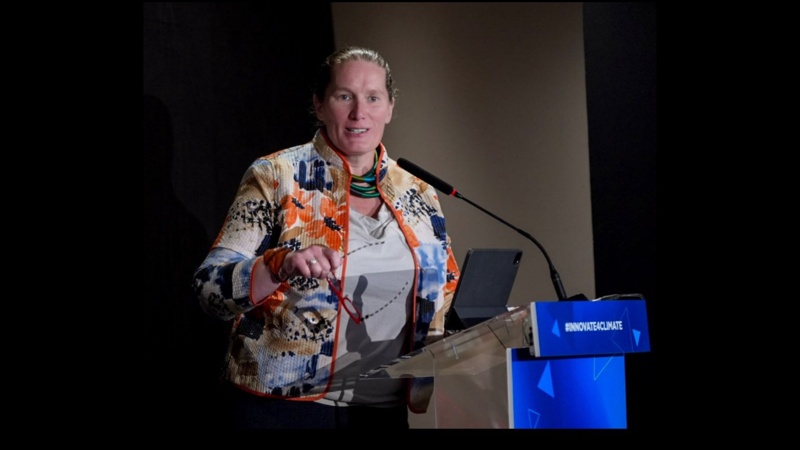
Kazakhstan has set ambitious targets for carbon neutrality and is actively developing its renewable energy sector. How do you assess the country's progress so far, and what role can it play as a regional leader in Central Asia's green transition?
Kazakhstan’s 2060 carbon neutrality strategy is an important commitment. The country has also put in place important regulatory tools such as Central Asia's first Emissions Trading Scheme, feed-in tariffs, and renewable energy auctions since 2018.
With the right enabling environment, Kazakhstan could serve as a regional demonstration of how a fossil-fuel-dependent economy can diversify employment, attract investment, and build new industries by adding new technologies to its energy mix. The World Bank's Country Climate and Development Report for Kazakhstan concluded that decarbonizing the energy system could increase GDP by 1.3% by 2040 relative to the baseline — making the case that climate action and economic growth go hand-in-hand.
What specific opportunities do you see for Kazakhstan to attract more climate investment, particularly in areas such as green hydrogen, sustainable infrastructure, or nature-based solutions?
Natural resources provide the foundational infrastructure to increase GDP, prosperity, and well-being. That’s why the World Bank Group is supporting countries, communities, and companies to use nature to drive a nail into the coffin of poverty and to unlock a better future for all.
In Kazakhstan specifically, to give one example, carbon sequestration through rangelands and grasslands offers a nature-based solution with significant potential. Kazakhstan's vast grasslands could provide a net carbon sink of 20–40 million tons of CO2 equivalent. Monetizing this through carbon markets or domestic mechanisms would require robust measurement, reporting, and verification frameworks — an area where international good practice can make a real difference.
With the rapid rise of technologies like AI and climate data analytics, how do you see innovation reshaping climate policy and decision-making in the next decade?
Making information more accessible and useful to people and economies is a key focus for the World Bank Group. Small AI — affordable AI tools built on local data to solve specific problems without being dependent on stable connectivity or large-scale computing — can offer solutions in sectors like agriculture, health, and education; for example, warning farmers about weather shocks or diagnosing crop disease.
The convergence of AI and climate data is already beginning to reshape what is possible, and the next decade will accelerate this substantially. Three areas are particularly transformative.
The first is emissions monitoring, reporting, and verification. Traditionally, GHG inventories have been self-reported and often weakly verified, leading to significant discrepancies. AI-powered platforms — such as Climate TRACE, which draws on over 300 satellites and 11,000 sensors — can now independently track and quantify emissions from oil and gas production, shipping, aviation, deforestation, and other sources in near real-time. For developing countries, this is especially powerful: it democratizes access to emissions intelligence that was previously out of reach, strengthens accountability under NDCs, and can support carbon market integrity with affordable data platforms. The World Bank is actively piloting digital MRV systems using AI and satellite data, including in the forestry sector and for soil carbon accounting.
The second area is energy system optimization. AI can improve demand forecasting, enhance grid resilience, and identify maintenance needs before failures occur. In multiple countries, AI tools are already being used to manage microgrids, predict wildfire risk to power infrastructure, and simulate the grid impacts of different investment decisions. For Kazakhstan, where grid flexibility is a constraint on renewable energy integration, AI-enhanced grid management could be a meaningful enabler of the transition.
The third — and perhaps most consequential for policy — is climate modeling and risk analytics. AI dramatically improves the accuracy and resolution of climate projections, allowing governments and investors to make better-informed decisions about where to build infrastructure, which communities face the greatest climate risks, and how to sequence adaptation investments. The World Bank's forthcoming World Development Report 2026 is dedicated to AI for Development and will explore these dimensions in depth.
The caveat is that AI itself carries risks: it is computationally intensive and energy-hungry, it can widen the digital divide between rich and poor countries, and it requires strong data governance. Realizing the benefits while managing these risks will require deliberate policy choices and international cooperation.
Earlier, Qazinform News Agency reported that Kazakhstan has made notable progress in the Climatescope international ranking, which evaluates countries’ investment attractiveness in the clean energy sector.