Astana hosts world’s largest AI film competition
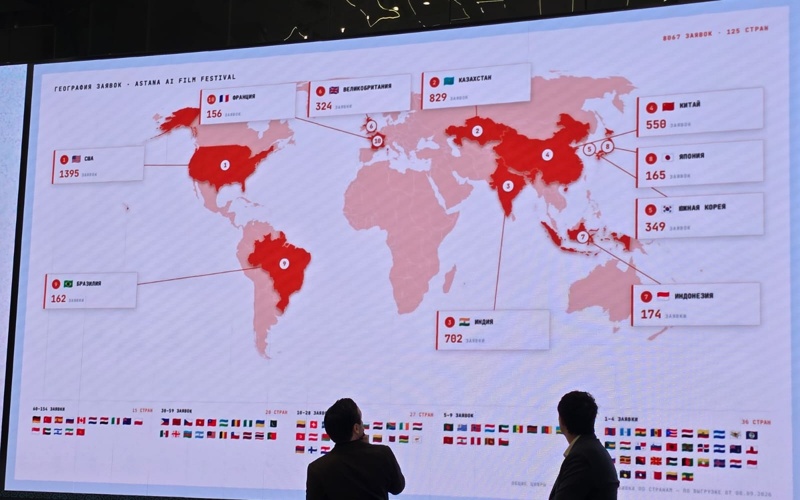
The Astana AI Film Festival (AAIFF 2026) has become the world’s largest international competition dedicated to films created using artificial intelligence, attracting 8,067 entries from 125 countries, reports a Qazinform News Agency correspondent.

Kazakhstan ranked second by the number of submissions with 829 films, behind the United States with 1,395. India submitted 702 entries, followed by China with 550 and South Korea with 349. The top ten also included the United Kingdom, Indonesia, Japan, Brazil and France.
Nearly 40% of the films, or 3,138 entries, explored the festival’s central theme, The Future Worth Living In. Another 4,929 works were submitted to the open competition, which covers 19 genres and has no thematic restrictions.
“Just a few months ago, we were launching an international competition, and today we have received more than 8,000 entries from 125 countries,” said Almaz Zhali, co-founder and Chairman of the AAIFF Board. “These are no longer isolated AI experiments. We are seeing full-fledged films, complex stories, characters and entire universes.”
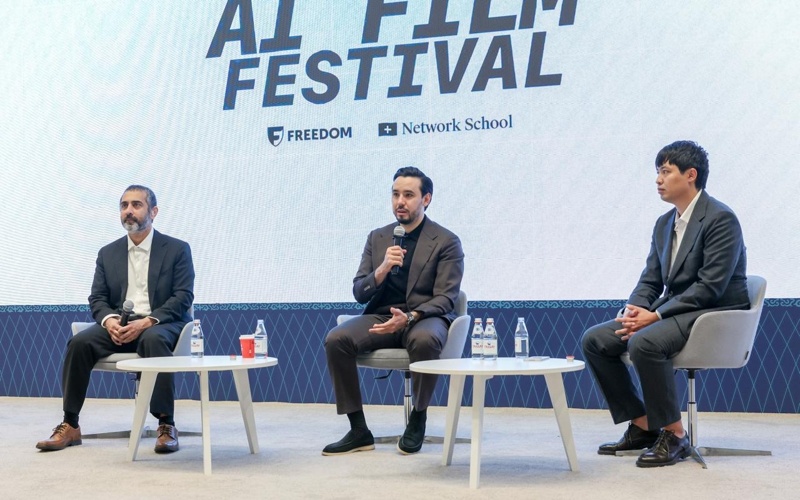
According to AAIFF co-founder and Creative Director Aizatulla Khussain, the idea for the festival emerged in Astana in December 2025 as the organizers anticipated rapid advances in generative video technology.
“We can now state clearly that the Astana AI Film Festival is the world’s largest AI film festival, both in terms of its $2 million funding and the number of submissions,” he told Qazinform News Agency. “We entered the market at the right time, just as technologies capable of producing real films began to emerge.”
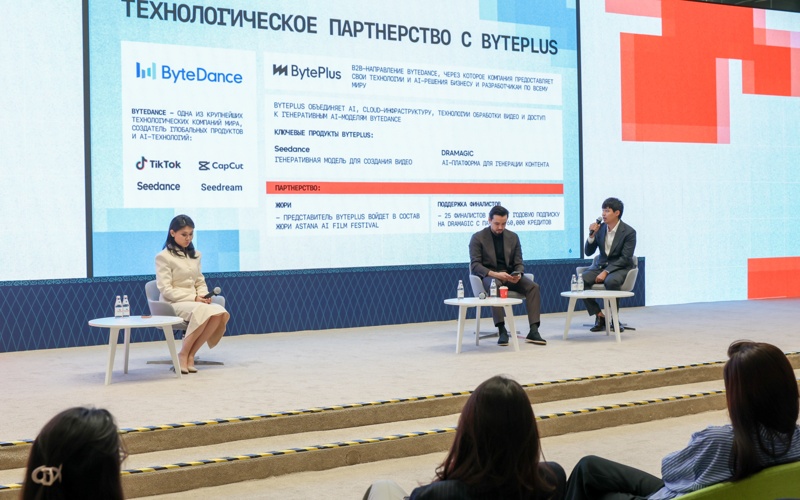
The entries undergo several stages of screening, beginning with checks for plagiarism and low-quality AI-generated content. Films that pass the initial review are assessed by specialists with experience in cinema and visual storytelling. Around 150 works will reach the festival’s senior selection team, which will choose 25 finalists.
Khussain said hundreds of submissions had produced a strong “wow effect”, making the final selection particularly difficult. He added that two films by Kazakh creators were already among the preliminary frontrunners.
The festival offers a $1 million prize pool, including $750,000 for its main thematic program and $250,000 across five open categories. A separate $1 million investment fund was established by entrepreneur and investor Balaji Srinivasan to support promising AI teams.
Srinivasan told Qazinform News Agency that falling production costs could create new opportunities for smaller language communities.
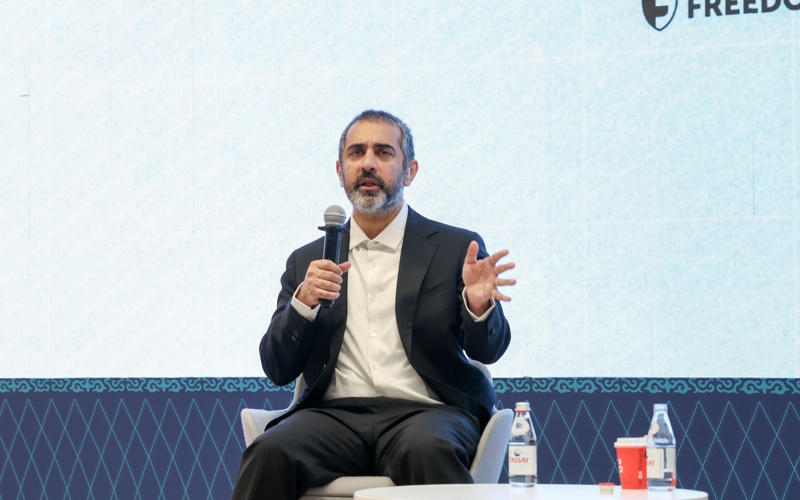
“You can actually have Kazakh-language content,” he said. “Smaller language spheres can get their own movies. It won’t just be Hollywood everywhere. If it is in Kazakh, you can reference things that people who speak Kazakh know.”
The submitted films have a combined runtime exceeding 100,000 minutes and were created by 4,756 filmmakers using more than 80 generative models.
Earlier, Qazinform News Agency reported that the Kazakh animated project KÖLEÑKE (18+), produced by the Qazaqanimation creative association, had received the Special Jury Award at the Portland Festival of Cinema, Animation & Technology (PFCAT) in the United States.