UAE to exit OPEC+: What it means for global oil prices and markets
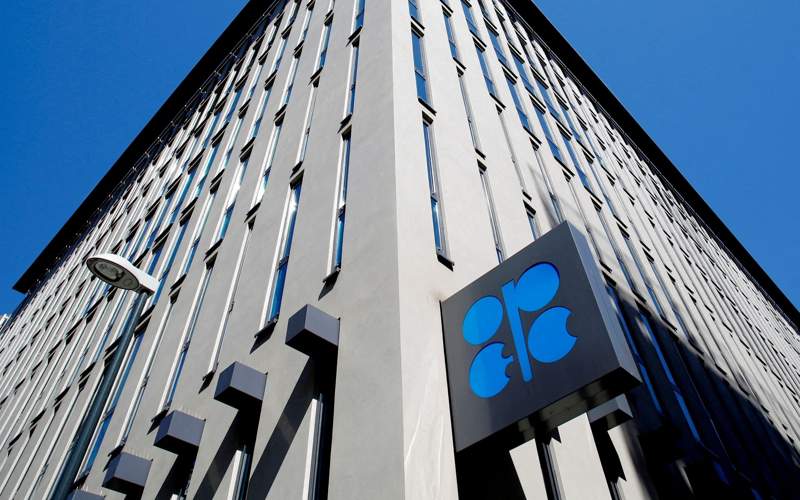
The United Arab Emirates has announced its withdrawal from the Organization of the Petroleum Exporting Countries (OPEC) and the broader OPEC+ format, marking one of the most significant developments in the global energy market in recent years, Qazinform News Agency reports.

According to Al Jazeera, the UAE said it would leave OPEC and OPEC+. The decision is set to take effect on May 1. The UAE, a member of OPEC since 1967, cited national interests and its long-term energy strategy as key reasons for the move. With a production capacity of around 4.8 million barrels per day and room for further growth, Abu Dhabi appears to be shifting toward a more independent oil policy.
Officials in Abu Dhabi emphasized that the move aligns with the country’s long-term strategy. UAE Minister of Industry and Advanced Technology and ADNOC CEO Sultan Ahmed Al Jaber stated:
“The UAE has taken a sovereign decision in line with its long-term energy strategy, its true production capability and its national interest, as well as global energy market stability.”
He added that ADNOC will continue focusing on meeting growing global energy demand and expanding supply.
Founded in 1960, OPEC was created to coordinate oil policies and stabilize global prices. In recent years, the expanded OPEC+ format, which includes major producers such as Russia and Kazakhstan, has played a key role. Together, its members account for about 40% of global oil supply.
However, internal contradictions within the agreement have been mounting.
Oil and gas expert Olzhas Baidildinov believes the UAE’s exit is a logical outcome of accumulated imbalances.
“The exit from the deal is not just a political gesture, but a signal to the markets. The era of rigid coordination can give a crack,” he said.
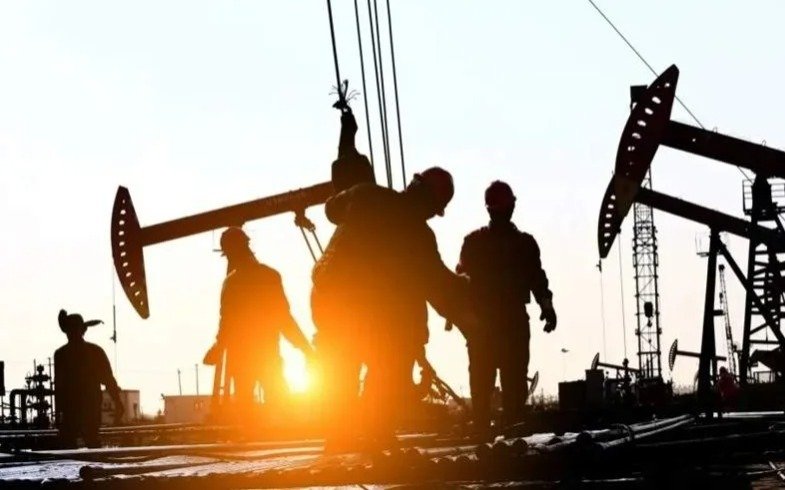
According to him, the main issue with OPEC+ lies in the uneven distribution of obligations. Some countries, primarily Saudi Arabia, Russia, and the UAE, bore the main burden of production cuts to support prices, while others either failed to comply or increased output, taking advantage of favorable market conditions.
Such imbalance undermines the very logic of the agreement. When some countries lose market share while others expand it, incentives to comply with restrictions weaken.
Another factor is structural change in the global market. Oil production is growing outside the OPEC+ framework, particularly in the United States, Canada, and other countries not bound by quotas, which respond quickly to rising prices. This puts additional pressure on OPEC+ participants limiting their output.
The economics behind the UAE’s decision
The UAE’s competitive advantages played a key role in its decision.
“They have a very low cost - less than $10 per barrel. They can compete even at around $20 per barrel,” Baidildinov noted.
He added that the country is already implementing long-term investment projects aimed at increasing production, which cannot be halted without significant economic losses. Under such conditions, OPEC+ restrictions increasingly conflict with national interests.
Moreover, like other Persian Gulf countries, the UAE maintains a high level of control over its oil sector. State-owned companies manage most production, allowing for flexible output adjustments and faster adaptation to market changes.
Impact on the oil market
The UAE’s exit could signal a shift toward a more competitive market model. Increased production by individual producers is expected to boost supply and put downward pressure on prices.
In the long term, this may lead to lower oil prices. After the situation in the Middle East stabilizes, the market could return to around $60 per barrel, with such levels potentially persisting for several years.
At the same time, Persian Gulf countries with vast reserves and low production costs are likely to maintain their leading positions. They can ramp up output and regain market share.
Crisis of the OPEC+ model
The developments also raise questions about the effectiveness of the OPEC+ framework itself. Baidildinov noted that the agreement has always functioned as a “gentlemen’s agreement” without strict enforcement mechanisms.
As a result, its stability depends largely on voluntary compliance. As competition intensifies and market conditions evolve, this balance becomes increasingly fragile.
Energy analyst John Kemp also described the move as a major challenge for the alliance:
“The decision represents a rejection of the production-control system dominated in recent years by Saudi Arabia and signals the UAE will make its own decisions about output in future.”
He added that cartels tend to weaken over time due to rising supply outside the agreement and internal contradictions.
Implications for the region and beyond
The UAE’s exit could set a precedent for other producers. If more countries begin to ignore quotas or reconsider their participation, coordination within OPEC+ may weaken significantly.
In such a scenario, the oil market would increasingly be driven by competition rather than collective decisions.
Meanwhile, Persian Gulf countries are expected to retain strategic influence due to their production scale, low costs, and control over resources. However, the system of market regulation that has existed in recent years may gradually transform.
Earlier, Qazinform News Agency reported that the issue of changing Kazakhstan’s format of participation in the OPEC+ alliance is not currently on the agenda.