The “Wooden Trojan Horse” strategy: a Kazakh scientist’s breakthrough in battling stage four cancer
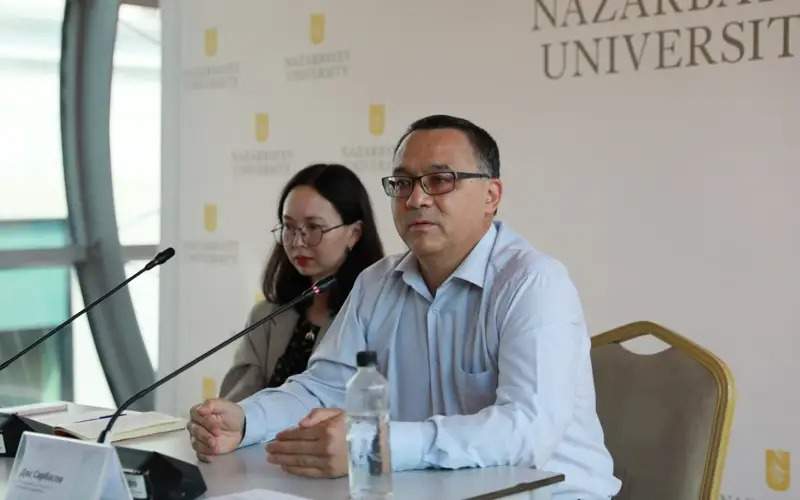
Kazakhstani biologist Dos Sarbasov created a drug that will treat people with stage four cancer illnesses. The initial trails of this project were successfully completed, reports a Kazinform News Agency correspondent. At the recent press conference held at Nazarbayev University, the project authors discussed how the second clinical trials are progressing.

According to Sarbasov, the method of treating malignant tumors with the new drug resembles a “wooden Trojan horse.”
“Cancer cells are ‘dependent’ on glucose. They obtain energy for reproduction from glucose. If it were possible to reduce the amount of glucose in the human body, cancer cells would “starve to death,” said Dos Sarbasov.
However, doctors cannot deprive a person of glucose for this purpose because there are many negative consequences. To resolve this, the scientific team found a way to destroy cancer cells by alternating the administration of vitamin “C” type “D” (scientific formula – D-CV) and arsenic trioxide (ATO). Their structure is similar to that of glucose. Cancer cells absorb these substances from the blood because they resemble glucose.
“This way, the injection destroys the cancer cells by poisoning them from within. That’s why I refer to it as a “Trojan horse,” says scientist Dos Sarbasov.
Nazarbayev University introduced Dos Sarbasov as a Kazakh-American scientist. Having spent most of his scientific career in the U.S., Sarbasov initially conducted drug trials on mice. After returning to Kazakhstan, he repeated the trials at Nazarbayev University to validate the results with his local colleagues.
The Kazakh scientist explained, that last year they reported the completion of the first clinical trials. In the initial stage, the drug was applied to cancer cells in mice, confirming its effectiveness. The scientist explained that the drug was invented in the U.S. while working at MD Anderson Cancer Center, a leading oncology center. In 2018, a patent was obtained there. Now, working at Nazarbayev University, the patent was licensed to the institution, securing the intellectual property and an international patent.
After that, Sarbasov highlighted the need to prove the drug’s effectiveness in clinical trials. In 2022-2023, the Ministry of Science and Higher Education of Kazakhstan allocated the first funds, which were used to establish a production system for vitamin “C” type “D” at the “Nur-Mai” pharmaceutical plant in Almaty, and clinical trials began.
The project authors are currently purchasing arsenic trioxide from India, which is administered after the vitamin. If all trials are successful, they plan to produce it in Kazakhstan as well. In India, each dose costs $4, while in Kazakhstan, the price could be as low as $1.5.
The expert said that each clinical trial consists of two phases. The first phase assesses the drug’s negative effects and toxicity levels, which were completed at the beginning of 2023. That year, they began administering the drug to patients with stage four malignant tumors, all of whom had rectal cancer. The scientist explains that oncology drugs are typically tested on a single type of cancer to quickly and accurately determine the drug’s impact and effectiveness. In rectal cancer, there are often mutated KRAS cells, which make the tumor even more dangerous. These mutated KRAS cells are found in 95% of pancreatic tumors and 40% of rectal tumors.
Initially, the Ministry of Health only approved testing the vitamin D-CV in very small doses—0.15 milligrams per kilogram of the patient’s body weight.
“At this dose, no beneficial effects were observed because the dose was too small. However, doctors confirmed that the drug is non-toxic to the body. In November last year, we received permission to increase the dose to 0.3 milligrams. At this dosage, all treated patients saw a halt in tumor growth. In one patient, the tumor even shrank by 30%. This was a very positive effect, and we were thrilled. However, this is not the final result we were hoping for. Our current goal is to establish the maximum dose that the human body can tolerate. We received permission to increase the dose of D-CV to 0.65 milligrams. We recently received the necessary funds to conduct the trials. We will start the next phase of trials soon. Since July 1st, several patients at the Kazakh Research Institute of Oncology and Radiology have been receiving this 0.65 milligram dose. At this stage, we are following the same protocol as before. In the first phase, we are determining how toxic this dose is. By the beginning of next year, we need to ensure that this dose is not dangerous. After that, we will move to the second phase, where we will test how effectively this drug kills mutated KRAS cells. This way, we will determine the maximum dose the human body can handle and how well it destroys existing metastases. If everything goes as planned, this process will take 2-3 years,” says Dos Sarbasov.
About 700 million tenge has been allocated from the budget for the first two years of the project. Funds for the remaining three years have not yet been allocated.
“Type 'D' vitamin 'C' is often used as a dietary supplement. Therefore, I believe the drug will be affordable for everyone. Once the tolerable dose for the human body is established, we will conduct trials on two groups of 60 people each. After determining against which types of malignant tumors the drug is most effective, we will move to the third phase. At that stage, the drug will be administered to thousands of people. According to the rules, in the first and second phases of trials, we must work with only one oncology center. In the third phase, we will be able to conduct trials at several centers. This will likely happen in about two years, depending on how smoothly the work progresses,” says the biologist.
If this formula by the Kazakh scientist successfully passes all trials, it will be a groundbreaking discovery in the field of oncology on a global scale.
“In oncology, the destruction of mutated KRAS cells is considered a complex challenge. People with this gene often have a shorter life expectancy. If our drug proves effective in all trials, it could solve one of the most difficult problems in oncology,” the scientist explains. “During the trials, patients will receive 36 combined injections: three weeks of injections followed by a week of rest, then another three weeks of injections. On Sundays, patients will rest. In the third phase of clinical trials, patients will return home after receiving injections, while in the first and second phases, they will receive injections in the hospital.”
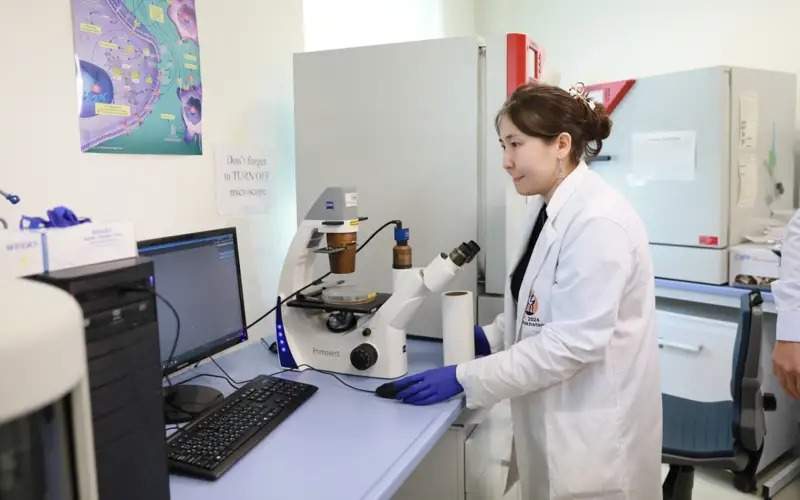
The biologist also introduced journalists to the laboratory responsible for preparing the injections, sharing that the combination was invented after reading the work of biologist Lewis Cantley, who studied metabolism in diabetes.
“While working at an oncology center in the U.S., I researched what substances could kill cancer cells. We deprived them of amino acids, but they survived. However, when deprived of glucose, the cancer cells died within two days. We studied this mechanism and found that these dying cells released oxidants. This led me to realize that cancer cells could be killed directly by oxidants, which sparked the idea of using arsenic trioxide. But arsenic alone, being a poison, was not viable. In 2015, American scientist Lewis Cantley reported that vitamin C could be used to increase stress in KRAS cells. I then realized that combining arsenic trioxide with vitamin C would significantly enhance the treatment’s effectiveness. We use the 'D' type of vitamin C because it has the lowest toxicity, and increasing its dose improves effectiveness,” the scientist explains.
Currently, the drug is only being administered to patients with stage four malignant rectal tumors. Whether it will be effective against other types of tumors will be studied by the genomic laboratory.