Scientists develop living textile that can repair itself on demand
Researchers at the Shenzhen Institute of Advanced Technology have grown a textile from living fungal mycelium that stays biologically active after it is shaped and can later be prompted to close tears in its own surface, Qazinform News Agency correspondent reports.

The material is built from Cordyceps militaris, a fungus cultivated in liquid until it forms small spherical pellets of mycelium. The pellets are harvested, packed into molds and dried at a low temperature, at which point neighboring clusters knit together into a single sheet. No adhesive, stitching or reinforcing backing is used to hold the fabric together.
Drying at 45 degrees Celsius pushes the fungus into a low-metabolism dormant state rather than killing it. That hibernation allows the finished sheet to be stored without continuing to grow and leaves the repair function switched off until it is deliberately triggered.
Reactivation is done by hand. A nutrient solution made from potato water is applied to the damaged area together with a small piece of fresh fungus, and the dormant threads resume growth, bridging the gap and sealing the surface. The material is also hydrophobic, which gives it a degree of self-cleaning without treatment.
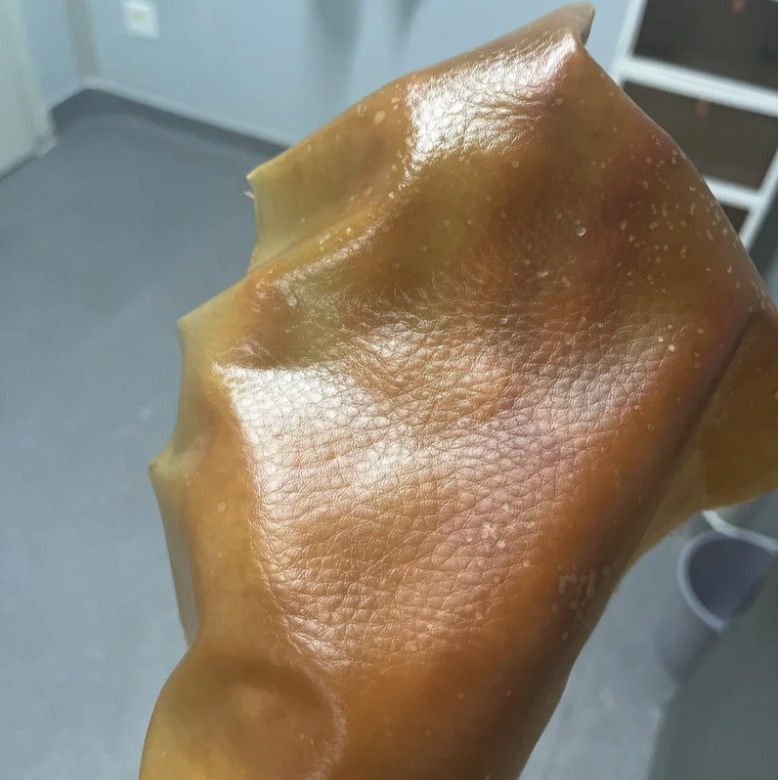
The team, led by Professor Ke Li, treats the mycelium as a modular base. The structural layer comes from the fungal filaments, while further properties can be added by co-culturing the fungus with yeasts or other fungi, producing effects such as blue pigmentation or resistance to ultraviolet light.
In laboratory testing, a thread twisted from four strips held a load of one kilogram, according to the researchers. Treating the sheet with glycerol made it flexible enough to be folded, cut and sewn in the way conventional fabric is handled. In composting tests, the material broke down almost entirely in soil over 41 days.
The finished surface has been described as resembling a soft nonwoven material or pliable leather. Working with the company Peelshere, the researchers produced a prototype dress to demonstrate what the fabric can be shaped into.
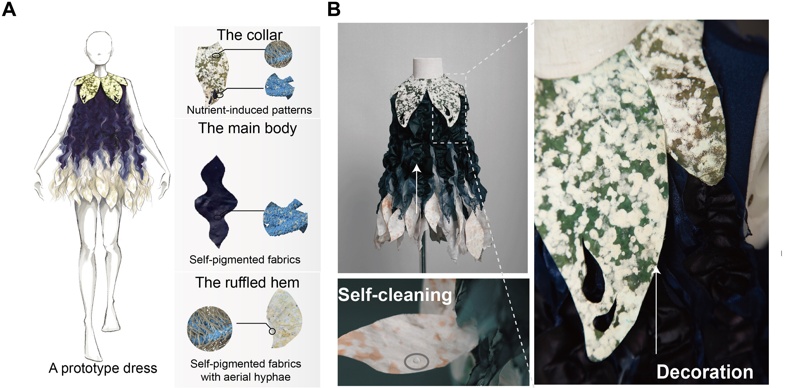
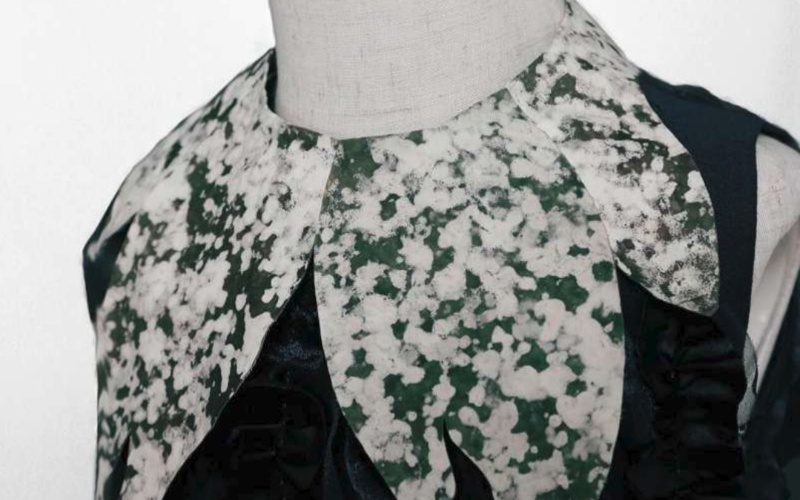
Several practical questions remain open. Tests for abrasion, breathability and washing have not yet been carried out, and the repair process is not automatic, since it depends on a person applying nutrient solution and fresh fungal material. Durability, moisture resistance, safety and consistency in manufacturing would all need to improve before the fabric could be used for everyday clothing or building surfaces.
Mycelium has drawn steady attention in materials research over the past decade, largely as a candidate replacement for leather, packaging foam and petroleum-based synthetics, which can persist in landfills for decades. Most of that work has treated the fungus as a raw input to be killed and processed. The Shenzhen approach keeps the organism alive inside the finished object, an idea sometimes grouped under the heading of programmable living materials, where biological functions are treated as components that can be combined for a given purpose.
Earlier, Qazinform reported that scientists at the Kazakh Research Institute of Processing and Food Industry had developed an integrated technology for producing marbled lamb from the Kazakh fine-wool sheep breed.