Construction project for Kazakhstan’s fourth oil refinery enters practical phase
The construction project of the fourth major oil refinery in Kazakhstan is entering its practical stage, Qazinform News Agency reports, citing the Ministry of Energy.
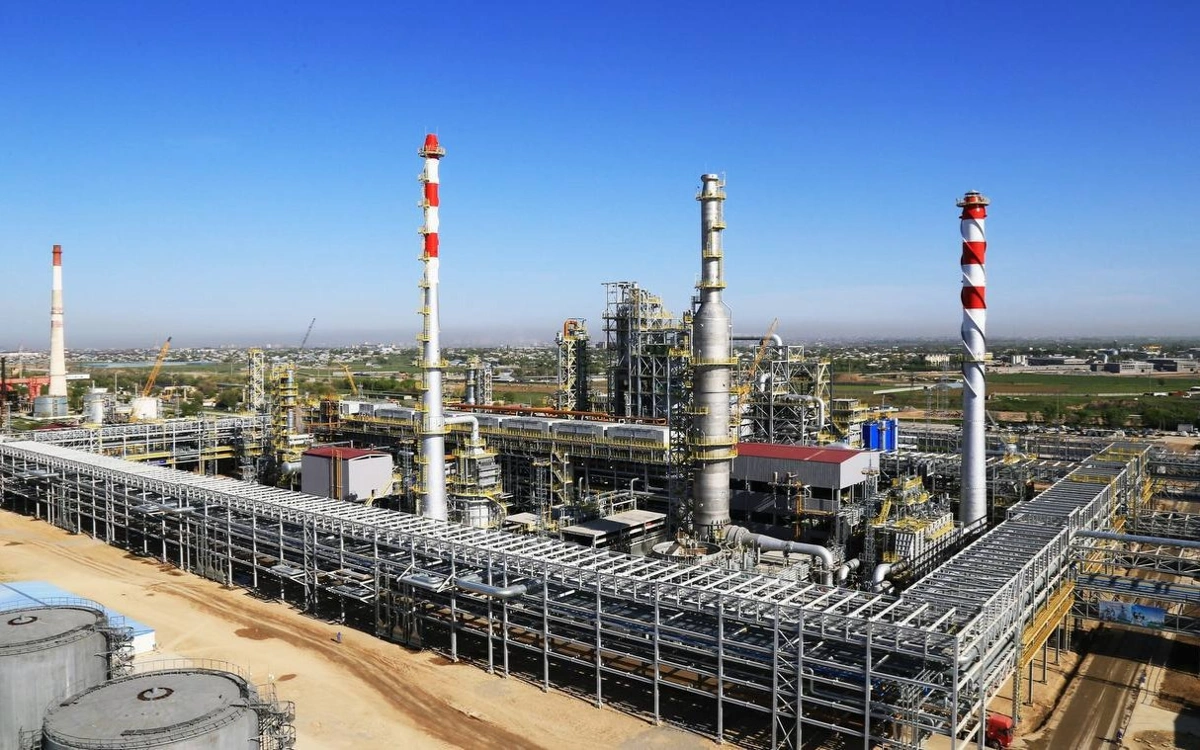
Work on the project's preliminary feasibility study has commenced, with the future giant complex designed to handle up to 10 million tons of oil annually.
On the directive from of President Kassym-Jomart Tokayev, Kazakhstan has begun preparations for the construction of a large-scale oil refining complex, which has the potential to become the center of a petrochemical cluster in the future. The Ministry of Energy, as the authorized state body in the field of oil refining and petrochemistry, carries out inter-agency coordination of the project. The project customer is SK Ondeu (a subsidiary of the Samruk-Kazyna Fund).
Over six months, an international engineering team will conduct comprehensive pre-project studies, the results of which will provide the Government with the technical and economic parameters of the future plant.
As part of the pre-feasibility study, specialists will elaborate on several key areas. First, the most effective raw material supply scheme will be determined - options for processing oil from the Kashagan and Tengiz fields, as well as using mixed raw materials via the existing pipeline infrastructure, are being considered. Special attention will be paid to the selection of a site for the refinery construction. Experts will evaluate transport logistics, access to railway infrastructure, proximity to sales markets, environmental requirements, and the availability of utility networks.
As noted by Kazakh Energy Minister Yerlan Akkenzhenov, the construction of the new complex is a pragmatic and strategically important step for the long-term energy independence of Kazakhstan. According to him, all decisions regarding the project's location and configuration will be made exclusively on the basis of economic efficiency and technical calculations. The scientific intensity of the project will be ensured by involving domestic research centers and specialized universities; for example, R&D structures will be tasked with developing improved fuel standards, technologies, and catalysts, while universities will handle workforce training for the future production.
Based on the pre-project documentation, the Government will make a decision to proceed to the detailed design phase, attract international investors, and subsequently commence the plant's construction. The ongoing work aligns with the Concept for the Development of the Oil Refining Industry of the Republic of Kazakhstan for 2025-2040, aimed at a phased transition from a raw-material-based economy to deep oil refining.
Earlier, Qazinform reported Kazakhstan's refineries increase the depth of oil refining up to 90 percent.