Positive science achievements of 2025: A year in review
As 2025 draws to a close, a review of the global scientific landscape by Qazinform News Agency shows a series of advances pointing to earlier disease detection, more effective medical treatment, and tangible progress in environmental recovery. From gene-editing breakthroughs and new medicines to biodiversity gains and rapid epidemic response, the year demonstrated how sustained research, policy coordination, and global cooperation can translate into measurable results. According to Nature Portfolio, these are among the science stories of the concluding year that stand out for delivering clear, real-world impact.

Species recovery signals conservation success
One of the clearest positive trends of 2025 was the recovery of several endangered species following long-term conservation efforts. The green sea turtle, listed as endangered since the 1980s, was reclassified as being of least concern on the International Union for Conservation of Nature Red List. Protection of nesting sites and measures to reduce accidental capture in fishing nets were cited as key drivers of population recovery.
In Australia, the ampurta, a small marsupial once close to extinction, also moved to least concern status. Between 2015 and 2021, its habitat expanded by more than 48,000 square kilometres despite prolonged dry conditions. At the international level, marine conservation reached a milestone in September when more than 60 countries approved the United Nations High Seas Treaty, which will legally protect biodiversity in international waters and aims to conserve at least 30% of land and sea areas.
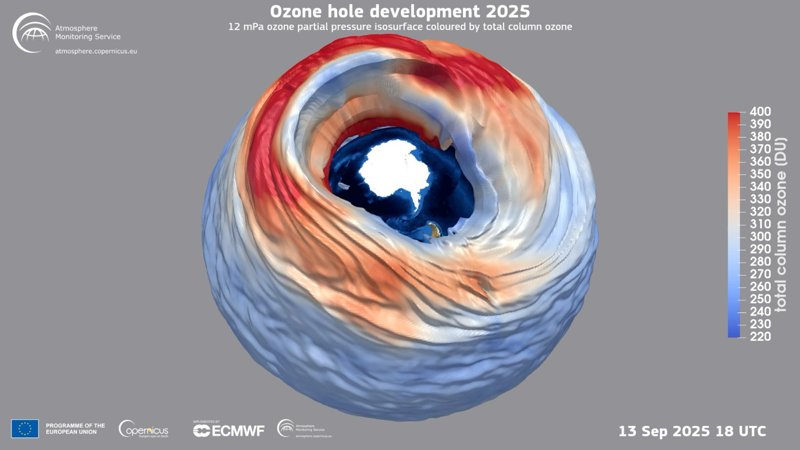
Antarctic ozone hole continues to shrink
Environmental monitoring showed that the Antarctic ozone hole shrank to its smallest size since 2019, reinforcing evidence that the Montreal Protocol remains one of the most effective global environmental agreements. The ozone hole, first identified in 1985 and caused by human-made chlorofluorocarbons, has been steadily declining since CFC production was phased out in 1987. Scientists say the ozone layer remains on track for full recovery by the late 2060s if climate-friendly alternatives continue to replace harmful chemicals.
Gene editing reaches clinical milestones
Biomedical science recorded major progress in gene editing. “This year was a breakthrough year for gene editing,” said David Liu, a chemical biologist at the Broad Institute of MIT and Harvard. “In 2025, these technologies have achieved a number of medical milestones.” Annarita Miccio of the Imagine Institute in Paris described the year as “an outstanding one, marked by the launch of many clinical trials.”
Among the highlights was the first gene therapy for Huntington’s disease, which slowed cognitive decline by 75% in participants. A separate gene therapy trial for T-cell acute lymphoblastic leukemia showed promising remission results, using base editing to modify multiple genes in immune cells. Researchers also reported the first personalized CRISPR-based treatment, alongside trials targeting rare immune and genetic disorders. According to Miccio, these studies demonstrate how collaboration between academia and industry is opening pathways to mutation-specific therapies.
Renewable energy overtakes coal globally
In energy, renewables surpassed coal as the world’s largest power source for the first time. China played a decisive role by becoming the first country to install one terawatt of solar capacity, adding 256 gigawatts in the first half of the year alone. Around half of the European Union’s electricity demand was met by renewables in the second and third quarters. Global renewable capacity is projected to increase by nearly 4,600 gigawatts between 2025 and 2030. At the same time, fossil fuel emissions reached a new high, highlighting the scale of the transition still ahead.

Rapid containment of Ebola outbreak
Public health response capacity was tested in September, when an Ebola outbreak in the Democratic Republic of the Congo was contained in just 42 days. A total of 64 cases were reported in Kasai province before the outbreak was declared over. Rapid vaccination, monoclonal antibody treatment, and contact tracing played a central role.
“We are improving in the management, the response, the community engagement and the contact tracing,” said Henry Kyobe Bosa, who leads Uganda’s Ebola and COVID-19 response.
New malaria treatments expand protection
In November, the World Health Organization approved the first malaria treatment specifically formulated for infants. Given that children under five account for about 75% of global malaria deaths, the decision marked a significant step. “It provides a drug formulation that can now be safely used to treat malaria in babies and young infants,” said Jane Achan of the Malaria Consortium. In parallel, a new drug combination, ganaplacide-lumefantrine, achieved a 97.4% success rate in phase III trials and may become the first new class of malaria medicine in more than 25 years.
Separately, a pioneering study by researchers at the United Arab Emirates University (UAEU), in collaboration with the Indian Institute of Technology Madras Zanzibar campus, introduced a novel data-driven framework for modelling malaria transmission dynamics.
Peanut allergies decline after policy shift
Long-term, evidence-based policy also delivered results in allergy prevention. Studies showed a 43% decrease in peanut allergy prevalence among children under three in the United States compared with 2012 levels. The decline followed revised guidelines encouraging early peanut exposure after research demonstrated that delayed exposure increased allergy risk.
“This is a great example of translating controlled trial findings into broader community-level outcomes,” said pediatric allergist Michael Pistiner.
Earlier, Qazinform News Agency reviewed the world’s key medical achievements in 2025 in its “World medical breakthroughs in 2025: A year in review” feature.