Political reforms take center stage at Kazakhstan’s National Kurultai
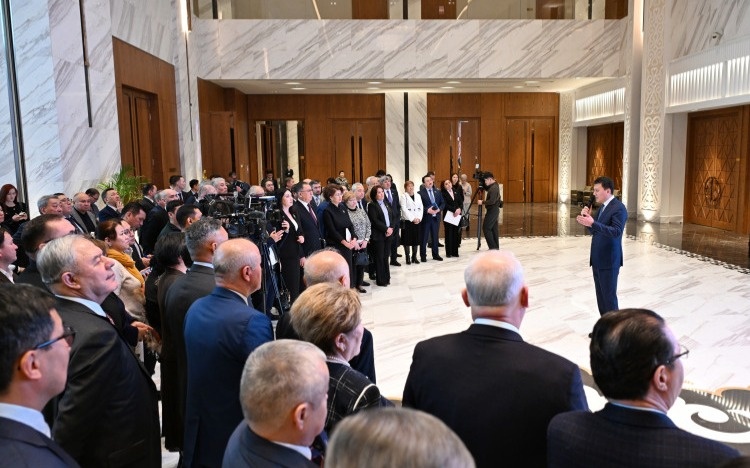
Kazakhstan’s reform agenda and upcoming legislation were discussed at the National Kurultai (Congress) section meetings held in Astana, Qazinform News Agency cites the Akorda press service.
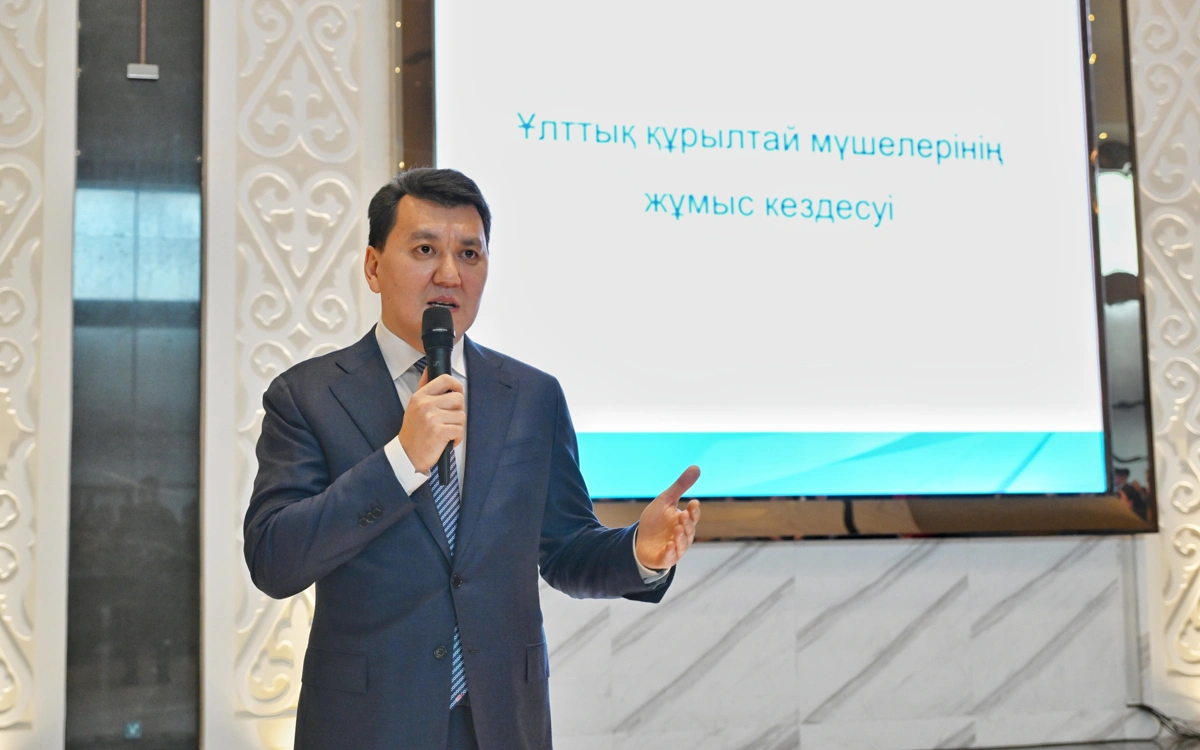
State Counselor Erlan Karin briefed members on the significance and outcomes of the President’s reforms.
Before the start of the sectional discussions, Erlan Karin summarized the key results of the year. He highlighted steady economic growth, the launch of new production facilities, the creation of permanent jobs, the large-scale construction of social infrastructure, and the continued modernization of transport networks. According to the State Counselor, these positive developments are the direct result of the large-scale reforms initiated by Kazakh President Kassym-Jomart Tokayev.
Erlan Karin also noted that the parliamentary reform launched by the President is a logical continuation of the country’s broader political modernization within the framework of the state-building formula “Strong President – Influential Parliament – Accountable Government.”
— The proposed reform aims at a fundamental recalibration and enhancing the effectiveness of representative power. It goes beyond simply adjusting the Parliament's operations and affects the fundamental pillars of the country's constitutional structure. The planned changes are expected to cover at least 40 articles of the Fundamental Law (Constitution) and, together with the constitutional reforms of 2022, will virtually ensure a transition to a new political model, Erlan Karin highlighted.
The State Counselor dwelled on the President's instructions, as well as proposals voiced by members of the National Kurultai at the 4th session in Burabay. A dedicated action plan consisting of 53 measures has been adopted to ensure the systematic implementation, including the preparation of 10 draft laws across various sectors.
In addition, several key conceptual documents have been developed within the framework of the National Kurultai’s initiatives. These include a concept document outlining the core principles and priorities of domestic policy, the approval of the 2026-2028 Comprehensive Plan to combat drug abuse and illicit trafficking, and the adoption of Kazakhstan’s 2025-2030 Regional Development Concept.
Landmark cultural and humanitarian projects have also been implemented: the nationwide “100 Kitap” (100 Books) survey, the release of the “Asyl Mura” (Noble Legacy) audio collection, and the inclusion of the manuscript “Khandar Shezhiresi” (Khans' Genealogy) in UNESCO’s Memory of the World Register.
Erlan Karin emphasized that work on implementing the initiatives of the National Kurultai is ongoing. Preparations are underway for a unified "Qazaqstan Balalary" (Children of Kazakhstan) program to consolidate measures aimed at protecting children’s rights. Legislative initiatives are also being developed to establish science cities, regulate the activities of NGOs, and provide comprehensive support for children with special needs.
Discussions on the initiatives and proposals continued in the National Kurultai’s working sections titled “Civil Society,” “Socio-Economic and Cultural Development,” and “Education and Science.”
The sessions were moderated by Assistant to the President for Domestic Policy and Communications Arman Kyrykbayev, Deputy Prime Minister — Minister of Culture and Information Aida Balayeva, Minister of Science and Higher Education Sayasat Nurbek, and Minister of Education Zhuldyz Suleimenova.
During the meetings, members of the National Kurultai expressed support for the President’s initiatives and presented new proposals in specific areas.
All suggestions will be consolidated by the Secretariat and reviewed jointly with relevant government bodies for consideration at the next session of the National Kurultai.
The fifth session of the National Kurultai is scheduled to take place next year in the city of Kyzylorda.
As Qazinform previously reported, Erlan Karin said UNESCO’s recognition of the yurt highlights the shared heritage of Central Asia.