No time for slow start: PM outlines priorities for economic growth, digital transformation
Prime Minister Olzhas Bektenov chaired a meeting on the Head of State's directives issued at Tuesday's Government session, Qazinform News Agency reports, citing the Government's press service.
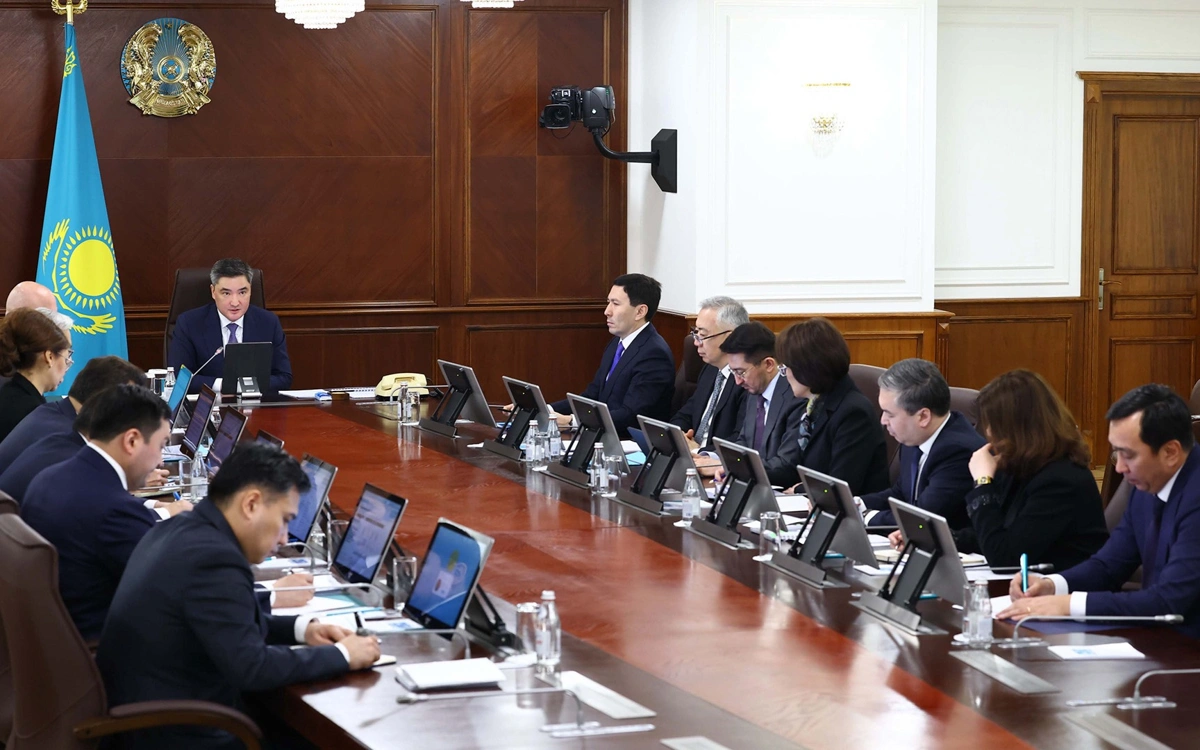
“Yesterday, the Head of State underscored the profound importance of the new draft Constitution. The scale and significance of the changes, as well as the transparency of the discussion process, are unprecedented in the country’s history. As the President pointed out, the draft of the new Constitution clearly enshrines the principle: ‘not a person for the state, but the state for a person.’ It is the core objective of the Constitutional reform: alongside a large-scale political renewal, it is designed to accelerate qualitative economic growth. In other words, our primary priority must be an increase in household incomes and the well-being of the population. This is one of the most essential goals we face,” emphasized Olzhas Bektenov.
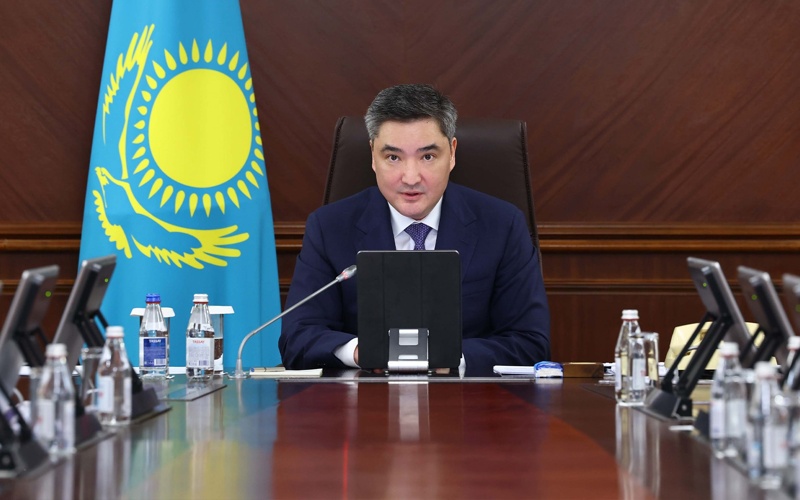
At the meeting, deputy prime ministers, ministers, and the leadership of the Samruk-Kazyna Fund reported on their implementation strategies.
Deputy Prime Minister and Minister of National Economy Serik Zhumangarin outlined plans to enhance public welfare, identifying income growth, inflation control, and support for the real sector as top priorities. Notably, jointly with the National Bank, the Ministry of National Economy will develop a plan aiming to reduce inflation to a 9-11% range. Moreover, the 2026-2029 Population Income Growth Program is set for adoption by May 1, alongside the expansion of business support based on the one-stop shop principle via the eGov Business platform.
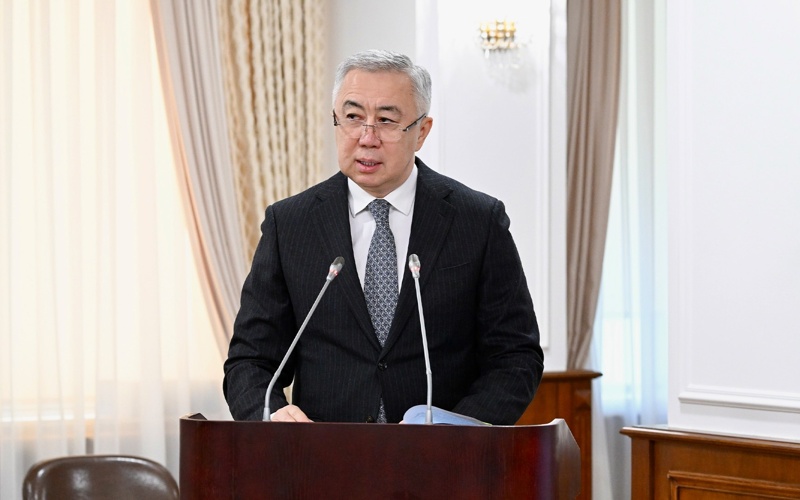
Significant focus was placed on the digital transformation of public administration and the integration of AI-driven solutions. Zhaslan Madiyev, Deputy Prime Minister and Minister of Artificial Intelligence and Digital Development, reported on several specialized platforms, including "KEDEN" for customs, "Tasqyn" for flood forecasting, "eJoldar" for road management, and "Smart Cargo" for logistics. The development of the "Social Wallet" and digital household profiles has enhanced the targeting of social support, while the digitalization of public services has already reduced physical visits to Public Service Centers (PSCs) by 2.3 million. The plans include migrating state information systems to the unified "QazTech" platform, strengthening cybersecurity, and establishing sector-specific Data Lakes and AI agents to optimize government efficiency.
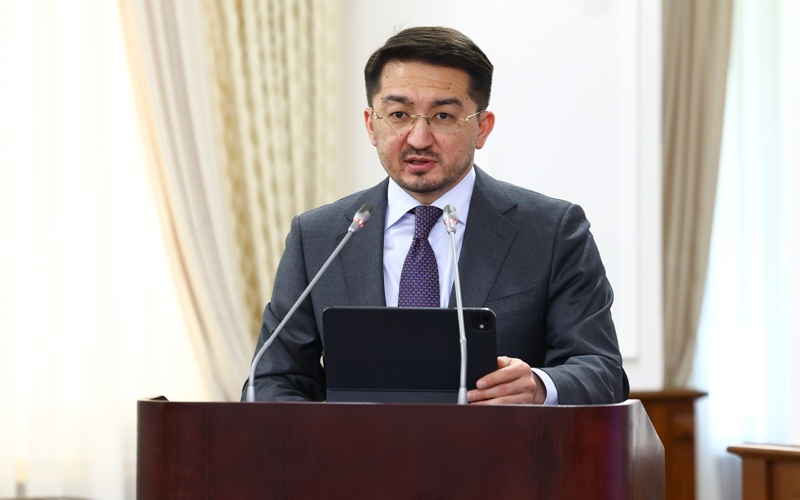
Nurlan Zhakupov, Chairman of the Management Board of Samruk-Kazyna, reported on the progress of the Fund’s investment portfolio and its strategic roadmap for 2026, which comprises launching several new projects. A key objective is to attract over $27 billion in foreign direct investment (FDI) between 2026 and 2030. The Chairman also highlighted the results of digital transformation efforts, noting that AI-driven initiatives are projected to deliver a cumulative economic benefit of $1.3 billion over the next five years. Following the report, the Prime Minister directed a further transformation of the Fund's organizational structure, including the potential merger of subsidiaries.
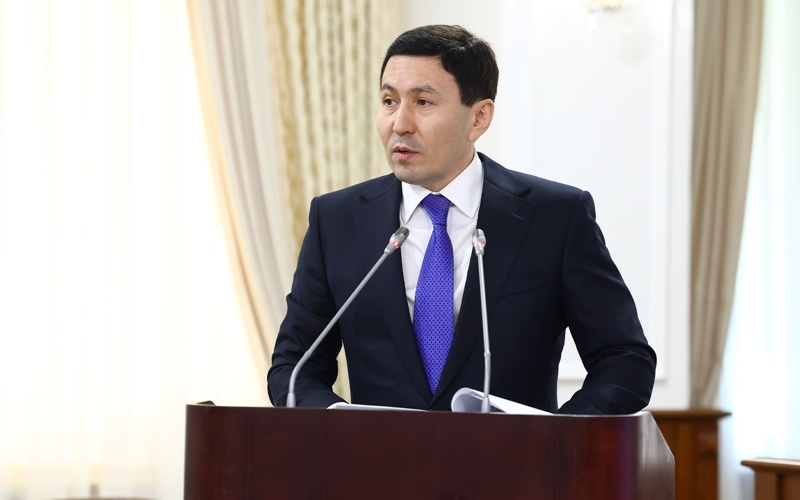
Minister of Finance Madi Takiyev reported on the advanced digital strategies for tax and customs administration, emphasizing a significant increase in budget transparency. In H1 2026, it is planned to launch the National Catalog of Commodities. The Minister confirmed that the digitalization of fiscal administration is accelerating. Budget programs are being audited to eliminate inefficient spending. In addition, the application of the Digital Tenge is being expanded to ensure the traceability of public funds.
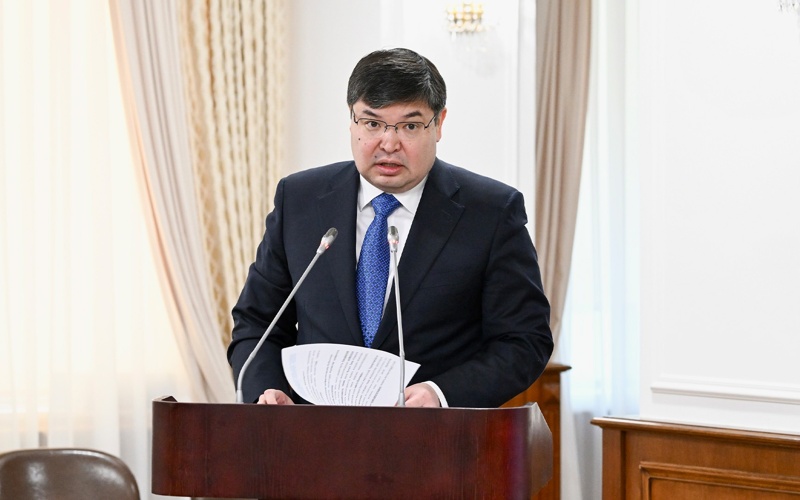
Minister of Energy Yerlan Akkenzhenov outlined comprehensive measures to bolster national energy security and drive sectoral development. The Government plans to commission 13.3 GW of new generating capacity by 2029. At the same time, a National Project for the Coal-Fired Power Generation Development is publicly discussed, aiming to modernize the country’s energy backbone. Regarding oil refining and the petrochemical industry, in line with Presidential directives, there are plans to expand existing refinery capacities and explore the construction of a new refinery. The Minister also highlighted large-scale petrochemical projects scheduled for launch by 2029, supported by the development of a specialized Law "On the Petrochemical Industry."
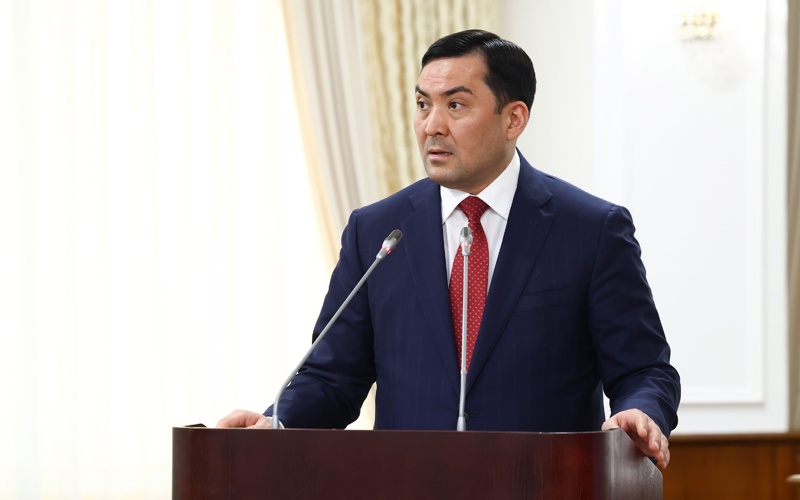
Minister of Industry and Construction Yersayin Nagaspayev reported on strategic measures to bolster domestic manufacturing, modernize Special Economic Zones (SEZs), and intensify geological exploration. Presently, the Unified Registry of Domestic Manufacturers includes 5,600 authorized companies. A phased transformation of SEZ operations is underway; to date, these zones have completed 555 manufacturing projects valued at 4.4 trillion tenge, creating over 33,000 permanent jobs. In the realm of high-value processing, there are measures to manage raw material exports while incentivizing the production of high-margin finished goods. Additionally, a new Critical Minerals Industry Development Strategy is being finalized. In a historic shift for geological exploration, the Government plans to provide funding over the next three years equivalent to the total investment seen over the previous 30 years.
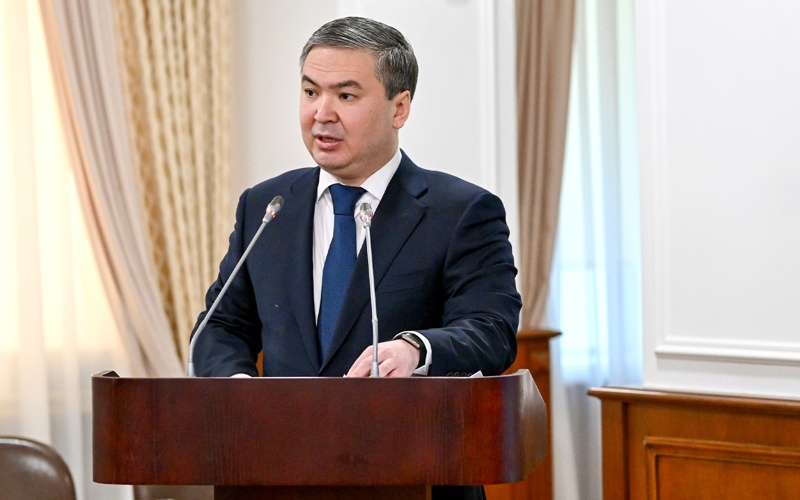
Minister of Agriculture Aidarbek Saparov reported on strategic measures to modernize the agricultural sector, centered on the 2026-2030 Comprehensive Livestock Development Plan and the expansion of concessional financing. Key priorities include bolstering veterinary safety and adopting digital traceability tools to monitor products from field to fork. To stimulate the food processing sector, the Government is introducing enhanced investment subsidies and a reduced net VAT burden starting in 2026. Besides, new projects for high-value raw material processing are being launched.
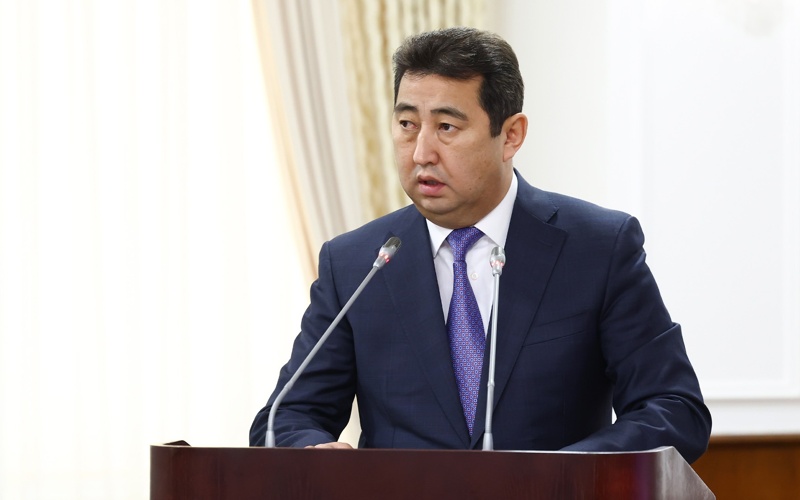
Minister of Education Zhuldyz Suleimenova presented a strategic framework for reforming state education funding. In line with Presidential directives, financing for private schools will now be concentrated on priority projects that address specific regional demands, accompanied by stricter oversight of institutional standards. The Minister detailed the outcomes of the voucher-based financing pilot for preschools; as of the end of 2025, the system has generated 25.7 billion tenge in budget savings. Plans are now underway to scale this model nationwide.
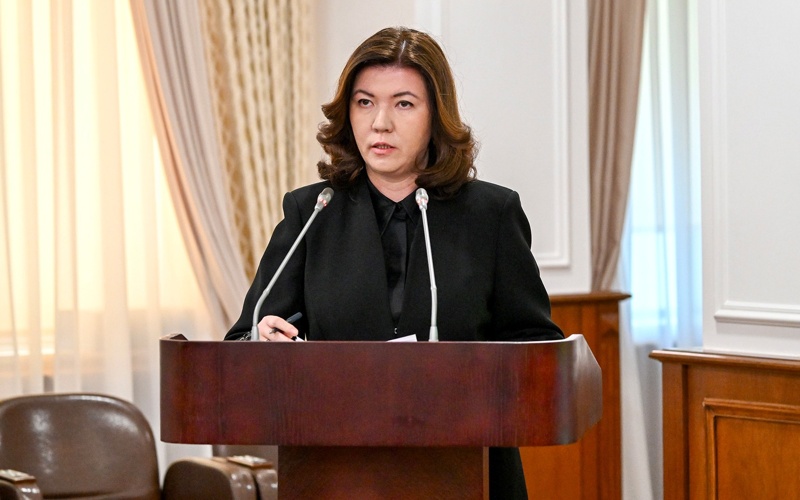
Minister of Labor and Social Protection Askarbek Yertayev reported on the social support. Currently, the digitalization of the social sphere is underway, anchored by the Unified Digital Platform for Social Protection, with data being prepared to transition support measures into a proactive format. Key initiatives include the transformation of the labor market through the establishment of a National Center for Occupational Transformation under a Public-Private Partnership (PPP) model, focusing on retraining programs for in-demand sectors and expanding vocational diagnostics for students.
Minister of Healthcare Akmaral Alnazarova detailed the creation of the Unified State Medical Information System (USMIS). Designed to integrate fragmented IT solutions and ensure transparent oversight, the platform and its accompanying Health Portal are scheduled for launch on December 1, 2026. Also, the "Social Wallet" continues to expand its role in outpatient pharmaceutical care. In 2025, it successfully processed over 13.8 million prescriptions, accounting for 82% of the national total.
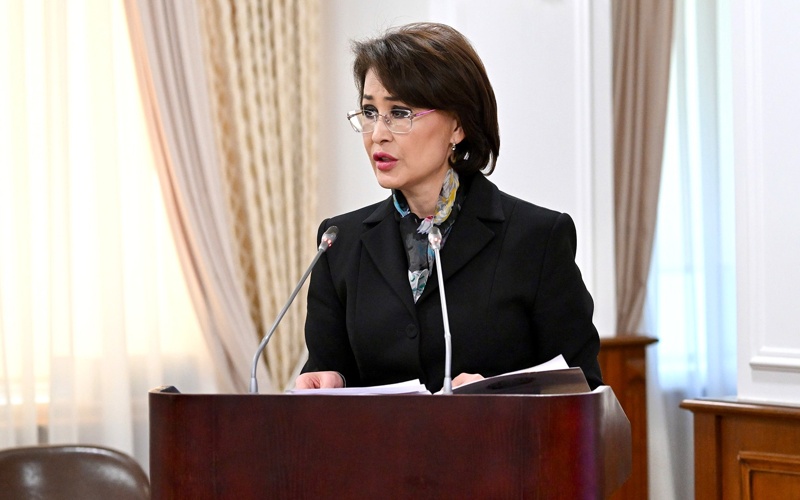
Vice Minister of Transport Maksat Kaliakparov outlined plans to significantly boost transit potential through digitalization. By the end of 2026, transit volumes are projected to reach 55 million tons (a 65% increase). A series of major infrastructure projects will be completed. Synchronization of border infrastructure with the Russian Federation and the PRC is currently underway. A KTZ roadmap and a new tariff policy have been approved. In the road sector, construction will begin on three bypass roads for the cities of Kyzylorda, Saryagash, and Rudny. Besides, 33 checkpoints are being modernized. Regarding the implementation of AI solutions, the integration of the Smart Cargo platform with state and sectoral services will continue. A Unified Intelligent Transport System will be created by 2027.
Following the meeting, the Prime Minister emphasized that all of the President's tasks require precise and practical execution, with a measurable impact on the population and businesses. Olzhas Bektenov issued a series of instructions.
Regarding the economy, the Prime Minister prioritized inflation control, business cost reduction, and the promotion of market competition. He directed the more active use of practical measures, such as stabilization funds, forward contracts, and price stability agreements with retailers. A key focus was placed on building a predictable tax environment through the implementation of 'soft administration' and early warning mechanisms. In addition, the Government is to create a unified digital ecosystem for businesses, accessible via mobile applications, and expand digital product labeling while minimizing production impact. Further directives include a fundamental review of unscheduled SME inspections, asset management optimization, and the high-tech development of Alatau City.
- The Ministry of Finance, in coordination with central government agencies and akimats (local administrations), has been directed to conduct a comprehensive audit of all budget programs by May 1.
- The Ministry of Finance and the National Bank are mandated to take measures on the cross-industry rollout of the Digital Tenge by the end of August.
- By year-end, the Ministry of Finance, with the Association of Financiers of Kazakhstan, must introduce legislative amendments designating marketplaces, internet aggregators, and commercial banks as official tax agents.
- The Ministry of National Economy and the Atameken National Chamber of Entrepreneurs are tasked with overhauling the mechanism for unscheduled SME inspections by June 1.
- The Ministries of Industry and Finance must complete all registration protocols to officially launch the Registry of Kazakh Manufacturers by March 1.
Regarding investment policy, directives have been issued to develop target indicators for fixed capital investment through 2030, with a significant emphasis on increasing the share of private investment. It is also necessary to form a pool of priority projects and establish KPIs for government agencies and akimats regarding the attraction of non-budgetary funds. The Ministry of Foreign Affairs, in collaboration with Kazakh Invest, will intensify efforts with major investors and engage through the Kazakhstan Investment House, while also strengthening the oversight of agreement fulfillment and post-investment monitoring via a digital platform.
The Ministry of National Economy and the Ministry of Foreign Affairs, with other relevant state bodies, are tasked with developing updated target indicators for fixed capital investment by funding source through 2030 within one month. These indicators must prioritize a significant increase in the share of private investment.
- To support this, the Ministry of Foreign Affairs is also responsible for creating a regulation for the post-investment monitoring of commissioned projects. This process will be streamlined by accelerating the implementation of a dedicated monitoring module within the National Digital Investment Platform.
- In the digital sector, new approaches to data management infrastructure must be developed. Specific objectives include expanding the practical application of the KazLLM language model, enhancing the functionality of the Aitu messenger, and integrating the Tasqyn and Talsim systems to improve the forecasting of floods and fire-prone periods.
- The Ministry of Artificial Intelligence, in coordination with the National Bank, must ensure the full launch of the Digitalization Financing Fund by October 1.
- To encourage broader technological adoption, the Ministries of Artificial Intelligence, National Economy, and Finance have one month to develop measures that stimulate the active implementation of digital solutions within the business sector.
- A migration plan for moving information systems to the "QazTech" platform must be approved by the Ministry of Artificial Intelligence and interested state bodies within 10 days.
In the real sector, the government is focusing on the timely completion of critical infrastructure projects across energy, manufacturing (including oil refining and petrochemicals), transport, and the agro-industrial complex. Key priorities include accelerating the digitalization of logistics, modernizing transport infrastructure, and ensuring the domestic market is saturated with local products. Additionally, there is a strong emphasis on strengthening veterinary control, fostering cooperation, and utilizing digital tools to increase the transparency of state support.
- The Ministries of Energy and Artificial Intelligence must implement real-time online monitoring of Kazakhstan's Unified Power System by the end of this year, using the Situational Analytical Center under the Ministry of Energy. By the end of 2027, the Western Zone must be integrated with the Unified Power System, and the Southern Zone must be strengthened, with no delays permitted.
- A draft National Plan for coal-fired power generation must be submitted to the Government by February 20. The Samruk-Kazyna Fund is tasked with ensuring that projects for "Almaty Power Stations" and thermal power plants (CHPs) in Kokshetau, Semey, and Oskemen are implemented on schedule.
- The Ministries of Industry, National Economy, and the Baiterek Holding have two months to develop support mechanisms for domestic businesses to organize the further processing of polymer products.
- The Ministries of Industry and National Economy have one month to submit proposals for new economic incentives aimed at developing deep processing and increasing the export of high-value products.
- Within one month, the Ministries of Industry, National Economy, Finance, and regional akimats must submit a coordinated package of legislative proposals to transform Special Economic Zones.
- By the end of this year, the Ministry of Transport and KTZ are tasked with launching the "Moyinty-Kyzylzhar" and "Darbaza-Maktaaral" railway projects, and completing the modernization of the "Altynkol-Zhetygen" and "Beineu-Mangystau" sections.
The "Bakhty-Ayagoz" section is scheduled to be commissioned by the end of next year. KTZ must ensure transit volumes reach at least 40 million tons this year and fully digitize the freight car allocation process by the end of the year.
The Ministry of Transport has been directed to accelerate the implementation of major road projects, including "Karaganda-Zhezkazgan," "Center-West," and "Aktobe-Ulgaysyn," as well as the construction of bypass roads for the cities of Kyzylorda, Saryagash, and Rudny. Construction on the "Karaganda-Zhezkazgan" project is slated to begin this year, and the modernization of 33 border checkpoints must be completed by the end of next year.
- The Transport Ministry must launch the "Smart Cargo" digital platform into full industrial operation by the end of the year, ensuring its integration with all national digital systems.
- In the agricultural sector, the Ministries of Agriculture and Trade have one month to collaborate with the business community on revising current strategies and developing measures to saturate the domestic market with local food products while strengthening export potential. The goal is to establish an efficient and transparent supply chain stretching from initial production to the final sale of finished products.
- The Ministry of Agriculture, in coordination with regional akimats, is tasked with developing veterinary infrastructure while reinforcing oversight both locally and at the borders. A draft of the Comprehensive Plan for Veterinary Development must be submitted to the Government by April 15, 2026.
- The Ministry of Agriculture, with relevant state bodies and akimats, will develop and submit a draft law on agricultural cooperation by June 1.
- To improve the transparency and efficiency of state support, the Ministry of Agriculture must ensure that the agricultural sector information system is fully operational by September 1. This system will be used to monitor the fulfillment of reciprocal obligations by subsidy recipients.
The Prime Minister has issued directives aimed at resolving systemic issues in education and healthcare by leveraging digitalization and increasing the transparency of public spending. Special emphasis is on professional training, the digitalization of a health information system, the creation of digital household profiles, and the integration of various forms of assistance into the "Social Wallet" system.
- The Ministries of Enlightenment, Science and Higher Education, in coordination with the Ministry of Finance and regional akimats, must submit proposals within one month to improve the effective use of budget funds across all educational levels.
- The Ministry of Labor, jointly with the Ministries of Science, Enlightenment, and the Atameken Chamber, is tasked with establishing the National Center for Occupational Transformation by April 1.
- The Ministries of Healthcare, Artificial Intelligence, and Finance must complete the adoption of the Unified Medical Data Repository by April 1. Directives have also been issued to develop the Unified State Medical Information System (USMIS).
- The Ministry of Finance, in coordination with the Ministries of Artificial Intelligence and Healthcare, must complete the full digitalization of the Social Health Insurance Fund's activities by the end of the year.
- The Ministry of Labor is tasked with making up social digital profiles for households by March 1 using the "Family Digital Card" system. It must also ensure that social support measures are delivered through the Unified Digital Platform.
- By the end of the year, the Ministry of Artificial Intelligence and relevant state bodies must integrate various forms of social support into the "Social Wallet" system.
"You all see the scale of the goals and tasks standing before us. As the Head of State noted, there is no time for foot-dragging. It is necessary to make bold and effective decisions and implement them promptly. Let me emphasize once again: the growth of public income and well-being is the concrete result of our work. State bodies and akimats (local administrations) must ensure the high-quality and timely execution of the President's instructions," Olzhas Bektenov stressed.
Earlier, Qazinform reported that the Head of State, Kassym-Jomart Tokayev, held an extended meeting of the Government of Kazakhstan.