New EAEU projects expected to generate tax revenue for Kazakhstan
Kazakhstani companies will participate in two new industrial cooperation projects under the Eurasian Economic Union (EAEU), following decisions made at a recent online meeting of the Council of the Eurasian Economic Commission (EEC), Qazinform News Agency reports, citing the Government of Kazakhstan.
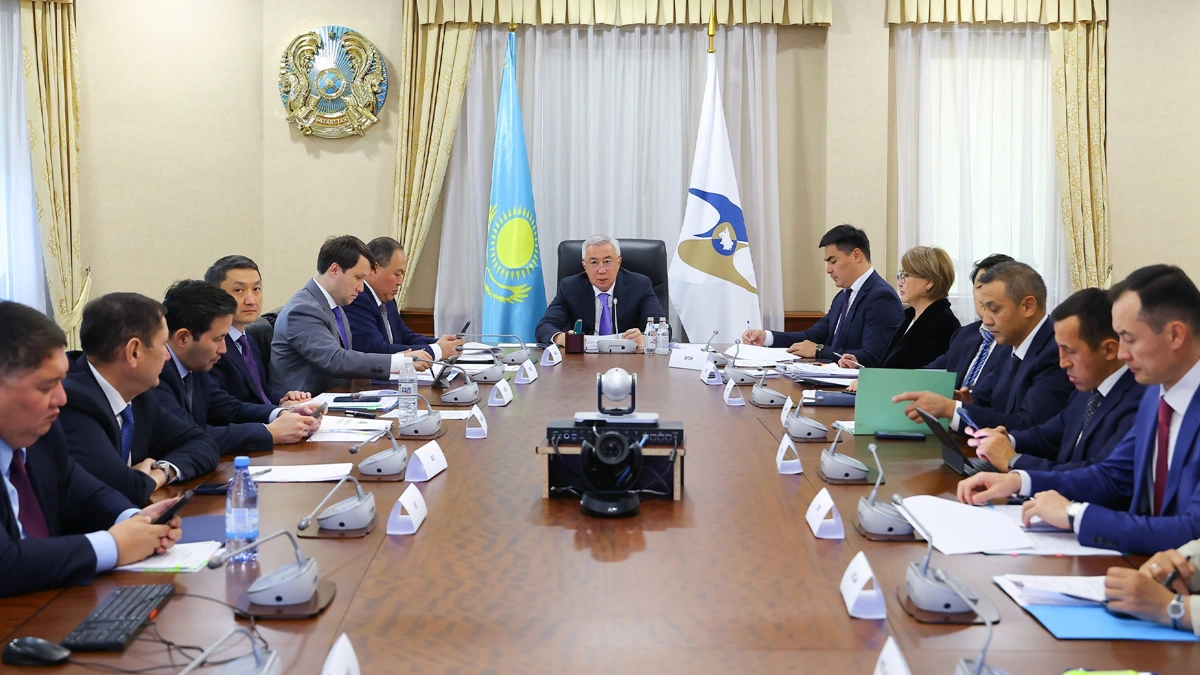
Kazakhstan’s side was led by Deputy Prime Minister and Minister of National Economy Serik Zhumangarin.
One of the projects involves the construction of a paint and coatings manufacturing facility in Russia’s Moscow region. The AKRUS plant is expected to produce paints and coatings with enhanced protection against corrosion and fire compared with existing products.
The project is scheduled to run for five years, with implementation set to begin this year.
The participants include Belarusian company Orion-VK, Kazakhstan’s ASYL CONSTRUCTION LLP, which will supply part of the materials and technological equipment, and Russian company AKZ Pokrytiya LLC.
The second cooperation project involves the construction of a new mixing line at the Samara Gypsum Plant. The facility is expected to increase production of dry construction and specialized mixtures by 75,500 tons per year.
Kazakhstan’s ELITA LLP will participate in the project by providing engineering and construction services, while Belarusian company Remeza CJSC will also be involved.
The project is expected to generate approximately 180 million tenge in tax revenues for Kazakhstan’s budget.
The latest initiatives follow an earlier EAEU cooperation project approved in 2025 to manufacture agricultural machinery in Kazakhstan’s Akmola region.
EAEU cooperation projects are eligible for preferential financing at reduced interest rates through subsidized loan rates. The initiatives are aimed at promoting technological development, establishing new production facilities and expanding trade and economic ties among EAEU member states.
The EEC Council meeting also approved a number of amendments concerning the agricultural sector. The sides agreed to amend the methodology used for field testing and approval of crop varieties.
The council also decided to revise the EAEU’s unified quarantine and phytosanitary requirements for regulated products and facilities at the customs borders and territories of member states.
The changes concern quarantine measures related to pepino mosaic virus, which can affect tomatoes, peppers and eggplants.
Another decision changes the list of regulated products subject to phytosanitary control. In particular, a phytosanitary certificate will no longer be required for wooden packaging and fastening materials if they carry the appropriate marking stipulated by the EAEU’s unified requirements.
The meeting also approved amendments to the Customs Union technical regulation on toy safety.
The amendments establish mandatory requirements for toys intended for children under 14 and are designed to protect consumers from misleading information and prevent products that fail to meet safety standards from entering the market.
The EEC Council additionally considered a number of procedural issues related to the activities of individual industries and the Eurasian Economic Commission.
Earlier, Qazinform reported Kazakhstan and Russia delivered 122 joint industrial projects worth 22.4 billion US dollars.