Kazakhstan's regional leadership: What the numbers show
Kazakhstan ranked 34th among 100 countries in World Population Review's Most Powerful Countries 2026 ranking, leading Central Asia as economic growth, investment and trade figures reinforce its regional standing, Qazinform News Agency correspondent reports.

The ranking places Kazakhstan among the world's 35 most powerful countries. Its position comes against a broader economic backdrop shaped by growing international reserves, sustained foreign investment, expanding transport infrastructure and improving sovereign credit ratings. These developments also reflect priorities pursued under President Kassym-Jomart Tokayev, who has consistently emphasized economic diversification, investment attraction and Kazakhstan's leading role in Central Asia.
Kazakhstan's standing in the international ranking
World Population Review's ranking draws on the power assessment developed by U.S. News & World Report, which considers economic and political influence, leadership, international alliances and military capability. China, the United States and India occupy the top three positions, followed by Germany and Japan.
Kazakhstan ranks ahead of several countries with substantial economic and political influence, including Denmark (36th), the United Arab Emirates (37th), Norway (39th) and Saudi Arabia (40th). Among former Soviet republics, only Russia, in 11th place, ranks higher. Kazakhstan also finishes ahead of Ukraine (51st), Belarus (57th), Uzbekistan (71st), Latvia (74th), Estonia (75th), Armenia (80th) and Georgia (91st).
The regional comparison is particularly notable. Uzbekistan, Central Asia's most populous country, ranks 37 places below Kazakhstan, while no other Central Asian state appears in the top half of the list. Although the ranking reflects several dimensions of national influence rather than economic performance alone, Kazakhstan's position corresponds with its considerable weight in the regional economy.
Investment and economic growth strengthen Kazakhstan's position
One of the principal indicators of Kazakhstan's economic standing is its ability to attract foreign investment. Between 2021 and 2025, cumulative gross foreign direct investment (FDI) inflows reached $114.2 billion. Over the seven-year period from 2019 to 2025, coinciding with Tokayev's presidency, the figure amounted to $155.8 billion.
These investments were recorded during a period marked by the COVID-19 pandemic, disruptions to international supply chains, geopolitical tensions and fluctuations in global commodity markets. Gross FDI figures do not represent net capital inflows, but they illustrate the scale of Kazakhstan's investment relationships with international businesses across successive years.
Economic growth has also remained substantial. According to the Bureau of National Statistics, Kazakhstan's real GDP expanded by 6.5% in 2025, reaching approximately $306 billion in nominal terms. GDP per capita exceeded $15,000, while transport and warehousing grew by 19.4%, construction by 17.5% and industry by 7.7%. The performance of these sectors points to growth extending beyond the country's traditional extractive industries.
Kazakhstan's financial reserves provide another measure of economic resilience. By the end of 2025, the country's combined international reserves, including the assets of the National Fund, had reached $129.3 billion. Of this amount, the National Bank's gold and foreign exchange reserves accounted for $65.4 billion, while the National Fund held $63.9 billion in foreign currency assets.
For an economy where commodity exports remain a major source of revenue, substantial financial reserves offer protection against external shocks. They also strengthen the country's capacity to maintain macroeconomic stability and support long-term development priorities amid uncertainty in international markets.
International rating agencies recognize economic resilience
Kazakhstan's economic standing has received further recognition from international credit rating agencies. In August 2026, S&P Global Ratings upgraded the country's long-term sovereign credit rating to BBB with a stable outlook, citing economic resilience amid global uncertainty and commodity market volatility.
According to the National Bank of Kazakhstan, S&P highlighted the country's significant foreign currency reserves, expectations of a narrowing non-oil budget deficit and improvements in the monetary policy framework. The agency also pointed to stricter rules governing the use of National Fund resources, which are intended to preserve fiscal reserves and strengthen the economy's ability to withstand external pressures.
S&P forecasts real GDP growth of 5.1% in 2026, followed by growth of approximately 4% over the medium term, above the expected performance of comparable economies. Its assessment provides an external indication of Kazakhstan's capacity to sustain economic expansion while pursuing fiscal and monetary reforms.
In September 2026, Moody's affirmed Kazakhstan's sovereign rating at Baa1 with a stable outlook. The agency identified sound public finances, low government debt and substantial international reserves as the main factors supporting the country's credit profile.
Moody's also noted the increasing contribution of manufacturing, construction, transport and other non-extractive sectors to economic activity. According to the agency, investments in digital, transport and energy infrastructure are supporting medium-term growth, while the consistent implementation of institutional and fiscal reforms could further strengthen Kazakhstan's creditworthiness.
Taken together, the assessments suggest that Kazakhstan's economic position is supported not only by its natural resources but also by financial buffers and a gradually broadening structure of economic activity.
Kazakhstan accounts for half of Central Asia's foreign trade
Perhaps the most tangible demonstration of Kazakhstan's regional economic weight is its share of Central Asia's foreign trade. According to the 2025 regional figures, Kazakhstan accounted for approximately 51% of the five Central Asian countries' combined merchandise trade turnover, recording $143.9 billion out of an estimated regional total of $281.4 billion.
The country's contribution to regional exports was even larger. Kazakhstan exported approximately $79 billion worth of goods in 2025, representing nearly 57% of Central Asia's estimated combined merchandise exports of $139.9 billion. In other words, Kazakhstan accounted for more than half of the region's total recorded goods exports to international markets.
These figures demonstrate the scale of Kazakhstan's commercial activity relative to its neighbors. The country's export structure includes oil, metals, uranium-related products, agricultural commodities and manufactured goods, while its geographic position provides access to major markets in China, Russia, Europe and the wider Eurasian region.
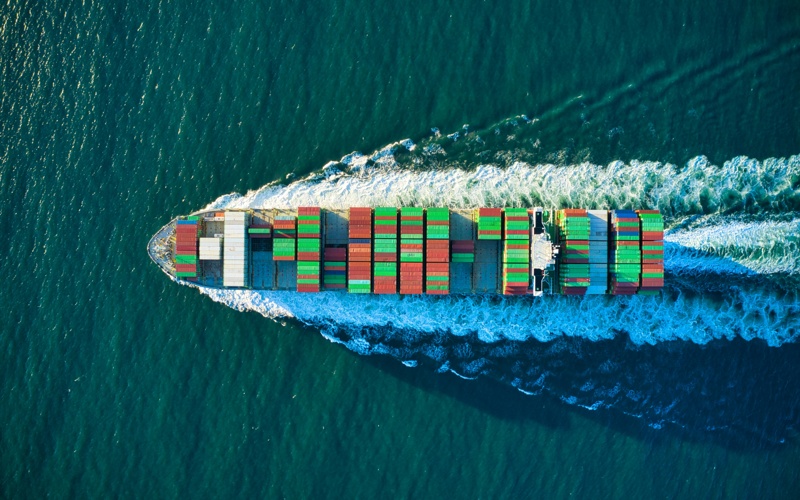
Transport infrastructure is becoming an increasingly important component of this economic position. Kazakhstan has prioritized the development of international corridors connecting Asia and Europe, particularly the Trans-Caspian International Transport Route, commonly known as the Middle Corridor.
Cargo transportation along the route has expanded substantially since 2019, rising from approximately 0.8 million tons to 4.12 million tons in 2025, although volumes declined from a peak of 4.48 million tons in 2024. Container traffic reached approximately 77,000 twenty-foot equivalent units (TEU) in 2025, with plans to increase capacity and raise annual container volumes to 300,000 TEU by 2029.
The infrastructure program has included the completion of the second track of the Dostyk-Moiynty railway section in 2025, alongside railway modernization and the development of port facilities on the Caspian Sea. Such projects are intended to reduce logistical bottlenecks, facilitate international trade and strengthen Kazakhstan's position in supply chains linking China with European markets.
For the world's largest landlocked country, connectivity is an economic necessity. By investing in international transport links, Kazakhstan is seeking to turn its geographic position into a competitive advantage and reinforce its role as a commercial gateway for Central Asia.
Tokayev's economic agenda and the pursuit of regional leadership
Kazakhstan's current economic position also provides context for the strategic objectives articulated by President Kassym-Jomart Tokayev since taking office in 2019. In his September 1, 2021 State of the Nation Address, the President explicitly identified regional leadership as a national priority.
"The strategic goal is to ensure our leading role in Central Asia and strengthen our position in the global economy," Tokayev stated.
The statement outlined an ambition extending beyond economic growth alone. It emphasized Kazakhstan's position within Central Asia and its capacity to participate more actively in international economic relations.
Investment attraction has remained one of the principal elements of this approach. In the same 2021 address, Tokayev highlighted the introduction of strategic investment agreements as a mechanism for attracting foreign capital. Subsequent policy initiatives have focused on improving investment conditions, supporting industrial development and expanding infrastructure, with particular attention to projects capable of bringing technology, employment and export opportunities to Kazakhstan.
Another priority has been reducing the economy's dependence on raw material exports. The President has repeatedly called for the development of manufacturing, transport, logistics and other non-extractive sectors. The growth recorded in these industries, together with Moody's latest assessment of gradual diversification, indicates progress toward that objective, although the transition remains incomplete.
Fiscal discipline has also become increasingly important to the government's economic agenda. Efforts to improve budget management, strengthen coordination with the National Bank and introduce tighter rules for National Fund transfers have attracted attention from international rating agencies. These measures seek to preserve the financial stability necessary for long-term investment and development.
Kazakhstan's economic strategy has unfolded alongside its multi-vector foreign policy, which seeks to maintain productive relations with major international partners while promoting closer cooperation among Central Asian countries. The development of cross-border infrastructure and regional transport initiatives reflects this approach, linking Kazakhstan's national economic interests with broader regional connectivity.

Sustaining regional leadership
The next stage of Kazakhstan's economic development will therefore depend on whether the country can translate its financial resources, infrastructure investments and established trade relationships into sustained productivity growth and a more diversified export base. International credit rating agencies have similarly emphasized that further improvements will depend on the consistent implementation of economic and institutional reforms.
Kazakhstan's 34th-place position in the 2026 international power ranking offers one measure of its standing. The underlying economic figures provide a more detailed picture: the country accounts for approximately half of Central Asia's foreign trade, continues to attract substantial foreign investment and maintains significant financial reserves, while international rating agencies recognize its economic resilience.
These developments are closely aligned with the strategic direction pursued under President Tokayev, particularly his stated objective of strengthening Kazakhstan's leading role in Central Asia. Sustaining that position will depend on extending the progress already achieved and ensuring that regional economic influence translates into lasting growth, greater competitiveness and broader opportunities for the country's population.
Earlier, Qazinform reported that Kazakhstan ranked 34th among 100 countries in World Population Review’s 2026 list of the world’s most powerful nations.