

Kazakhstan's democratic reforms discussed in Brussels
A roundtable on Kazakhstan's new Constitution, a major political renewal that has drawn international interest, took place at the Brussels Press Club, Qazinform News Agency reports.
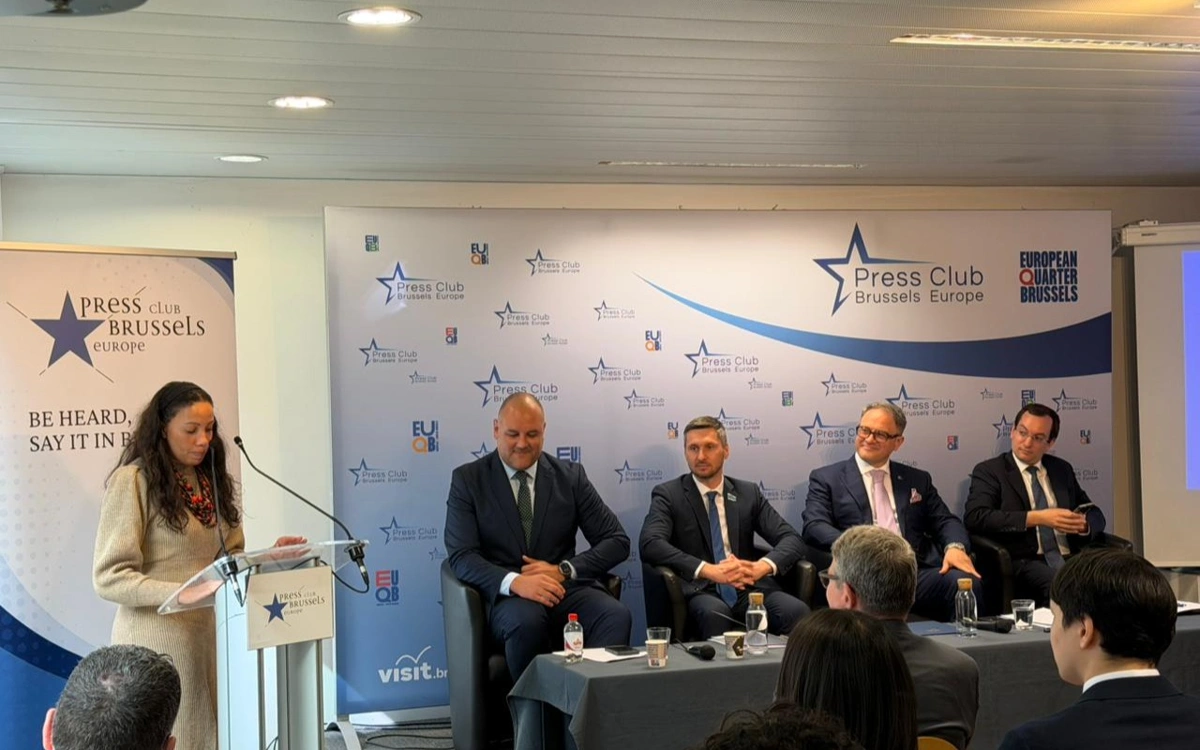
Ambassador Roman Vassilenko, Head of the Mission of the Republic of Kazakhstan to the European Union, delivered welcoming remarks. The main report was presented by Yevgeny Bolgert, Secretary of the Kazakh Senate Committee on Constitutional Legislation, Judicial System and Law Enforcement Agencies, Member of the Constitutional Reform Commission. The Kazakhstani speakers detailed the key changes, clarifying why the current constitutional reform is seen as a turning point in the country's development.
It was noted that the new Constitution aims to establish a clearer distribution of powers among the branches of government. In particular, speakers pointed to the strengthened role of Parliament, expanded mechanisms for parliamentary oversight, and additional guarantees for the independence of the judicial system.
The expanded citizen participation in governance, through new consultative formats and public dialogue, was also highlighted. Among the priorities outlined were the protection of human rights, the rule of law, and greater transparency of state institutions.
The discussion brought together representatives from the European Commission, the EU Council, diplomats, think tanks, and the media. They talked not only about what the reforms say, but also how they will actually work on the ground. Topics at the center of the discussion included citizens' rights in the digital sphere, environmental responsibility, and social inclusivity.
As speakers noted, the high voter turnout and support for the constitutional reform reflected in the referendum results show a growing public demand for a more accountable and balanced system of governance. At the same time, experts emphasized that consistent implementation of the announced changes will be a key factor.
A separate discussion focused on Kazakhstan-EU relations. Participants expressed the view that the constitutional reforms could strengthen investor confidence, increase regulatory predictability, and create new opportunities for cooperation within the framework of the existing Enhanced Partnership and Cooperation Agreement between Kazakhstan, the EU, and its member states.
During the question-and-answer session, participants exchanged views on the practical implementation of the reforms. The parties expressed confidence that the adopted constitutional changes will be introduced consistently and systematically, strengthening the country's institutional system, which in turn will facilitate building trust and developing cooperation between Astana and Brussels.
Marilyn Josefson, Foreign Policy Advisor to the President of the European Council, noted that, in the European Council's view, the Constitutional Referendum in Kazakhstan represents a significant moment in the country's development.
"The high level of participation and engagement is essential for shaping the reform process as it moves forward, and will also be guaranteed to ensure that it is inclusive and sustainable. For international partners like the European Union, these developments will be closely followed with the expectation that they will contribute to a more stable, transparent, and predictable environment — key elements for strengthening long-term cooperation between Kazakhstan and the European Union," she said.
As Qazinform previously reported, the nationwide referendum on the new Constitution of Kazakhstan was held on March 15. According to the results of voting, 7,954,667 citizens of Kazakhstan voted in favor of adopting the new Constitution, that is, 87.15% of those who cast ballots. A total of 898,099 people voted against.