

Kazakhstan drafts its first bill using AI-Quryltai platform
Kazakhstan's Parliament, the Qurultay, has begun using specialized artificial intelligence in lawmaking. For this purpose, it has developed AI-Quryltai, an intelligent environment with a built-in AI model capable of legal analysis, Qazinform News Agency reports.
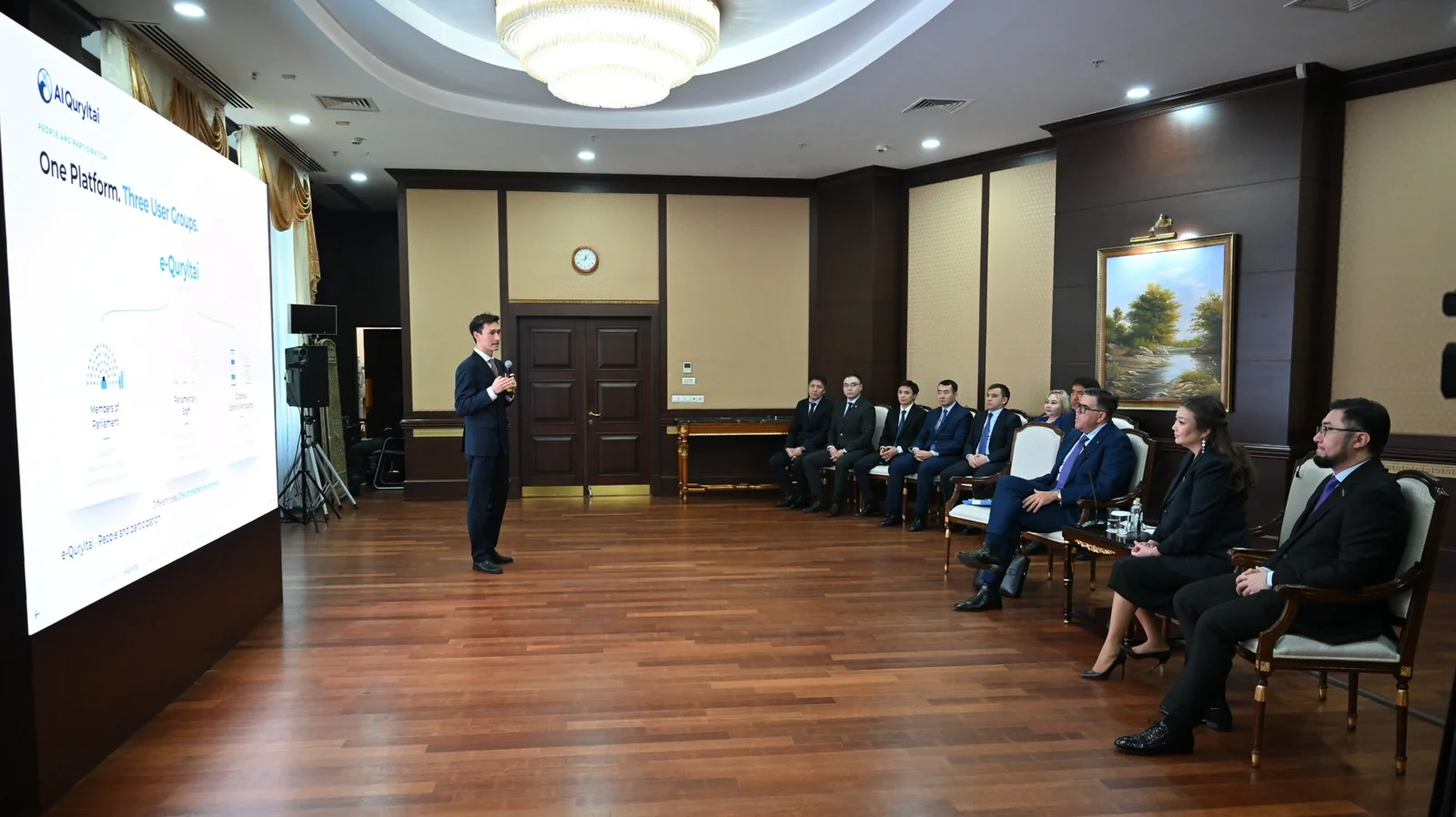
AI-Quryltai's first assignment
The first result of the collaboration between Kazakh deputies and AI-Quryltai is a new draft law "On the Digital and Information Safety of Children."
Using the platform, a comprehensive assessment of the current state of children's safety in the digital and information environment was carried out and presented to the bill's drafters. It drew on big data, an analysis of citizens' appeals and of concerns raised by parents, experts and members of the public, as well as an assessment of existing risks and a review of international practice.
In addition, a specially trained legal model within AI-Quryltai, which integrates a database of more than 800,000 regulatory legal acts, was used for the first time directly in drafting the text of the bill. This made it possible to broaden the scope and completeness of the proposed legislative amendments and to identify potential inconsistencies.
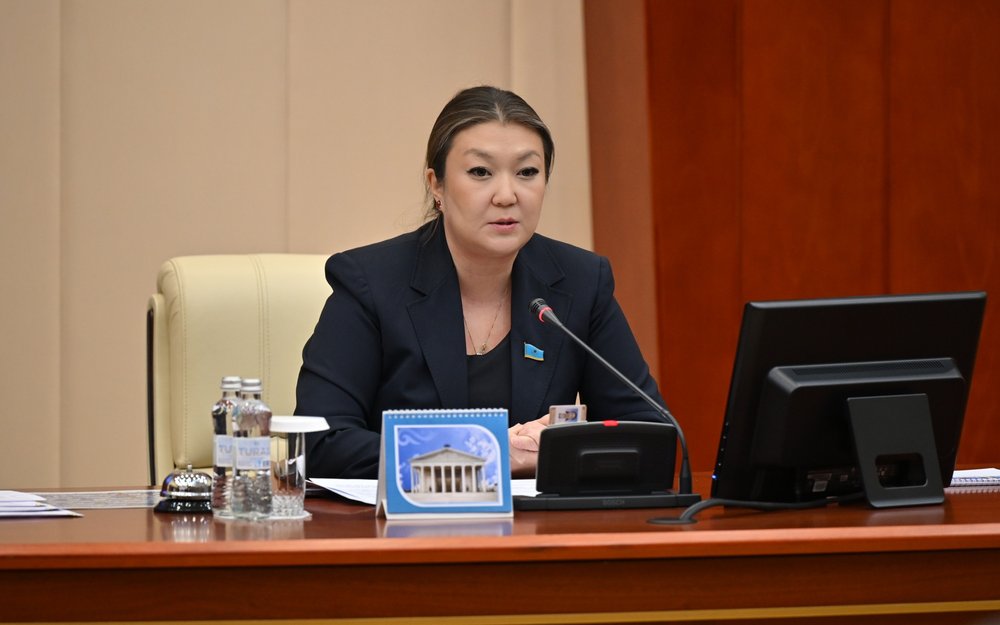
"For example, the platform helped us develop a set of measures to protect children in the digital and information environment, taking into account new threats and the development of digital technologies. These measures include introducing a 'parental control' mechanism on all platforms. In other words, filtering will be introduced for children, so that unlabeled and unverified digital and information products, apps and games will not be accessible to them. We also propose requiring platforms to label all digital products, including apps and games, to verify them, and to block them if threats or violations are detected. In total, more than 120 amendments have been drafted," said the bill's co-author, Deputy Speaker of the Qurultay Dinara Zakiyeva.
Qurultay deputy and Head of the AI Lab Yekaterina Smyshlyayeva noted that the introduction of AI-Quryltai creates an intelligent environment for improving the quality of lawmaking.
"While digitalization has moved documents, procedures and interactions into the virtual environment, AI-Quryltai should help qualitatively transform the way we work with information itself. We are talking about building a new intelligent layer on top of the existing digital infrastructure: interconnected AI agents and specialized modules that will assist deputies and staff of the Qurultay at various stages of legislative work," she said.
How the AI-Quryltai ecosystem works
The ecosystem comprises five interconnected areas covering the entire life cycle of a law, from identifying a public problem to evaluating the results of its application.
The first area is intelligent analytics. AI tools are designed to analyze citizens' appeals, statistics, research and case law, making it possible to assess the scale and dynamics of public problems. The resulting data will be supplemented by findings from meetings with voters, work in the regions and consultations with the expert community.
The second area is a legal module that works with a structured, legally annotated body of regulatory legal acts. It can be used to find interrelated provisions, identify legal conflicts, check terminology, and prepare draft provisions and comparative tables. This is expected to make the legal elaboration of bills more thorough and to reduce the time spent on repetitive legal and technical tasks.
The third area is intelligent review. It provides tools for the preliminary detection of corruption risks, conflicts of interest, legal inconsistencies and shortcomings in legal drafting. AI complements the reviews required by law, while the final professional assessment remains with qualified specialists.
The fourth block covers regulatory impact assessment and modeling the consequences of proposed provisions. This will make it possible to identify in advance the groups affected, as well as the potential benefits, costs and risks for citizens, the economy and public institutions.
The fifth area is monitoring how laws are applied. AI tools will help analyze court decisions, citizens' appeals and statistics, identify recurring problems and evaluate the effects of adopted provisions. If unintended consequences emerge or the intended goals are not achieved, this will help determine whether further legislative work is needed.
At the same time, the deputy stressed that artificial intelligence does not replace people in legislative work.

"Artificial intelligence does not determine the substance of public policy and does not make legal decisions. It helps specialists see a fuller regulatory picture and prepare legal material to a higher standard," said Yekaterina Smyshlyayeva.
According to her, the introduction of intelligent tools does not relieve deputies of responsibility for their decisions and requires a critical assessment of AI outputs. Automating certain routine tasks will free up time, allowing deputies to devote more attention to meeting citizens, working with experts and examining specific real-life situations.
What do the experts think?
AI-Quryltai is currently in the development and pilot testing stage. To test and evaluate domestic solutions, a Lab for AI Lawmaking Tools has been established, bringing together legislators, experts and developers. Its portfolio includes about 10 projects, among them three legislative initiatives.
As Yekaterina Smyshlyayeva noted, each tool must be checked for output quality, legal accuracy, robustness and fitness for professional tasks. The Qurultay's institutional memory, including records of the legislative process, review findings and the history of bill deliberations, also serves as the basis for fine-tuning them.
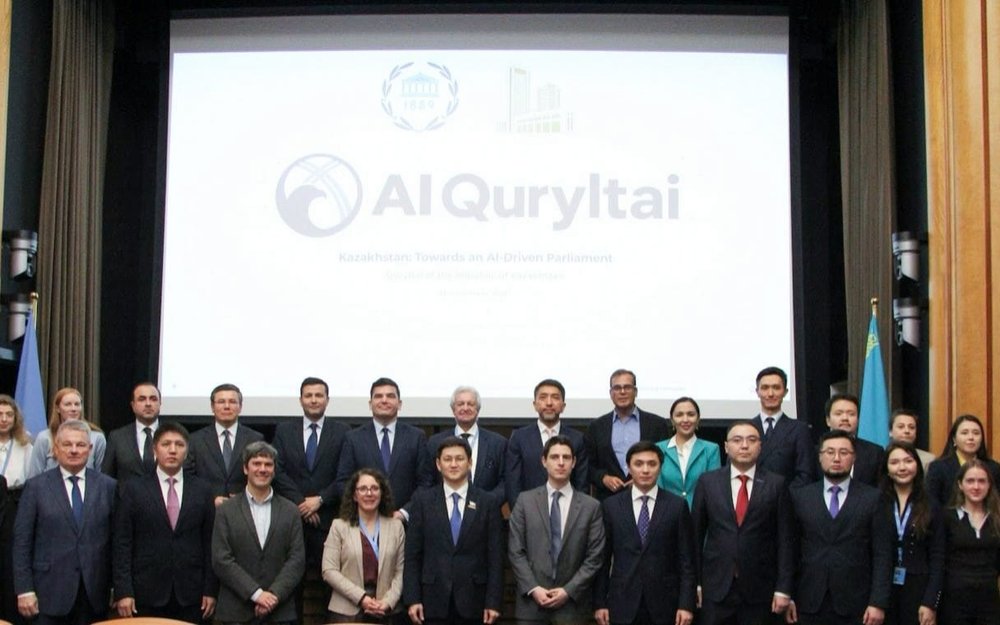
The AI-Quryltai system was presented at the World e-Parliament Conference 2026 in Brussels. Organized by the Inter-Parliamentary Union together with the European Parliament, the event brought together parliamentarians, Secretaries General, heads of IT departments and experts from more than 100 countries.
Following the presentation, IPU President Milton Dick, who arrived in Kazakhstan on a working visit, shared his thoughts on Kazakhstan's experience. He called Kazakhstan's course toward moving from an electronic parliament (e-Parliament) to a parliament that uses artificial intelligence technologies (AI Parliament) impressive.
The IPU President also stressed that artificial intelligence is playing an increasingly important role in the development of the economy and society and is influencing the functioning of democratic institutions.
"Our main task is to ensure that artificial intelligence serves the interests of the citizens we represent in national parliaments. Ultimately, this is about protecting the interests of citizens represented by 45,000 parliamentarians around the world, whom I have the honor of representing as President of the Inter-Parliamentary Union. We must ensure that artificial intelligence technologies work for the benefit of our citizens," he said.
Thus, both Kazakh and international experts agree that artificial intelligence should remain a tool for expert support, while setting regulatory goals and taking responsibility for decisions remain with the deputies.