Kazakhstan showcases its top universities in China
On April 10, the China Study Abroad Forum (CSAF) and the two-day China International Education Exhibition Tour (CIEET) kicked off in Beijing. For the first time, Kazakhstan participated on such a significant scale, presenting a national pavilion, a Qazinform News Agency correspondent in China reports.
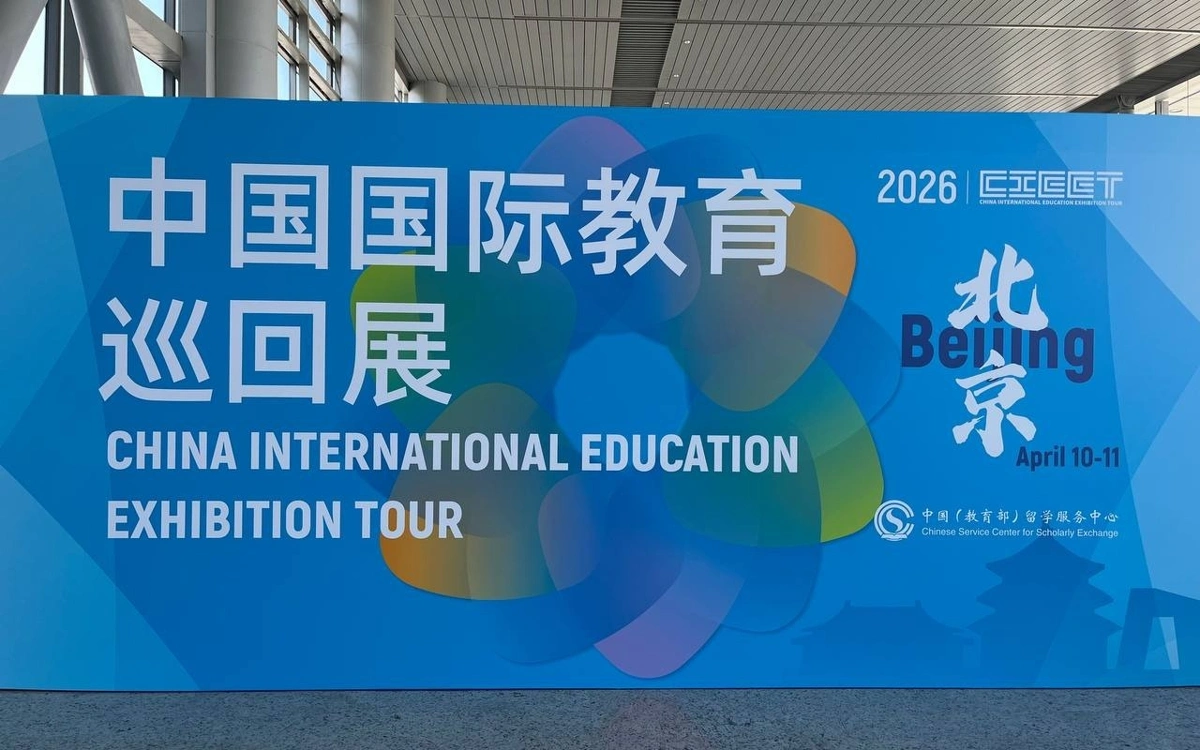
The forum, held under the motto "Openness, cooperation, mutual benefit: Promoting the development of reliable, safe, and high-quality education abroad," featured speakers from China's Ministry of Education and Kazakhstan's Vice Minister of Science and Higher Education, Gulzat Kobenova.
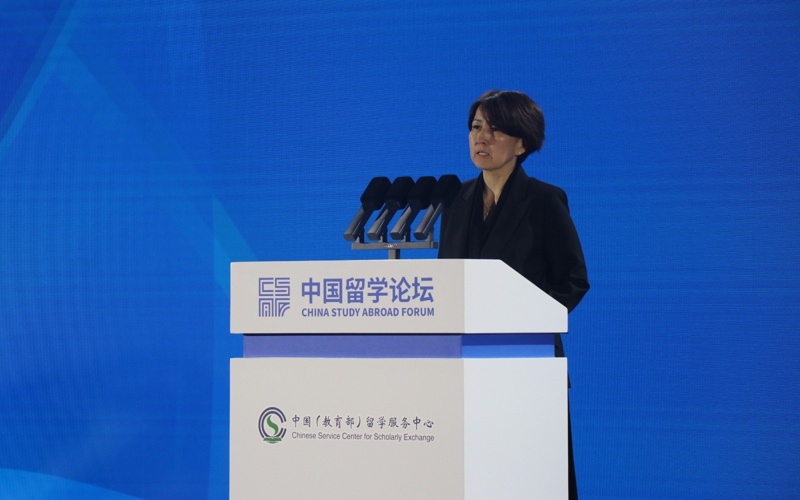
In her speech, Vice Minister Kobenova highlighted the current state and prospects of Kazakhstan's higher education system. She informed attendees about ongoing efforts to expand academic cooperation and develop overseas universities' branches in Kazakhstan.
"Today, Kazakhstan is represented here on such a scale for the first time. This is more than just participation in an exhibition — it is a declaration of our readiness for a genuine educational partnership with China. We are linked by the Silk Road, which carried not only goods but also knowledge, culture, and ideas. Today, that road leads to our universities," she stated.
A key focus was placed on the Study in Kazakhstan initiative, a unified digital platform designed to attract students. The vice minister outlined an ambitious goal to increase the number of international students in the country to 100,000 by 2029.
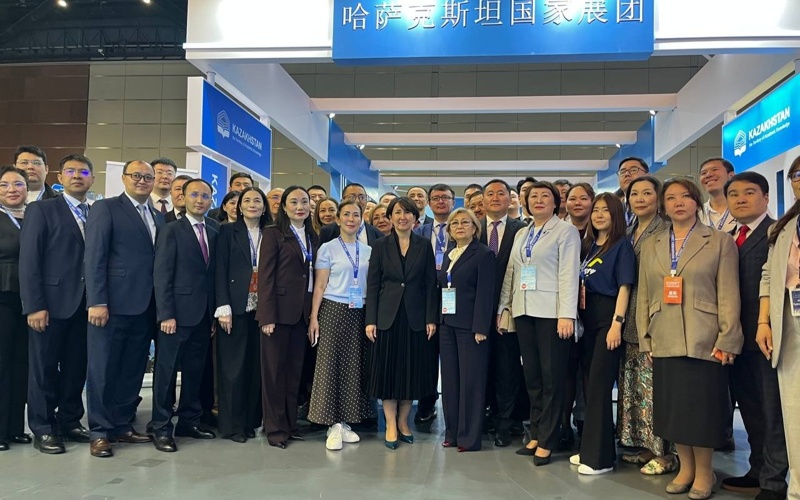
27 leading Kazakh universities presented their programs at the national pavilion under the banner "Kazakhstan — The Territory of Academic Knowledge."
Nurken Abdigali, Director of the Internationalization and Recruitment Department at Al-Farabi Kazakh National University, noted the immense potential for recruitment of international students.
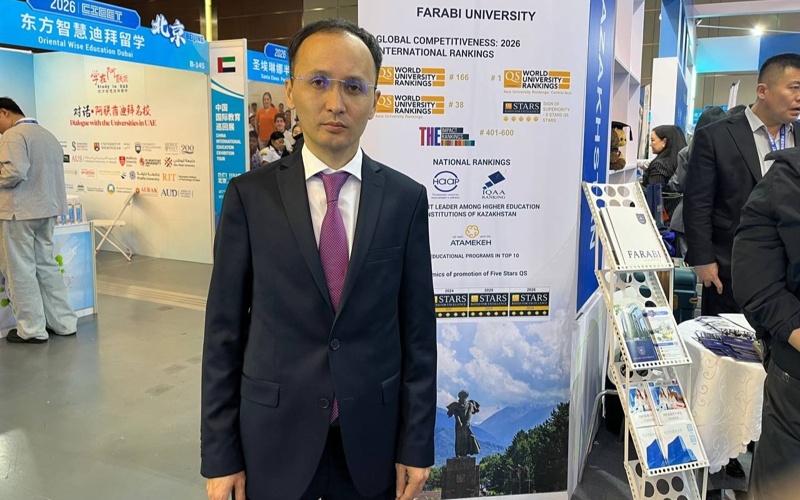
"Currently, about 2,000 students from China study at our university, many in master's and PhD programs. This reflects the high scientific potential of Kazakhstan. KazNU is also developing technological projects with Chinese partners, including robotics centers and remote sensing centers," he shared.
Gulmira Qanay, Vice President of Nazarbayev University, emphasized that Kazakhstan has reached a fundamentally new international level, standing alongside traditional leaders from the UK and other major education powerhouses.

"China shows great interest in Kazakh universities, including our university, where 7,500 students study, including 500 international students. The university is also working on launching double-degree programs with top universities in China that are ranked in the Times Higher Education," she added.
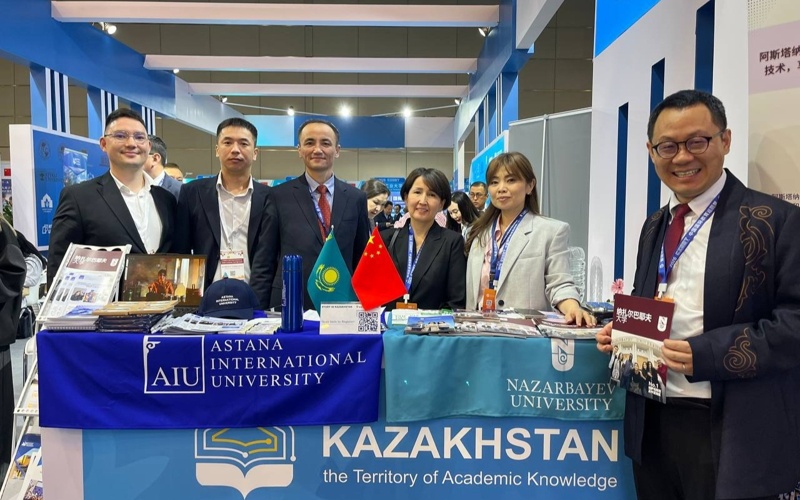
Kairat Abdrakhmanov, Vice President of Astana International University (AIU), emphasized Kazakhstan's ambition to carve out a significant niche in the changing global education landscape. According to him, the university is successfully developing cooperation with China in several key areas. A branch of Beijing Language and Culture University has been opened at AIU, with the official launch ceremony attended by the heads of state of both countries.
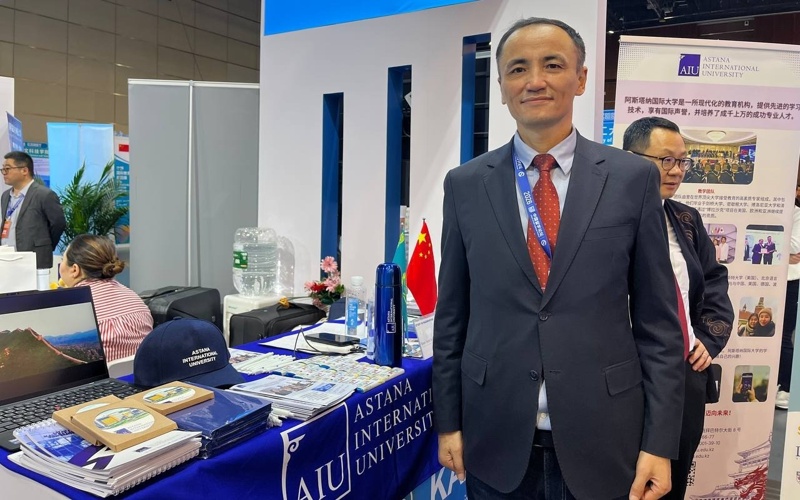
"A crucial milestone was the launch of the first and only digital HSK center of the Chinese Ministry of Education at AIU in November 2025. This facility allows students to take the official Chinese language proficiency exam on a computer, completely replacing the traditional paper format. About 200 people take the test each month, receiving confirmed results within 24 hours," he noted.
According to Kairat Abdrakhmanov, AIU also offers double-degree programs with the University of International Business and Economics (Beijing) and maintains partnerships with Tsinghua University and Shenzhen University. The parties are actively negotiating the creation of joint research laboratories in the field of artificial intelligence.

It should be noted that Kazakhstan's participation in CSAF and CIEET is aimed at promoting the national higher education system internationally, developing the export potential of educational services, and expanding international academic partnerships.
The international education forum brought together more than 500 participants from educational institutions and relevant organizations in China, the United States, the United Kingdom, Russia, Australia, Italy, Spain, Greece, Singapore, Malaysia, Vietnam, and other countries.
Earlier, Qazinform reported that an exhibition of major universities kicked off in Kazakhstan.