

Kazakhstan, China to deepen cooperation in non-ferrous metals
Kazakhstan and China plan to deepen cooperation in the non-ferrous metals industry and expand joint projects across the entire value chain, Qazinform News Agency quotes Jia Mingxing, Vice Chairman of the China Non-Ferrous Metals Industry Association, as saying.

He said strengthening trade and economic ties between Kazakhstan and China, coupled with bilateral trade of more than $48 billion in 2025, have created a solid foundation for expanding cooperation in the metallurgical sector.
"Thanks to the high level of mutual trust, political stability and friendly relations, Chinese investment in Kazakhstan is increasingly directed toward metallurgy, workforce training and the development of the entire industrial value chain," he said at the Kazakhstan-China Forum on Sustainable Development of Non-Ferrous Metallurgy in Astana.
Jia said joint projects are being carried out in accordance with the laws of both countries and have become an example of mutually beneficial cooperation while advancing production localization. He outlined three priority areas for expanding bilateral cooperation.
The first priority is deeper industrial cooperation, with Chinese companies aiming to further localize production in Kazakhstan.
"We have seen Chinese enterprises reach annual copper production of 300,000 mt and continue to expand their investments. Output of refined copper cathodes is also increasing," he said.
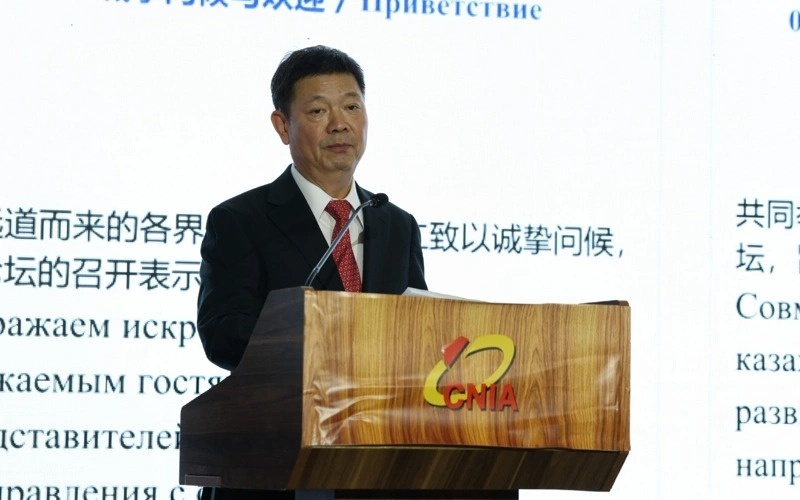
Jia said China plans to continue strategic cooperation with Kazakhstan in 2026 across the industrial value chain. He cited Zijin Mining's Boguty tungsten deposit project, along with other strategic initiatives, as examples of successful cooperation.
The second priority is workforce training and knowledge sharing. Jia said the focus will be on upgrading workforce skills, expanding production of higher value-added products and adopting more efficient production practices. He added that Chinese projects in Kazakhstan could serve as models for green mining, advanced technologies and modern production management.
The third priority is cross-sector cooperation. Jia said cross-border railway links between Kazakhstan and China, the two countries' strategic partnership and the opportunities offered by special economic zones in China's Xinjiang Uygur Autonomous Region would help deepen bilateral cooperation.
Earlier, it was reported that three Chinese automakers plan to localize production in Kazakhstan.