Kazakh Tazy puppy births rise fourfold in two years
The number of Kazakh Tazy puppies born has quadrupled since 2023, experts announced at the Astana Winner 2026 international dog show taking place in Astana on May 2–3, Qazinform News Agency reports.
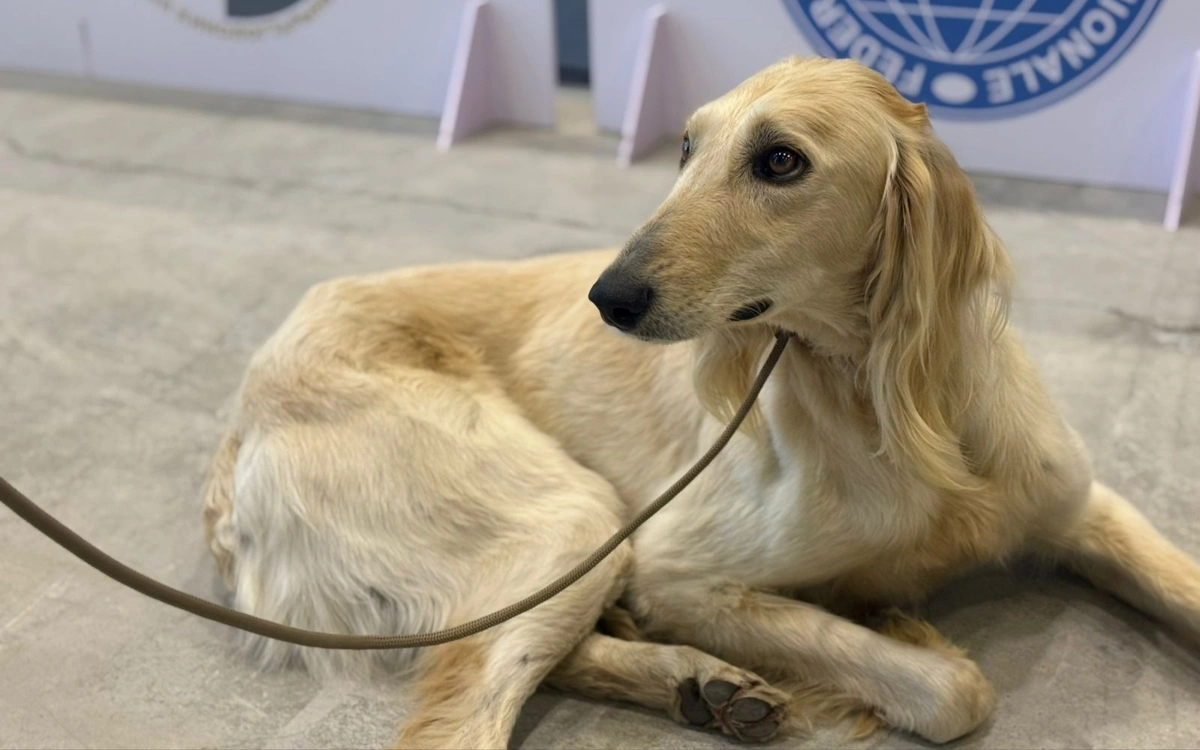
Tazy – one of Kazakhstan's seven treasures
A special feature of the exhibition was a mono-breed showcase dedicated to the Kazakh Tazy — a platform where the breed is finally getting the attention it deserves, and its cultural value is being reaffirmed. Breeders, experts, and enthusiasts gathered to discuss how to preserve and promote the Tazy beyond Kazakhstan's borders.
Among the participants is Yelena Khardina from Oskemen, the owner of a two-year-old brown Tazy named Tamerlan. She has been involved in canine breeding since 1991 and now heads the national Tazy breed club under the Union of Cynologists of Kazakhstan.
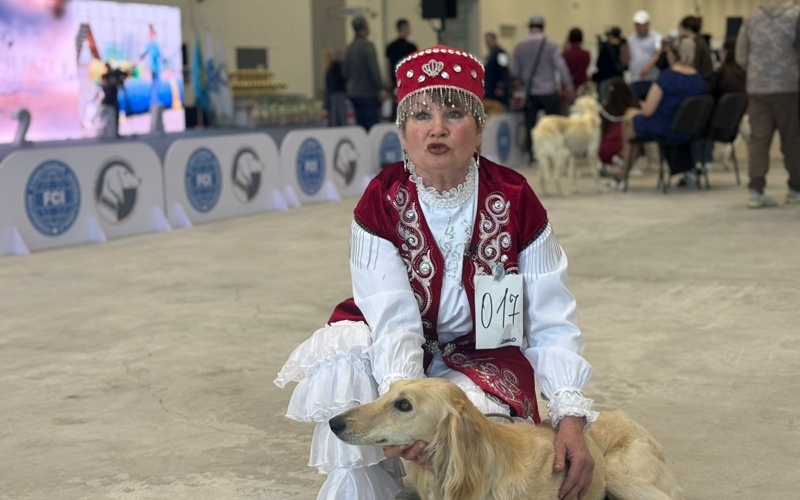
According to Khardina, Tamerlan's story began with hardship. In 2024, he was the only survivor of his litter after a dangerous virus. The illness left him with joint complications — the puppy could not walk. Yelena Khardina nursed him back to health and named him after the warrior, believing he would endure.
Today, Tamerlan is not just an exhibition participant but an award-winning dog. Despite the challenges, he now competes successfully at shows and vies for champion titles at the international level. Judges have noted his movement, conformation, and breed qualities.
"The Tazy breed is hundreds of years old. For centuries, it saved nomads from starvation and protected them from wolves. Yet for a long time, this breed was unknown to the world. When I first saw a Tazy, I wanted the whole world to know about it. I set myself the goal of representing it at international exhibitions, presenting it with dignity, including in beautiful national costumes," says Yelena Khardina.
After taking over as head of the national Tazy breed club under the Union of Cynologists of Kazakhstan, she reached out to breeders across the country, calling on them to unite and register their dogs properly.
"It is also important that our President highlighted that the Tazy is one of Kazakhstan's seven treasures. Indeed, in the past, this breed saved villages from starvation by hunting game on its own and protected against wolves. One dog would struggle, but a pair or a small pack of three Tazy could fight off predators," she added.
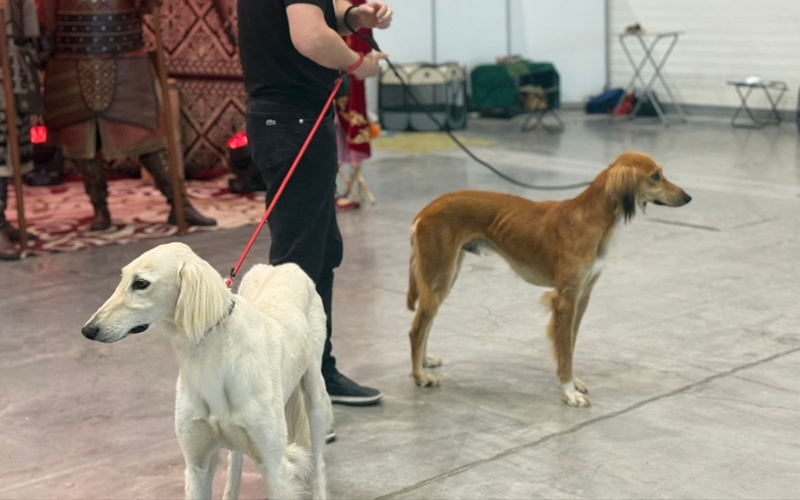
Khardina particularly highlighted the significance of President Kassym-Jomart Tokayev's decision to establish September 3 as the Day of the Kazakh Tazy and Tobet. Furthermore, with the support of the President and the Union of Cynologists of Kazakhstan, the breed was officially attributed as belonging to Kazakhstan two years ago. Experts now have a decade to prepare full international documentation. Previously, efforts had been scattered: Tazys were bred in different regions and villages, but the breed had virtually no presence on the global stage.
How Kazakhstan is boosting Tazy population
According to Bauyrzhan Serikkali, President of the Union of Cynologists of Kazakhstan, the most crucial indicator today is the births of Tazy puppies within the breeding system — and this number is growing rapidly.
"For instance, in 2023, when we began this ambitious effort, there were 93 puppies born annually. And in 2025, the number reached 411. In other words, the birth rate has quadrupled. This refers to the purebred dogs only. What matters most to us is the number of puppies from dogs already included in the breeding system. The Tazy population is clearly growing — this trend is obvious," the speaker stated.
For now, approximately 4,000 purebred Tazys have been registered in the unified studbook, according to Bauyrzhan Serikkali.
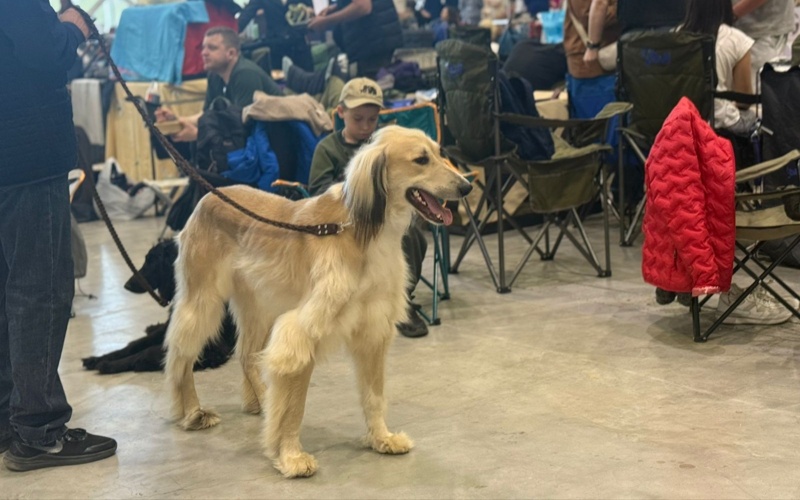
"We arrange events not only in cities but also travel to villages. There, breeders often lack direct contact with cynological clubs. Therefore, we go directly to them, gather the owners, and examine the dogs," he said.
Serikkali explained that if dogs meeting the breed standard are found on site, they are immediately registered and issued documents, on the basis of which a pedigree can be obtained. Such entries are recorded as a registry because information about ancestors is missing. This is also important as it helps expand the unified studbook and increase the breed's numbers.
"It is well known that our Tazy breed is an extremely friendly, calm dog. It never barks or shows aggression toward children, domestic animals, or strangers. These temperament traits are therefore written into the breed standard. And when a dog enters the show ring, this temperament becomes evident," the expert said.
According to the organizers, interest in the exhibition is steadily rising: around 400 dogs daily. Of these, over 60 Tazys are featured in the mono-breed showcase, and about 40 more are taking part in the international program. Judging is conducted strictly in line with breed standards: experts examine everything — from conformation and coat condition to teeth and temperament. Based on the results, a dog either receives breeding approval or is excluded from it. The Union of Cynologists of Kazakhstan monitors all matings.
As Qazinform reported earlier, the meeting between Kazakh President Kassym-Jomart Tokayev and President of the Fédération Cynologique Internationale (FCI) Tamás Jakkel centered on cooperation prospects with the Federation in promoting domestic dog breeding and preserving a stable breed gene pool.