Kazakh scientists develop smart irrigation cutting water use by 32%
Kazakhstani researchers have developed an innovative irrigation system, Qazinform News Agency reports.
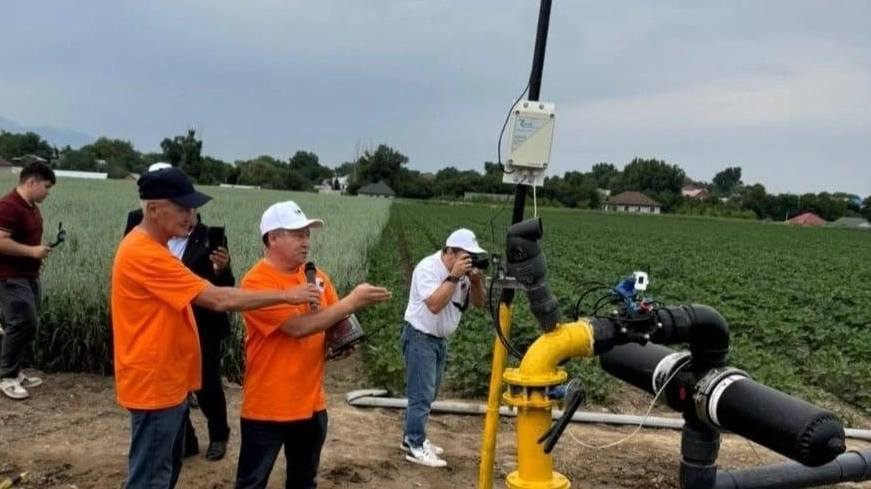
Specialists at the Kazakh Research Institute of Agriculture and Crop Production, part of the National Agrarian Science and Education Center (NASEC), proposed a fundamentally new approach to farming, the Ministry of Agriculture announced.
Instead of outdated fixed-schedule irrigation, the technology flexibly adjusts water supply to the specific crop and its current growth stage.
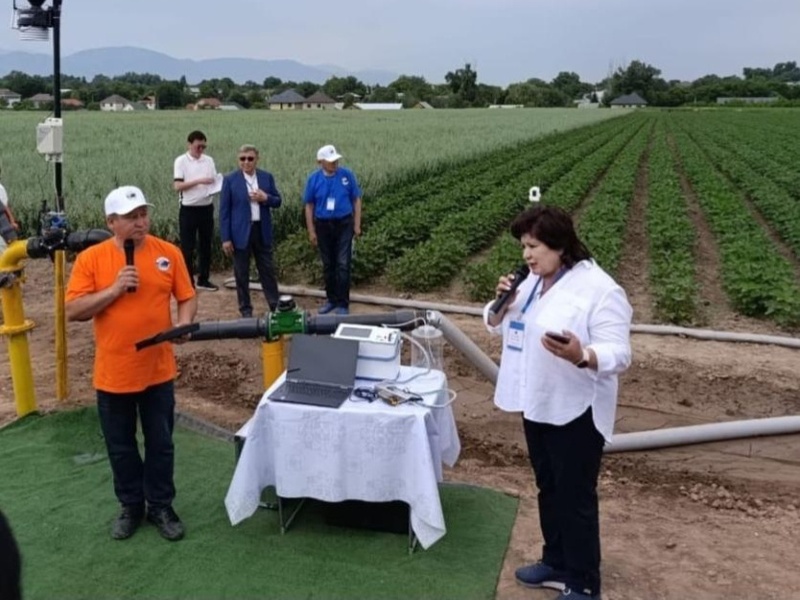
"The development combines differentiated water feed rates for various crops with a digital automated irrigation control system. The technology makes it possible to determine the irrigation regime based on the crop, its growth stage, soil moisture depth and the required volume of water. These parameters are built into the digital system," the ministry said.
The technological complex includes soil and environmental sensors, a digital weather station, flow meters, pressure regulators and special software. This enables remote control of irrigation and fertilization by time or volume, alongside precise control of individual irrigation sections.
In addition, the new irrigation system can run on renewable energy sources, making it usable at sites that require autonomous power supply for equipment.
The ministry emphasized that the benefits of the development have already been proven in real field tests. For instance, when growing sugar beets at the Nurzhan farm's experimental site, the irrigation rate was 3,278 m³/ha compared with a designed rate of 4,850 m³/ha. Water savings reached 1,572 m³/ha, or 32%, at a yield of 119 quintals per hectare.
For soybeans, the irrigation rate was 2,620 m³/ha versus a designed rate of 3,000 m³/ha. Savings amounted to 380 m³/ha, or about 13%, at a yield of 46.8 q/ha.
For grain corn, irrigation regimes were developed for different soil moisture levels and growth stages. At a designed irrigation rate of 4,500 m³/ha, the yield of the Tauelsizdik 20 SV hybrid reached 160.2 q/ha in some variants. Research was also conducted on rice. In some drip irrigation variants, yields reached 46.1 q/ha.
"The developed technology is intended for agricultural enterprises, farms, and scientific research and educational experimental organizations that use irrigated farming. It makes it possible to move from irrigation at a fixed rate to managing water supply based on the crop's actual needs, thereby using water resources carefully while maintaining high crop productivity," the Ministry of Agriculture said.
A comparative assessment of various irrigation methods and crop water consumption coefficients is underway. The research is part of the Ministry of Agriculture's 2024–2026 Research and Technology Program.
Earlier, Kazakhstan's Foreign Minister presented Kazakhstan’s security, environmental, and water Initiatives at the UNGA General Debate.