Kagan and Soai win Nobel for molecular mystery
France’s Henri B. Kagan and Japan’s Kenso Soai have won the 2026 Nobel Prize in Chemistry for discoveries explaining how chemical reactions can favor one mirror-image form of a molecule, reports a Qazinform News Agency correspondent.
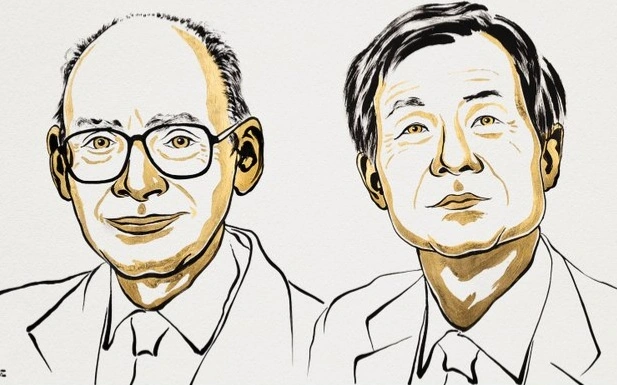
The Royal Swedish Academy of Sciences recognized the pair “for the discovery of non-linear effects and autocatalysis in asymmetric organic synthesis,” according to its official announcement.
Many molecules exist in two forms that resemble left and right hands. Although their components are identical, their effects can differ. In medicines, one form may provide the intended treatment while the other causes unwanted effects.
Kagan demonstrated in 1986 that a catalyst could produce a greater predominance of one molecular form than scientists had expected.
Soai subsequently developed reactions in which the product helps catalyse its own formation. This process amplifies a tiny initial imbalance until one mirror-image form overwhelmingly dominates.
Their findings gave chemists tools to improve reactions used in manufacturing medicines, fragrances and agricultural chemicals. They also helped explain how the preference for one molecular form, a defining feature of life’s chemistry, can arise. Soai’s laboratory reaction, however, differs from the chemistry of living organisms.
The laureates will share the 12 million Swedish kronor prize, approximately $1.2 million.
Earlier, Qazinform News Agency reported that Belgian physicist Francis Halzen won the 2026 Nobel Prize in Physics for his pioneering work on the IceCube Neutrino Observatory and the discovery of high-energy neutrinos from space.