Japan’s Supreme Court grants first posthumous retrial in life sentence case
Japan's top court has granted a posthumous retrial for a man convicted of robbing and murdering a 69-year-old woman in 1984, in the first such retrial in postwar history for a case involving a sentence of life imprisonment or death, Kyodo reports.

The decision dated Tuesday by the Supreme Court's Second Petty Bench granted a retrial of Hiromu Sakahara, who died of illness aged 75 in 2011 while serving a life term, dismissing the prosecution's appeal. The move indicates a high possibility of his acquittal in retrial proceedings at the Otsu District Court in Shiga Prefecture.
"It has taken an incredibly long time. Something this tragic must never happen again," his 64-year-old son Koji said at a gathering in Tokyo on Wednesday.
He also called for a "swift start of the trial and finalization" of a sentence later at a press conference in Osaka.
More than seven years have passed since the Otsu District Court initially approved reopening the trial in July 2018 as sought by Sakahara's family. Prosecutors had filed two objections during the process, prolonging it before the decision was finalized.
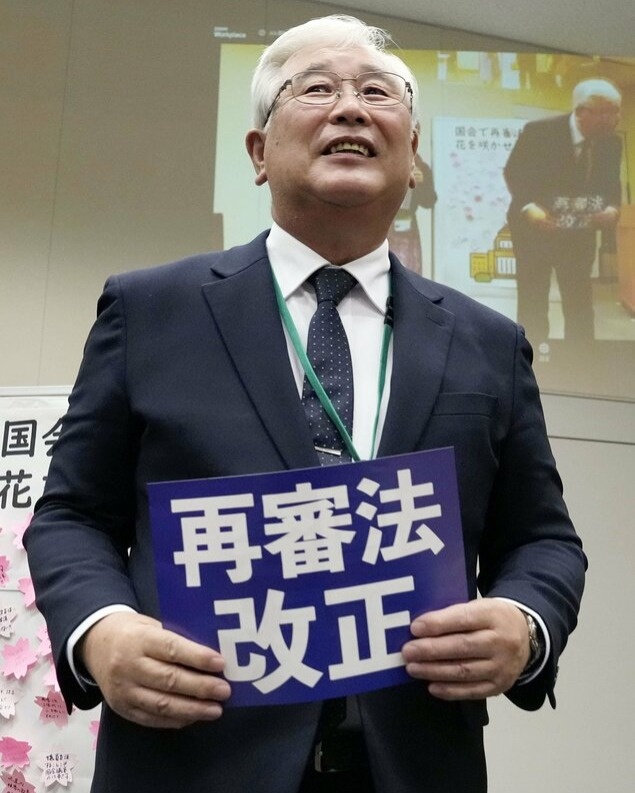
The latest development comes as the Justice Ministry works to review Japan's criminal retrial system, amid criticism that the process of overturning wrongful convictions is excessively prolonged, largely due to inadequate legal provisions.
Discussions at the ministry have so far indicated that the reform will not include a provision prohibiting prosecutors from filing objections against starting a retrial, but Sakahara's case could bring renewed attention to the issue.
In a decision finalized by the Supreme Court in 2000, Sakahara was found guilty and sentenced to life in prison on charges of killing Hatsu Ikemoto, a liquor store manager in Hino, Shiga Prefecture, and stealing her cash box.
Sakahara argued in an initial plea for a retrial that his original confession during the investigation was made under coercion, but the Otsu District Court dismissed it in 2006. Sakahara was appealing the ruling at the Osaka High Court when he died.
Following a second plea, the district court ordered a retrial in July 2018 for Sakahara, questioning the credibility of his confession about guiding investigators to the scene. The ruling was upheld by the Osaka High Court in 2023, with prosecutors appealing it.
Japan's Code of Criminal Procedure allows a retrial to be held even after the death of a person whose guilty sentence is finalized when there is a clear reason to believe the individual may be innocent.
Courts have so far approved only a handful of posthumous retrials sought by bereaved families, including over the so-called Yokohama Incident, often described as Japan's worst case of repression of free speech during World War II.
The first posthumous retrial held in the postwar period was in connection with a murder case involving a woman who was sentenced to 13 years in prison. She was acquitted by the Tokushima District Court in 1985.
Earlier, Qazinform reported that prosecutors at the International Criminal Court began presenting evidence to support charges against former Philippine President Rodrigo Duterte over his controversial anti-drug campaign.