Investors eye AI-powered energy future in Kazakhstan
Working groups on investment policy presented reports at an interim meeting of the Foreign Investors’ Council (FIC) under the President of Kazakhstan, Qazinform News Agency cites the Government’s press service.
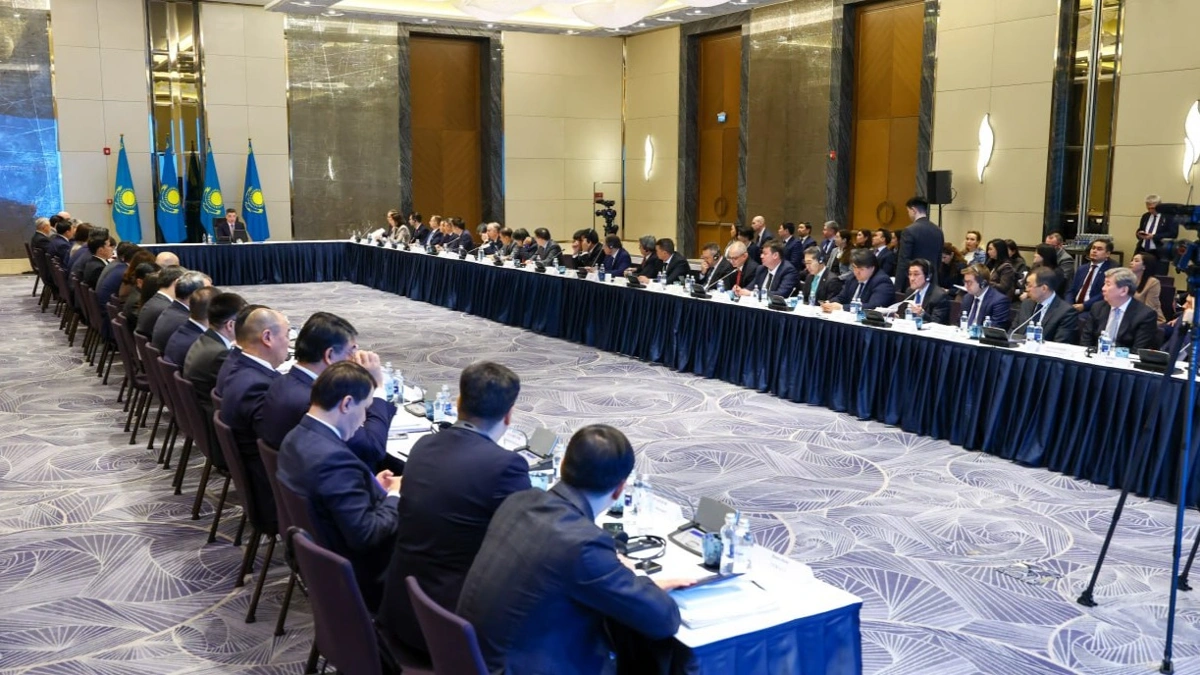
The meeting on Thursday covered energy, ecology, and the oil and gas industry; labor legislation, the development of human capital, and the employment of foreign nationals; digitalization; as well as healthcare and pharmaceutical industry development.
Participants addressed the customs valuation of goods and VAT neutrality, the regulation of methane emissions in the oil and gas sector in line with international best practices, and proposals regarding visa support for foreign workers and the organization of mentorship programs.
Regarding the regulation of public cloud services, the meeting participants highlighted the need for a balance between innovation and security. In healthcare, the importance of developing public-private partnerships for professional training, internship programs, and dual education was emphasized.
Leadership from the Ministries of National Economy, Energy, Labor and Social Protection, Artificial Intelligence and Digital Development, and Healthcare provided comments on the issues raised by the investors.
Particular attention was given to the adoption of digital solutions within the energy sector.
The high efficiency of AI-powered defectoscopy for overhead power lines was highlighted. The pilot project scanned 618 power transmission pylons in just two days, processing 2,000 images to uncover nearly 7,000 defects. The recognition accuracy for typical damage is 98%, including insulator contamination and degradation, pylon deformation, missing fasteners, and the risk of line breaks.
Additionally, the integration of thermal imaging and LiDAR systems enhanced the impact of digitalization, enabling a transition to comprehensive diagnostics. At the same time, robotic systems are now performing acoustic resonance diagnostics inside heating network pipelines. This solution enables internal pipeline inspection without excavation, enabling targeted repairs. The pilot project in Shymkent in 2025 demonstrated over 70% cost savings during the inspection of 1.2 km of heating networks.
Furthermore, an AI assistant was introduced in the gas industry for the automated recognition of gas meter readings via mobile app photography. The solution has proven effective in reducing operator workload and minimizing human-factor errors.
A wide range of issues was discussed during an open dialogue with foreign investors.
Marubeni Corporation expressed interest in Japanese companies' participation in AI and digital technologies, including deploying them to support socially vulnerable groups. The Ministry of Artificial Intelligence and Digital Development cited practical AI cases based on the Digital Family Card in Smart Data Ukimet and noted the development of the Social Wallet.
Polpharma raised issues regarding patient safety and the fight against counterfeit medicines. The Ministry of Healthcare reported on the introduction of mandatory drug labeling from July 1, 2024, and plans for a risk-oriented mechanism for selecting medications from the market.
Besides, CNPC, EY, JP Morgan, and Kazzinc (Glencore) brought forward issues regarding oil transportation tariffs, the modernization of requirements for data localization and cross-border transfer, and taxation in the mining and metals sector, to name but a few.
Following the meeting, the Prime Minister instructed government bodies and organizations, in collaboration with the Kazakhstan Foreign Investors’ Council Association (KFICA), to address all issues and recommendations raised.
Earlier, Prime Minister Olzhas Bektenov noted that the Government is open to constructive dialogue with investors.