How AI could transform Kazakhstan’s industries: Interview with NVIDIA vice president
Digital twins allow engineers to test factory changes, train robots and assess infrastructure performance before implementing solutions in the real world. In an interview with Qazinform News Agency, Rev Lebaredian, NVIDIA’s Vice President of Physical AI Simulation, discusses the opportunities these technologies offer Kazakhstan and why computing power alone is not enough to put them into practice.
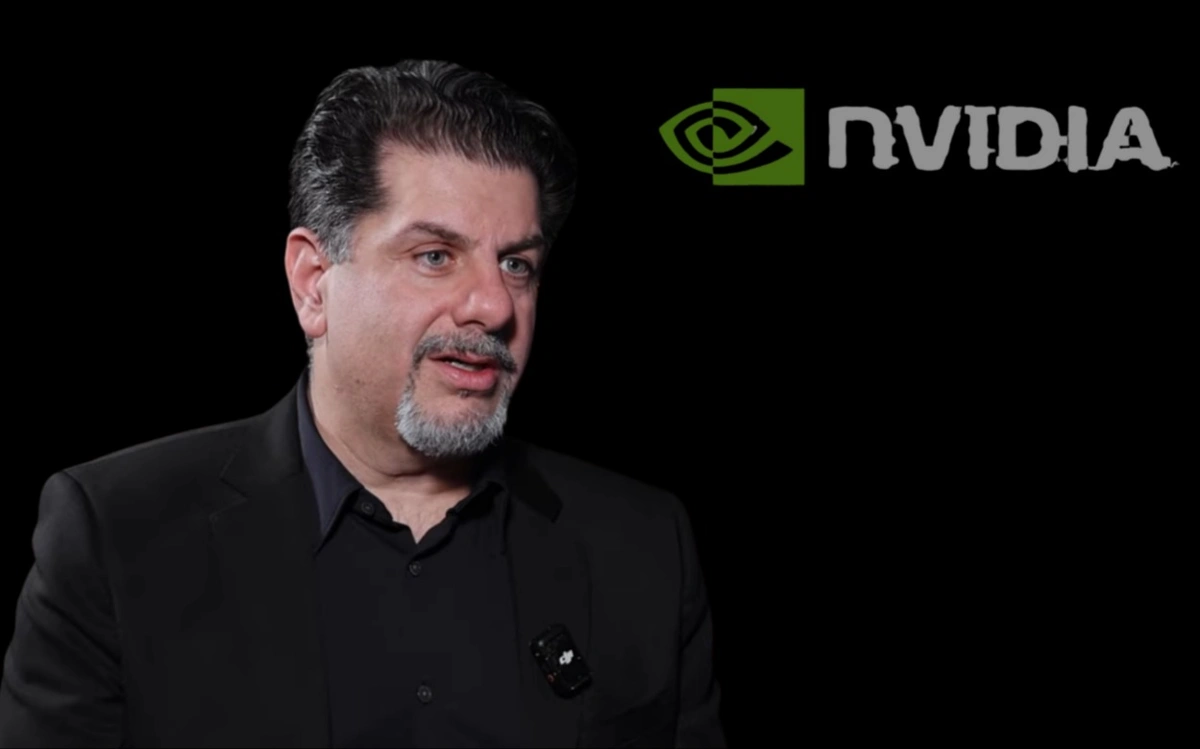
You have spent more than 30 years working in computer graphics, from Hollywood studios to NVIDIA. How has the role of computer graphics changed with the rise of artificial intelligence, and what do you think is the biggest transformation still ahead?
For much of my career, computer graphics was about creating virtual worlds that people could believe in. With physical AI, those worlds become places where machines can learn. That makes the physics essential: a robot needs to understand what happens when it picks up an object, moves through a room or encounters something it hasn’t seen before.
Simulation lets developers explore those interactions repeatedly, under conditions that would be expensive, difficult or dangerous to reproduce physically.
The biggest transformation ahead is AI moving into the physical world - helping machines perceive, reason and act. Decades of progress in graphics, physics simulation and accelerated computing are providing essential building blocks for that transition.
NVIDIA Omniverse is designed to create and simulate physically accurate virtual worlds. How close are we to a point where companies can test factories, robots, vehicles or entire cities virtually before deploying them in the real world?
This is already happening. BMW Group uses NVIDIA Omniverse in its Virtual Factory to plan and test manufacturing changes. BMW said previously that a production-line collision check that previously required almost four weeks of physical testing can now be simulated in three days.
AI agents are now changing how we build and use these digital twins too. A great deal of engineering effort goes into preparing the data, connecting software and setting up simulations. With NVIDIA Omniverse libraries and agent skills, developers can have agents help carry out that work and run experiments.
An engineer could describe a goal - such as moving materials through a factory more efficiently - and have an agent help explore different layouts and compare the results. The digital twin gives that agent a way to test the likely physical consequences of a proposed change. Engineers can explore more possibilities, check the results against physical tests and real-world measurements, and use that feedback to refine the digital twin and decide which changes to make.
What industries do you expect to benefit most from the combination of generative AI, Omniverse and simulation over the next five years - manufacturing, automotive, energy, construction, healthcare, or something else?
Manufacturing, logistics and automotive are among the strongest near-term opportunities. They involve complex physical systems, where changing a production line, introducing a robot or testing a vehicle can be expensive and time-consuming.
Simulation lets engineers explore those changes virtually. Generative AI can help create more varied training scenarios, and AI agents can help coordinate design, simulation and optimization, making it easier to explore more options. Digital twins connect that work to the equipment and environments companies actually operate.
Energy, construction and healthcare also have significant opportunities. Over the next five years, I expect adoption to grow around applications that deliver clear results: shorter development cycles, more reliable operations and better use of resources. Each application will need testing appropriate to the consequences of getting it wrong.
Following the announced plans to expand AI computing infrastructure in Kazakhstan, how could accelerated computing support digital twins, industrial simulation and other applications across the country’s physical economy?
Accelerated computing can give engineers a practical way to explore how physical systems will behave before making changes to them. That creates opportunities across Kazakhstan’s industrial economy, including manufacturing, energy and logistics.
For example, a digital twin could help evaluate a production facility’s layout, simulate material flows or test how robots operate around equipment. In energy infrastructure, simulation could support engineering analysis and operational planning.
Realizing that value requires more than computing capacity. It also requires suitable software, reliable engineering data and people who understand the industry. Connecting those capabilities would help local teams use AI infrastructure to solve physical problems and develop services that businesses can put to work.
Building large AI data centers requires enormous amounts of electricity, cooling and infrastructure. As countries compete to expand their AI computing capacity, how should they balance the race for more computing power with energy efficiency and sustainability?
The question is how much useful work we can get from every unit of energy. Improving that requires us to design the whole AI factory together: computing, networking, software, power and cooling. Decisions in one part of the system affect the others.
Digital twins let engineers evaluate those interactions before construction and continue improving the facility during operation. The NVIDIA Omniverse DSX Blueprint helps teams simulate layouts, power and cooling systems, and operating conditions so they can understand the effects of a change before making it.
Better hardware, software and system utilization can improve efficiency. Countries also need to plan around local electricity supply, water use and grid capacity. Efficiency gains matter, but overall resource demand still has to be managed as computing capacity grows.
You have spoken about physical AI’s potential to transform industries across the global economy. What technological advances are needed to realize that opportunity, and where do you expect world models to have the earliest practical impact?
One of the biggest challenges is data. We had enormous amounts of text to teach AI about language. Teaching machines to operate in the physical world requires experience with motion, forces and the consequences of their actions. Collecting that experience with real robots takes time, costs money and can involve dangerous situations.
Simulation lets us create and test scenarios inside a computer. NVIDIA Cosmos world models complement that work by helping developers reason about physical environments, generate training data and explore how situations could unfold.
Robotics and autonomous vehicles are early practical applications because they must handle so many different conditions. The important advances are making simulations more faithful to the real world, measuring how well systems perform, and ensuring that what a machine learns virtually transfers reliably to physical operation.
Earlier, Qazinform News Agency reported that NVIDIA had unveiled its Open Agent Safety Platform, designed to prevent AI agents from accessing systems or taking actions beyond their assigned tasks.
Also, it was reported that President Kassym-Jomart Tokayev held talks with NVIDIA’s Vice President of Physical AI Simulation Rev Lebaredian, focusing on prospects for expanding cooperation in artificial intelligence, digital technologies, and computing infrastructure.