Glaciers melting, risks rising: IPCC Chair on Central Asia’s climate future
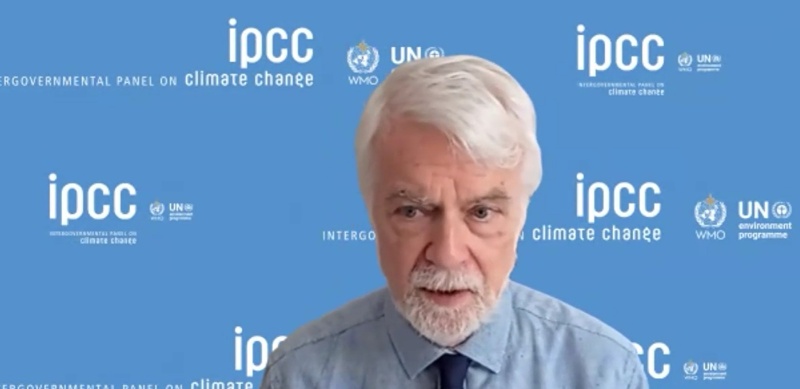
As Astana draws global attention to climate challenges through the Regional Ecological Summit 2026, Jim Skea, Chair of the Intergovernmental Panel on Climate Change (IPCC), identified rapid emissions cuts and climate adaptation as the two central priorities in light of the latest findings. In an exclusive interview with Qazinform News Agency, he also highlighted persistent implementation gaps and outlined the role of clean energy expansion and methane reduction in accelerating climate action.

What are the top global climate priorities that governments should focus on following the latest IPCC findings?
I think the central conclusion of the IPCC reports as they've been updated by new data is that it's almost inevitable that we're going to surpass global warming of 1.5 degrees within the next few years. That doesn't mean it's impossible to return to 1.5 degrees warming later by taking carbon dioxide out of the atmosphere. I think what it means is there are two priorities. First of all, we have to focus on getting greenhouse gas emissions down as quickly as possible to prevent temperatures rising to an even greater extent during the 21st century.
Also, because it's inevitable that we're going to exceed 1.5 degrees of warming, we need to pay a lot more attention to climate impacts and adaptation to the climate changes that are now inevitable; in fact, we've seen them already. I think these are the two important things: concentrating on getting emissions down, but we also have to learn to adapt to the inevitable climate changes that we're facing.
How would you assess the most pressing climate risks facing Central Asia today?
What came out of the last IPCC report, I think, was the consequential effects of, for example, glacier loss, which is, you know, we could see about very large reductions in glaciers if we carry on with the policies we have and the world warms up, I don't know, two and a half, three degrees; we could see substantial losses in glaciers, which will have a big implication for water availability and water scarcity in the Central Asian region; that's going to be important.
There are other issues around: the risks of extreme events, flooding, extreme storms, etc. And of course, one of the things that's very obvious, you know, we're going to face much more extremes in the summer period in terms of heat, which may make it more difficult for people, for example, to work outdoors safely. These are the kind of things we're facing. I think the question of floods is something that we do need to deal with more immediately.
Other issues: there will be impacts, for example, on the productivity of agricultural systems. Productivity will go down as the world warms up.
How do water scarcity and glacier melt reshape long-term stability in the region?
The risks are really quite substantial. If we carry on as we are with our current policies, the world would be expected to warm by up to three degrees by the end of the century. That has huge implications, especially glacier losses as an important consequence there. We could see reductions in glacier mass of between 50 and 70 percent by the end of the century.
That won't have quite the same impacts on water flows, but the flow of water from the glacier regions could go down very substantially during the century, which obviously has implications for livelihoods and for agriculture in Kazakhstan.
We often hear about climate goals, but implementation remains slow. What are the most effective ways to accelerate real action?
Although emissions of greenhouse gases are still rising, we can identify ways in which actions that have already been taken have meant that we have avoided emissions. Emissions would be even higher than we see at the moment had we not undertaken climate action. I think two of the most important ones relate to, for example, the extension of renewable energy, and displacing fossil fuel production from electricity systems is an important factor.
I think the potential for that in Kazakhstan is actually considerable. Going along with that, if you can have low carbon electricity, we can move to the greater use of electricity in end uses. For example, moving to electric vehicles, where China, for example, you know, has already made huge advances. One thing that I would flag is that in parts of the world where there is still oil and gas production, the question of reducing leaks from pipelines, particularly leaks of methane from pipelines, is a very, very quick win that can often pay for itself. So round renewables and the reduction of methane emissions, I think, would really be a priority for action to put us on the right track.
Would the implementation of alternative electricity sources like water plants and nuclear power plants also be considered the next step towards progress?
Yes. Anything that can be done to displace the use of fossil fuels and the electricity system is one of the most obvious paths forward. All over the world, people are adopting renewable energy, and some countries are choosing to go to nuclear power as well. That's a matter of choice that has often to do more with energy security than it does with climate ambition.
Kazakhstan is planning to build its first nuclear power plant in the near future. How do you assess the role of nuclear energy in reducing emissions and supporting the low-carbon transition?
Replacing fossil fuel-based systems with low-emission alternatives is an important step in reducing pressure on the climate. In that context, nuclear energy can play a role in lowering greenhouse gas emissions as part of a broader low-carbon energy mix.
How important is international cooperation in addressing climate change today compared to a decade ago?
Climate change is a global problem, and it needs a common approach to do it. Regardless of how difficult things are, countries do need to get together to collectively discuss this common problem. We understand perfectly well we're not naive that there are difficulties around energy security, a difficult geopolitical situation. But frankly, there is no alternative to collective global discussions if we're going to move forward on a global issue like climate change, because it is truly global.
What are your expectations from international platforms such as Regional Environmental Summit 2026?
I think it's very important that in different parts of the world, people with common interests from the same region do collaborate with each other, not just on climate, but on other environmental issues and questions as well. I think this is almost the first time the IPCC has actually visited the Central Asian region. We are very pleased to attend the regional summit because there are obviously common issues, common challenges from countries in the region. We are very happy to come and contribute to the discussions in Astana.
We have not had so much contact with the Central Asian region. We are, in fact, very pleased to have had some authors, IPCC authors from the region who've participated in important reports like the special report on climate change in land. We hope we can encourage even more participation by scientists from Central Asia in IPCC activities.
Earlier, Qazinform News Agency reported Inger Andersen warned that Central Asia is experiencing climate change impacts at a pace exceeding the global average, posing growing risks to ecosystems, water resources, and livelihoods.