Foreign diplomats briefed on key provisions of President Tokayev's Address to Nation
Kazakhstan's Foreign Ministry held a briefing for heads of foreign diplomatic missions and international organizations on President Kassym-Jomart Tokayev’s State-of-the-Nation Address, titled “Kazakhstan’s Current Priorities in a New Historical Cycle,” Qazinform News Agency reports, citing the ministry’s press service.

Around 100 representatives of the diplomatic corps attended the event. The speakers included Foreign Minister Mukhtar Tileuberdi, Minister of Industry and Construction Yersaiyn Nagaspayev, and Vice Minister of Transport Damir Kozhakhmetov.
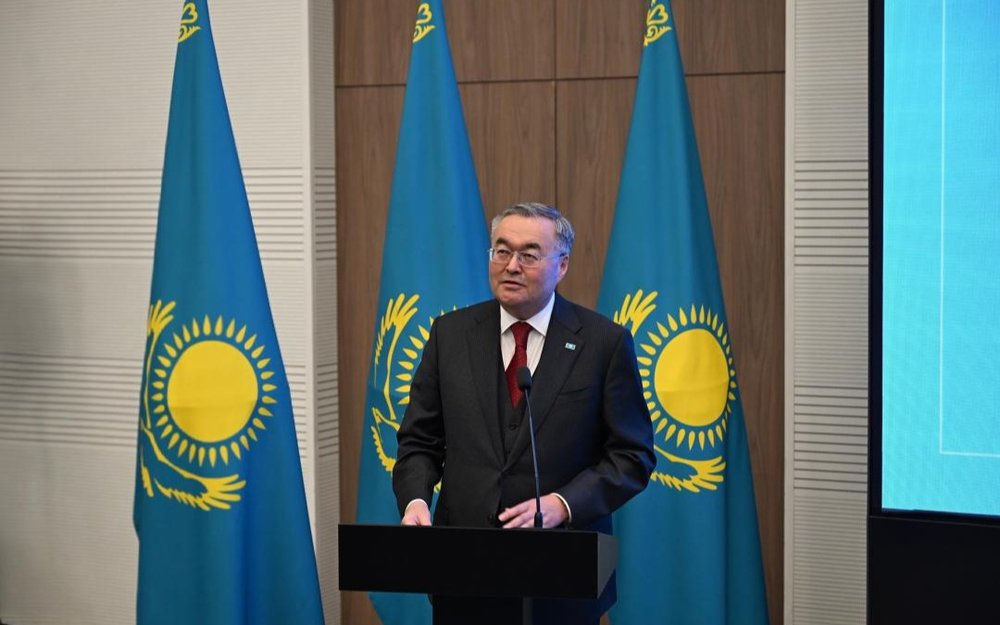
In his opening remarks, Tileuberdi noted that the President’s Address, delivered in the 35th year of Kazakhstan’s independence, summarizes the country’s achievements and outlines its long-term development strategy.
He stressed that amid global uncertainty, Kazakhstan’s foreign policy remains consistent and is based on constructive dialogue, respect for international commitments, and balanced pragmatism.
According to Tileuberdi, foreign direct investment inflows increased by 14.4% in 2025, reaching $20.5 billion.
“President Kassym-Jomart Tokayev’s large-scale reforms are our sincere and open invitation to your countries, business communities, and investors to engage in mutually beneficial cooperation,” he said.
Tileuberdi recalled that approximately 6.5 trillion tenge from the National Fund is expected to be allocated for infrastructure modernization through 2029. He also noted the proposal to declare 2027 the Year of Nationwide Large-Scale Construction.
According to the minister, Kazakhstan offers its foreign partners long-term planning opportunities, access to major investment projects and institutional guarantees for investment protection.
He identified energy, agro-industry, digitalization and artificial intelligence, as well as water management, as priority areas for cooperation.
Tileuberdi also outlined measures to strengthen legal guarantees for investors, including plans to establish an Investment Court based on English common law in Alatau City and adopt a new Civil Code by the end of 2027. He added that Kazakhstan’s diplomatic missions abroad had been instructed to provide individual support for major investment projects.
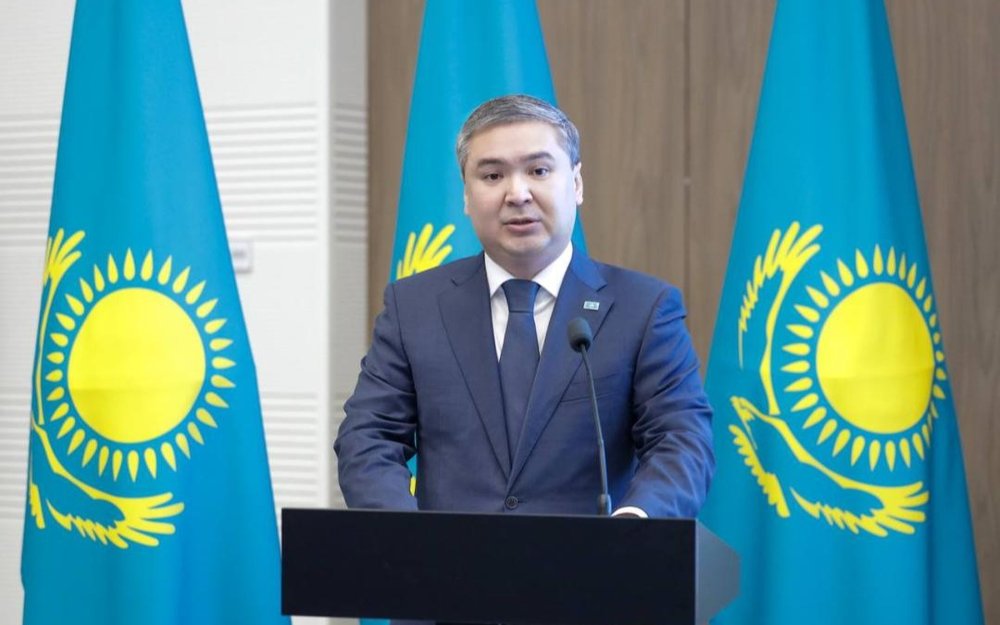
Minister of Industry and Construction Yersaiyn Nagaspayev said the Nationwide Large-Scale Construction program is designed to give fresh impetus to domestic industry and attract additional investment.
He noted that, under the development strategy outlined by President Tokayev, manufacturing accounts for 13% of GDP, surpassing the mining sector. Since 2023, a total of 647 industrial projects have been implemented across the country.
Nagaspayev said mechanical engineering, metallurgy, the chemical industry, and electrical engineering are the most promising areas for investment.
He said investors are offered tax and customs incentives, land plots equipped with infrastructure, and support through a one-stop-shop mechanism.
“Our goal is not simply to attract investment, but to build long-term industrial partnerships based on technology transfer, localization of production, deep processing of raw materials, workforce training, and the output of competitive products,” he said.
Vice Minister of Transport Damir Kozhakhmetov outlined the objectives set for the transport sector in the President’s Address, emphasizing Kazakhstan’s ambition to become a leading logistics hub in Eurasia.
He said the country aims to move beyond its role as a transit territory and become an organizer of international cargo flows.
According to Kozhakhmetov, approximately 85% of overland freight traffic between China and Europe passes through Kazakhstan. Transit cargo volumes increased by 18% last year, reaching 39.1 million tons.
Among the key infrastructure projects, he cited the Bakhty-Ayagoz railway line, the Aral-Caspian transport corridor, the modernization of all 37 road border crossing points on the borders with Russia and Kyrgyzstan, and the construction of a new airport in Astana.
He also highlighted the importance of the Trans-Caspian International Transport Route and invited foreign partners to invest in ports, airports and logistics centers.
“Kazakhstan is moving from the status of a landlocked country to that of a country that connects continents,” he said.
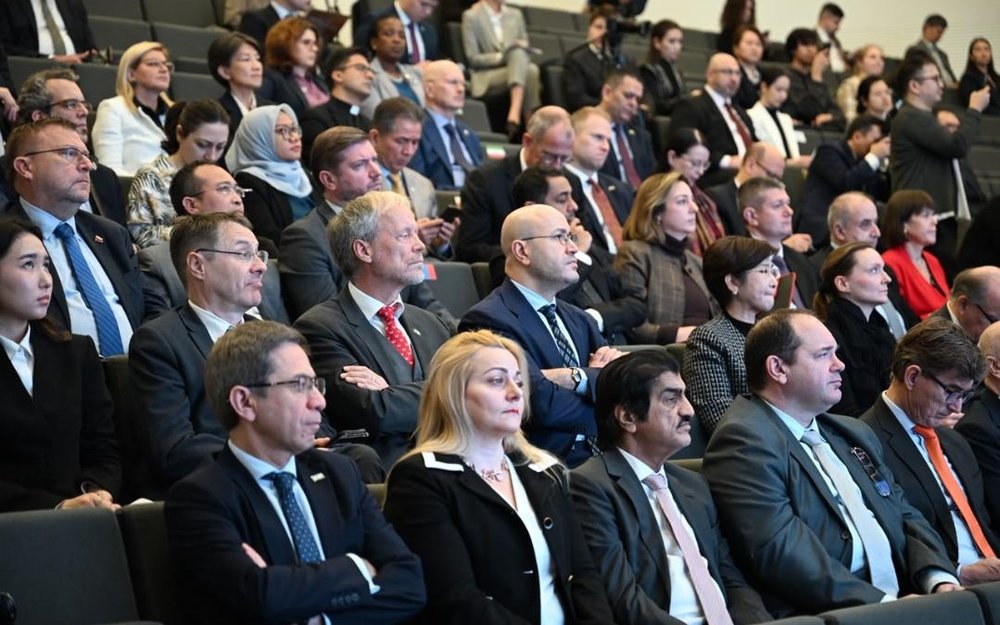
During the question-and-answer session, diplomats expressed particular interest in Kazakhstan’s investment climate, guarantees for investor protection, participation in investment projects, transport corridor development and cooperation in critical minerals.
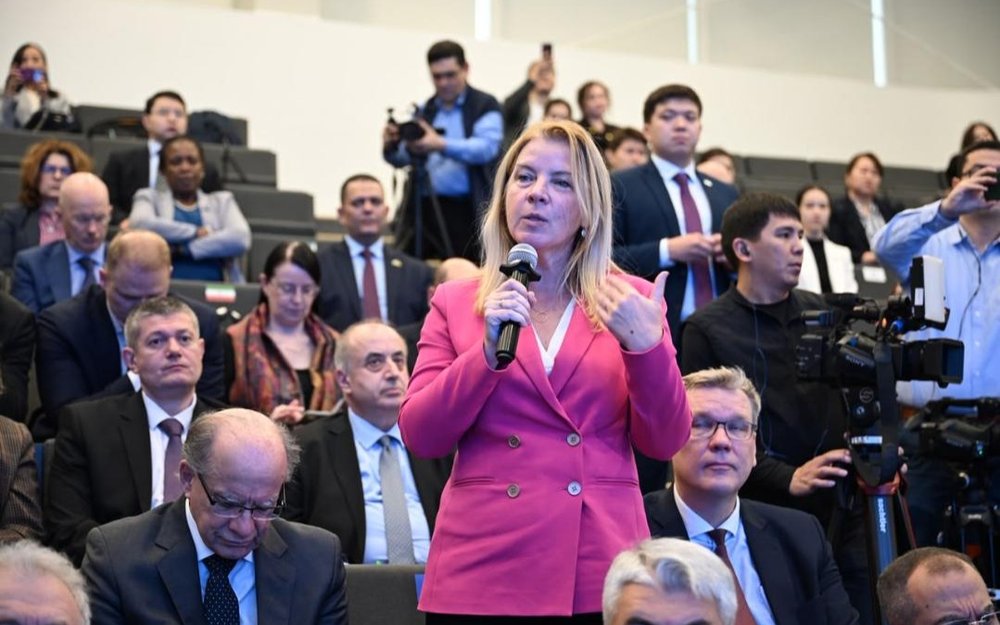
The speakers provided detailed responses and reaffirmed their readiness to continue dialogue with international partners.
Concluding the briefing, the participants emphasized that Kazakhstan’s diplomatic missions abroad would provide comprehensive support to foreign companies interested in establishing modern production facilities and introducing new technologies. The country remains open to long-term investment partnerships, the ministry noted.
Earlier, it was reported that Consul General of Kazakhstan in the Hong Kong SAR, Bauyrzhan Dosmanbetov, held a series of roundtable meetings with heads of Hong Kong’s trade, industrial and expert associations. The main topics of discussion were the development of artificial intelligence and infrastructure modernization under the “People’s Construction” program. The sides also considered prospects for industrial cooperation and tax incentives for Kazakhstan’s manufacturing enterprises.