

Fields of Greig’s tulips paint Kazakh steppe in bright crimson
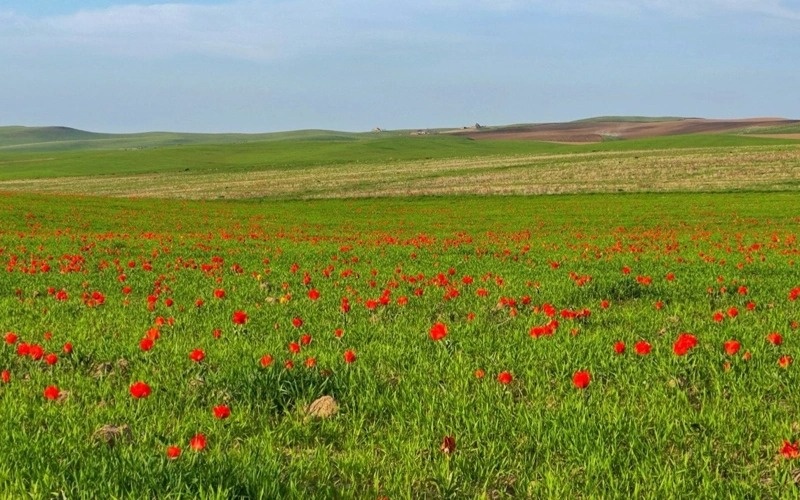
In Kazygurt district of Turkistan region, the rare Greig’s tulip, listed in Kazakhstan’s Red Book, has begun blooming, transforming the steppe landscape for several weeks with striking fields of bright red flowers, Qazinform News Agency reports.

The tulips, growing in dense clusters and reaching 10–15 cm in height in Shanak district, are easily recognized by their large blossoms and distinctive dark-brown leaf patterns.
Greig’s tulip is an endemic species of Central Asia, often found in foothill and arid regions. Its blooming is one of the brightest natural phenomena of the region. Tulips are shaping a unique image of the region and have become a symbol of spring.
First described in the 19th century, it was named after botanist Samuel Greig.
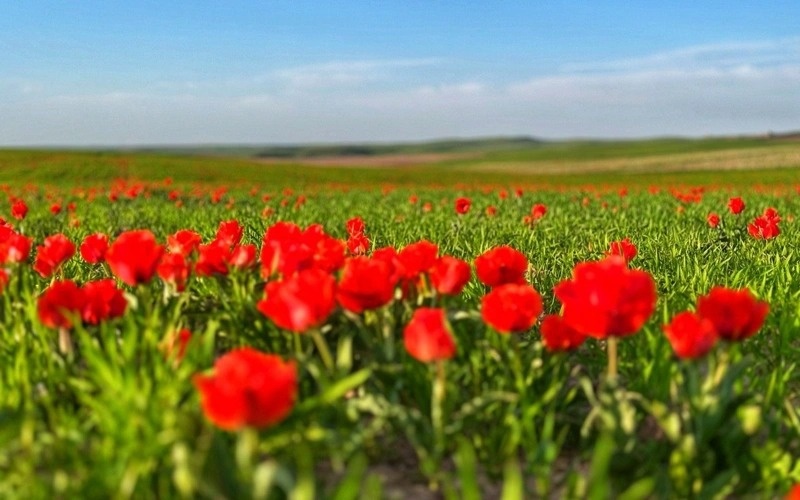
Currently, the plant is under strict protection: picking or trampling is prohibited.
Penalties for destroying rare plants are severe — fines up to 13 million tenge or imprisonment for up to three years, even for a single flower.
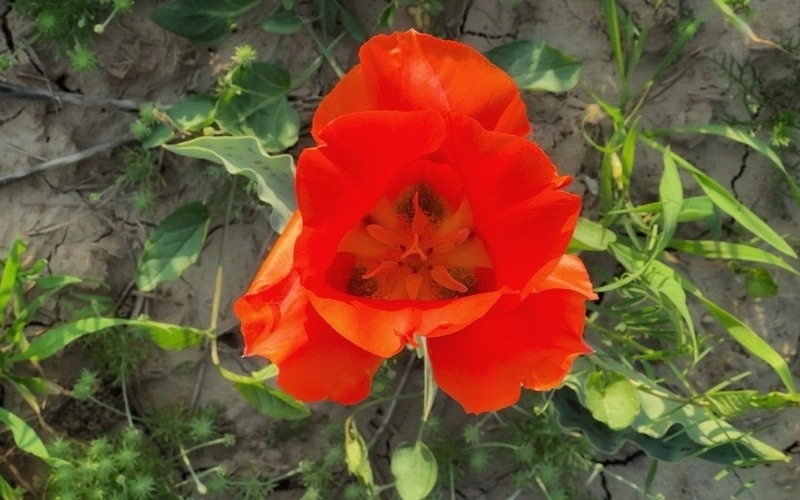
Specialists emphasize that careful preservation is the only way to maintain these natural symbols of spring.
Earlier, thousands of tulips bloomed in the Turkestan Botanical Garden, where experts continue developing new varieties adapted to the local climate.
Notably, the tulip season started at the Botanical Garden of the Khoja Ahmed Yasawi International Kazakh-Turkish University, where around 7,000 tulips of seven varieties have blossomed.