

Experts assess Kazakh parties’ election programs
On August 13, an expert platform titled Party Competition: Ideas, Platforms and the Contest for Voters, organized by the Kazakhstan Institute for Strategic Studies (KazISS) under the President of the Republic of Kazakhstan, was held in Almaty, Qazinform News Agency reports, citing KazISS press service.
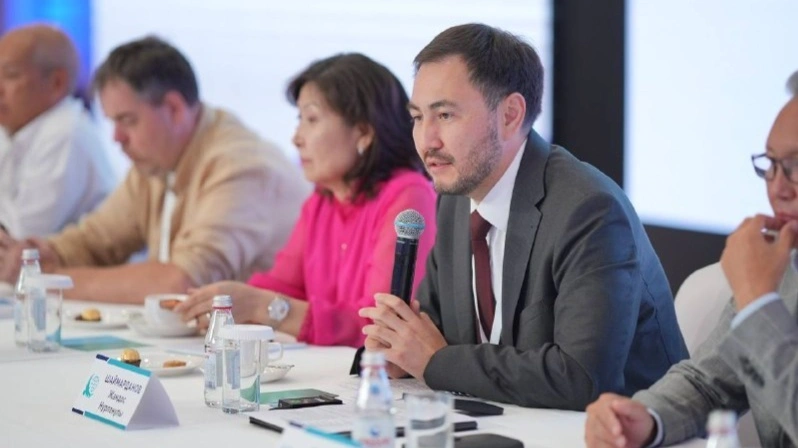
The discussion focused on the ideological positions of political parties, the content of their election platforms and the nature of the competition for voter support. The participants considered the extent to which the political parties’ platforms offer voters meaningful alternatives, how current public demands relate to the country’s long-term development objectives, and what form the dialogue between parties and citizens should take after the election campaign concludes.
The expert platform was moderated by Zhandos Shaimardanov, Director of KazISS. The discussion brought together representatives of the Institute, leading research and educational institutions, think tanks and public organizations, as well as political scientists, experts and media representatives.
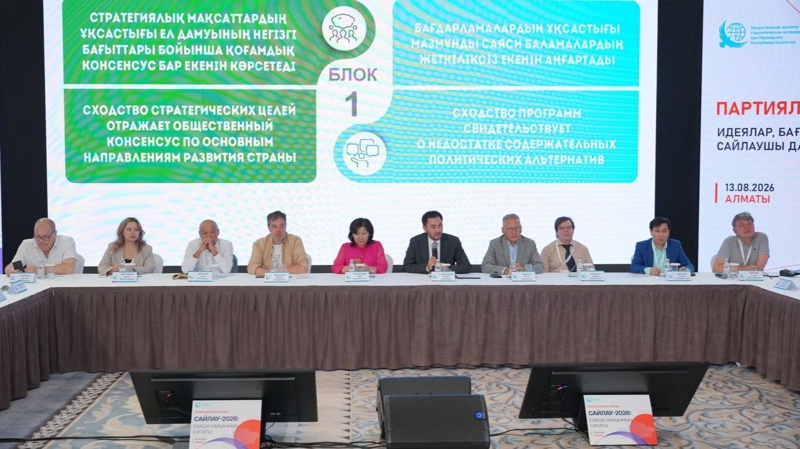
A distinctive feature of the platform was its debate format, built around opposing expert positions. Participants were asked to express their views on two opposing views, after which representatives of each position presented arguments in support of their choice. This approach made it possible not only to identify the assessments prevailing within the expert community, but also to explore the reasoning behind different views on the development of party competition.
The first discussion block focused on the similarities and differences between the election platforms. The participants discussed whether the convergence of the parties’ strategic goals reflected a public consensus on the country’s key development priorities or indicated a lack of meaningful political alternatives.
The experts noted that common strategic goals do not exclude political competition. For voters to make an informed electoral choice, it is essential that parties clearly articulate the differences in their priorities, the mechanisms for implementing their proposals, the time frames and resources required, and their accountability for achieving the stated results.

A separate discussion focused on the time horizon of party platforms. The participants considered whether political parties should primarily respond to citizens’ most pressing concerns or concentrate on long-term challenges extending beyond a single electoral cycle.
Following the discussion, the experts noted that a high-quality political platform should combine both approaches. The ability to respond to society’s current needs should be coupled with a strategic vision for the country’s development, while the proposed solutions should be accompanied by a clear explanation of their implementation mechanisms, the resources required, and the potential risks.
Another topic was the relationship between electoral participation and political trust. The participants referred to sociological research showing that between 70.3% and 75.6% of respondents said they were prepared to take part in the upcoming vote, while nearly nine out of ten citizens were aware of the elections to varying degrees.
During the discussion, it was noted that the high level of stated willingness to vote indicated considerable public interest in the election campaign and significant potential for political engagement. At the same time, participation in elections alone does not fully resolve the issue of trust. Its sustainability will largely depend on how consistently the parties fulfil their commitments after the elections, remain open and maintain feedback channels with society.
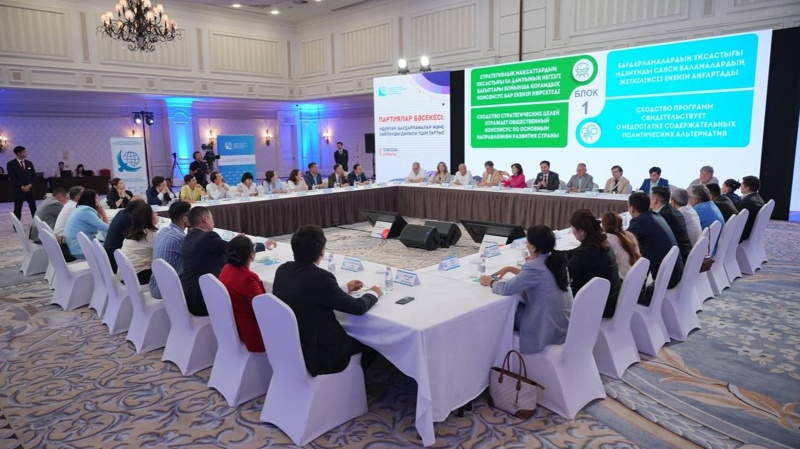
The final block focused on the development of political engagement after the election campaign. The experts discussed two positions: whether the new Qurultay should become the principal forum for inter-party debate or whether the public dialogue between political parties and society should continue on an ongoing basis outside the representative body as well.
The participants emphasized that elections mark the end of the campaigning period, but not of the political process. The new Qurultay should become a key platform for meaningful competition between political parties; however, their engagement with citizens should not be limited to election periods.
“Political dialogue should not end when campaigning concludes. After the elections, the competition of promises must become a competition of solutions, while engagement with voters must become continuous,” Zhandos Shaimardanov emphasized in summarizing the discussion.
Following the expert platform, the participants noted that the current election campaign was creating new conditions for the development of party competition. Its future quality will be determined not only by the voting results, but also by the ability of political parties to transform their election platforms into concrete solutions, ensure public accountability for their implementation and maintain continuous dialogue with citizens after the elections.
Earlier, it was reported that over 70% of Kazakhstanis are ready to cast ballots in the upcoming Qurultay elections.