

Balayeva says Kazakhstan seeks to make migration control ‘more transparent, managed and citizen-centric’
Kazakh Deputy Prime Minister – Minister of Culture and Information Aida Balayeva explained the key provisions of the new 2030 Migration Policy Concept, adopted late December by the Government to implement the directives from Head of State Kassym-Jomart Tokayev, Qazinform News Agency reports.
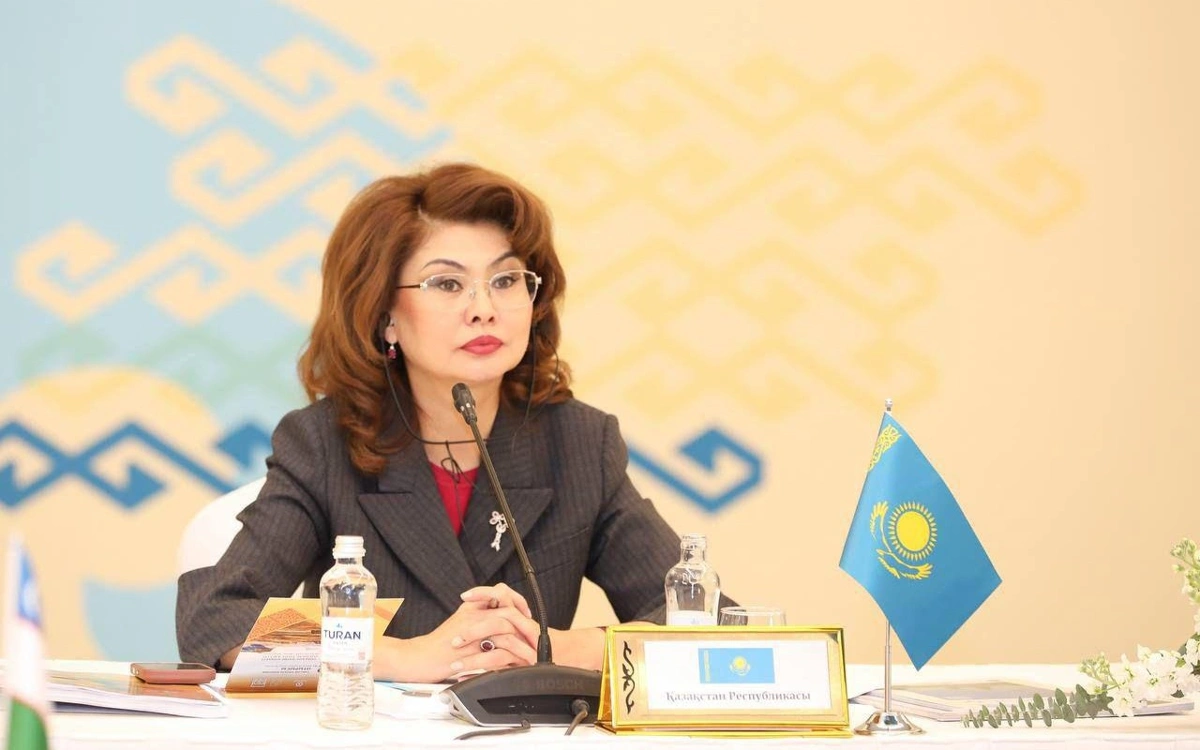
Balayeva stressed the role migration plays as a key indicator of socio-economic and geopolitical changes in today’s world, saying that the state is reconsidering approaches to migration control, making it “more transparent, managed and citizen-centric.”
The Kazakh Government adopted last December the 2030 Migration Policy Concept, aimed at balancing economic needs, citizens' interests, and national security concerns.
Above all, we proceed from the interests of citizens of Kazakhstan, Balayeva said, noting that foreign workers will be recruited only where there is a real staff shortage. “Migration flows will be shaped taking into account the real needs of industries, regions, and concrete projects,” she added.
Balayeva stressed that the Concept places a focus on upholding the Law and Order principle, underpinning the state’s stability.
Compliance with the law is mandatory for everyone, regardless of status. Therefore, oversight of compliance with migration legislation will be strengthened, and responsibility for violations will be inevitable both for migrants and for employers. Security must be ensured at every stage - from entry to exit.
Our goal is for people to come to Kazakhstan who are ready to live and work here while respecting the country’s laws and culture, said the minister.
Starting in January 2026, Kazakhstan will implement a scoring-based model for the preliminary selection of foreign nationals, including ethnic Kazakhs applying for a residence permit. This will include mandatory testing of proficiency in the state language, digital questionnaires, checks by competent authorities, and a final interview.
A separate procedure will apply to ethnic Kazakhs seeking state support.
In order to access benefits and government assistance programs, such resettlers must obtain the kandas status and settle in regions with labor shortages, including Akmola, Abai, Kostanay, Pavlodar, Atyrau, West Kazakhstan, East Kazakhstan, and North Kazakhstan regions.
We urge our compatriots to follow the state strategy, and in return they will receive all the necessary support with relocation, settlement, and employment. Kandases, included in the regional quota, sign a five-year social contract upon relocation.
However, if, for example, a kandas family receives assistance and after two or three years decides to leave the host region for another city without having lived there for the required five years under the social contract, they will be obliged to return the full amount of state support received, said Balayeva.
At the same time, an alternative option is envisaged - applying for permanent residence on general grounds, without linkage to regional quotas or state support measures. This makes it possible to independently choose a region of residence within the framework of current legislation.
According to the minister, the new migration policy will be rolled out in stages, taking into account feedback from the society, business, and regions, Priority will be given to honest and law-abiding individuals, while digital tools will help eliminate grey schemes and fictitious documents.
Legal, controlled, and safe migration is essential. Only in this format does it serve the interests of our state and citizens, said Balayeva.
Earlier, Qazinform reported President of Kazakhstan Kassym‑Jomart Tokayev said that more than 16,000 kandas arrived in Kazakhstan last year, while only 15% of those of working age hold a higher education degree in his extended interview with Turkistan newspaper.