Astana-Tehran: How natural Eurasian partners are building a new model of cooperation
Astana and Tehran are among the most dynamically developing bilateral partnerships in Eurasia. Against the backdrop of transforming regional logistics, the growing importance of the Middle Corridor, and the expanding East-West transport architecture, cooperation between the two countries is taking on a new and more substantive dimension. The key areas of cooperation are examined in this analysis by a Qazinform News Agency correspondent.
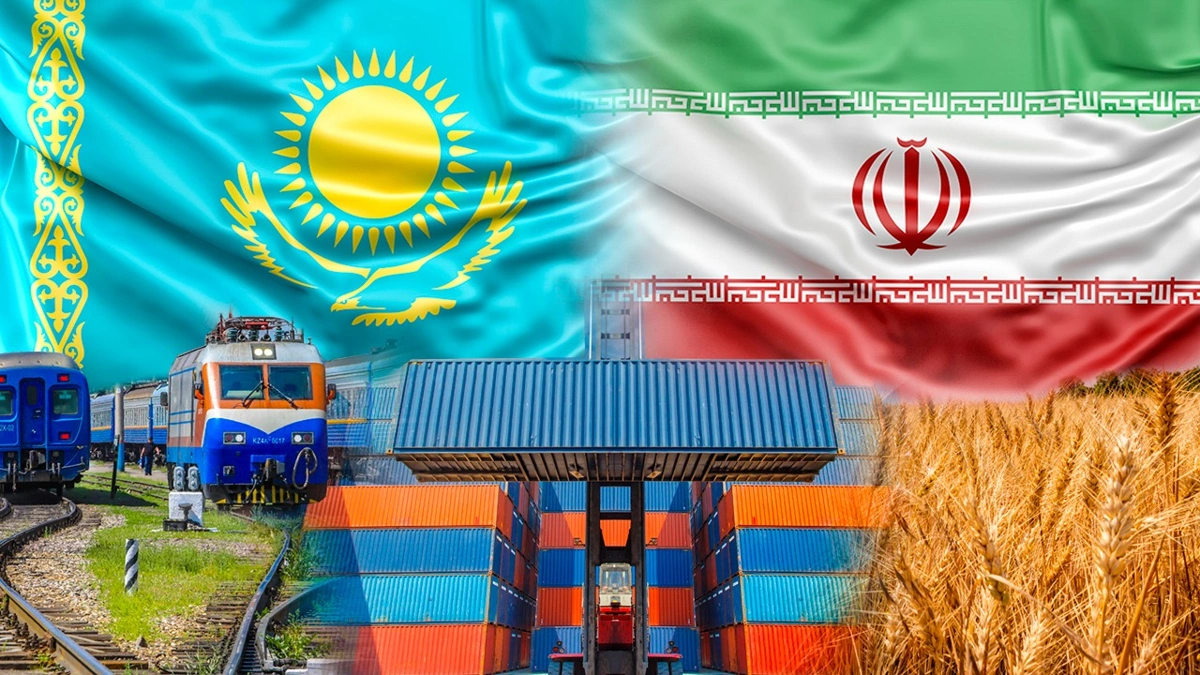
Ambitious plans for trade
Diplomatic relations between Kazakhstan and Iran were established on January 29, 1992. As early as 1993, Kazakhstan opened an embassy in Tehran, followed later by consulates general in Gorgan and Bandar Abbas. Iran, in turn, expanded its diplomatic presence in Kazakhstan by opening offices in Aktau and Almaty.
Since the early 1990s, the presidents of Kazakhstan and Iran have made more than 15 high-level visits, forming a stable architecture of trusted dialogue. A major milestone was President Kassym-Jomart Tokayev’s official visit to Tehran on June 19, 2022, which resulted in decisions shaping the current agenda of bilateral cooperation.
In particular, the two sides set the goal of increasing mutual trade to USD 3 billion, introduced a visa-free regime for up to 14 days, signed 24 documents, and concluded commercial agreements worth USD 235 million. In addition, the first container train on the Kazakhstan-Turkmenistan-Iran-Turkey route was launched, and a joint chamber of commerce was created.
Business cooperation is also expanding. A total of 658 companies with Iranian participation are registered in Kazakhstan, more than half of which are actively operating.
From January through September 2025, bilateral trade reached USD 310.8 million, an increase of 44.9% compared with the same period last year (USD 214.5 million). The main driver was an almost threefold increase in Kazakhstan’s exports, while imports from Iran showed a moderate decline.
Despite the overall decrease, the export structure is changing markedly. As wheat and metal supplies decrease, the share of agricultural processing and petrochemical products is rising. Political scientist and orientalist Zhanat Momynkulov notes that Iran is increasingly focused on such products:
“Iran is diversifying economically, which is evident across indicators. Its industry needs new categories of raw materials, and its agricultural sector requires stable seasonal products. This is why Kazakhstan is beginning to supply not only traditional wheat but also oils, feed, and processed goods,” he said.

Imports from Iran are declining in several traditional categories but increasing in food products and certain types of industrial goods. The trade structure in 2025 shows a dual trend: Kazakhstan’s exports rose significantly, driven mainly by agricultural goods including barley, wheat, and cotton, while imports from Iran fell overall, though supplies of dairy products, oil, potatoes, and plastics increased, pointing to a shift in Iran’s export flows toward Kazakhstan.
According to Momynkulov, Kazakhstan has the potential not only to satisfy Iran’s existing demand for food but also to supply niche consumer goods:
“Kazakhstan, as a major exporter of grain and food, can meet a significant share of Iran’s demand, and joint projects in processing, storage, and agro-infrastructure development could become a driver of bilateral cooperation,” he said.
Looking ahead, a clear logic of complementarity is emerging: Kazakhstan serves as a supplier of agricultural raw materials, while Iran provides food products with higher added value and chemical industry goods. Trade and investment analyst Yernar Serik stresses that the Iranian president’s visit to Astana will likely focus on concrete and pragmatic agreements:
“One can expect attention to logistics and development of the transit corridor through Iran, to trade and expanding Kazakhstan’s exports beyond grain, and to investment in processing and agriculture. Importantly, the visit may help resolve technical conditions and tariffs that currently restrain trade, bringing greater stability and predictability to the relationship,” the expert noted.
This reinforces confidence that trade will grow as logistics through the Caspian and the Kazakhstan-Turkmenistan-Iran corridor expand.
Logistics as the core of cooperation
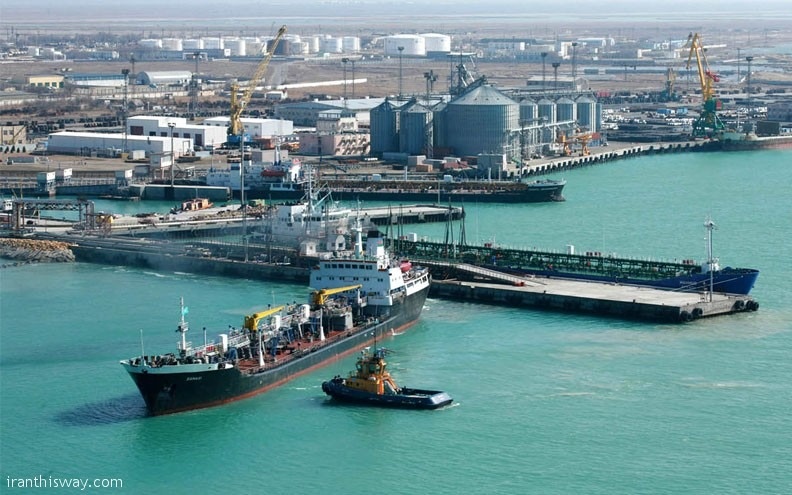
Transport remains the main driver of bilateral ties. Kazakhstan and Iran are developing the southern branch of the North-South corridor linking Central Asia with the Persian Gulf and the Indian Ocean. Iran’s Bandar Abbas port and Kazakhstan’s Aktau are key hubs along the route, allowing businesses in both countries to cut delivery times almost in half compared to traditional sea routes.
“According to Iranian sources, Kazakhstan is viewed in Tehran not simply as a neighboring state but as a natural Eurasian partner, a strategic transport hub, an exporter of food, and a gateway to the markets of the EAEU, China, and Central Asia. Amid global geopolitical shifts, Iran sees Kazakhstan as a vital link for access to the Persian Gulf, South Asia, and the Middle East,” Momynkulov notes.
The international North-South transport corridor is becoming one of the key regional projects for both states. In 2024, Kazakhstan, along with Iran, Russia, and Turkmenistan, signed a roadmap for developing the eastern branch of the corridor for 2024-2025. The plan aims to raise the route’s capacity to 15 million tons a year by 2027 and 20 million tons by 2030.
“In the first five months of 2025, 1.5 million tons of cargo transited Kazakhstan along this route, a 74% increase from the same period last year. This creates real conditions for using Iran’s territory and the ports of Bandar Abbas and Chabahar as the main access points for Central Asia to the sea, and as an alternative to traditional global routes. The route’s development will also depend on geopolitical changes,” Momynkulov stressed.
He added that the corridor’s efficiency will rise as technical barriers are removed, including tariff harmonization, digital customs procedures, and expansion of the Caspian fleet. Work in this direction is already underway.
The Kazakhstan-Turkmenistan-Iran railway line, fully commissioned in recent years, has become a key land route connecting Central Asia with the Middle East. Through Iran, cargo from Kazakhstan can reach India in 18-20 days, almost twice as fast as traditional maritime routes.
Expansion of the Aktau port, modernization of dry ports, and increased capacity at stations on the Kazakhstan-Turkmenistan border provide the infrastructure base for growing freight volumes. Iran, for its part, is investing in expanding Bandar Abbas and Chabahar, giving Kazakhstan alternative access to the Indian Ocean and bypassing global logistics bottlenecks.
The upcoming meeting of the two leaders is expected to accelerate decisions to expand capacity on the Incheh Burun-Bereket-Gorgan railway line, align transit tariffs, and develop container services. This will allow freight flows to rise significantly as early as 2026. Astana and Tehran are currently working toward unified rates, fleet expansion, and the introduction of electronic certificates of origin. These steps should make the corridor one of the most competitive routes across Eurasia.
Kazakhstan as moderator and connecting link
Amid shifting geopolitics, Astana is steadily strengthening its role as a moderator between East and West. At the crossroads of the interests of China, Russia, India, the Gulf states, and the EU, Kazakhstan is pursuing a model of pragmatic multi-vector engagement that positions it as a key center of transport and economic connectivity.
Experts note that Iran is one of the few partners that fits seamlessly into this model. Tehran aims to develop transit routes and alternative trade channels, while Kazakhstan seeks reliable geo-economic access to the Indian Ocean. This complementarity makes cooperation resilient to external pressures. Yet for further progress, Iran will need to adjust its approach to joint work.
“If Iran can offer Central Asia an effective system with predictable rules, stable logistics, and minimized sanctions risks, bilateral cooperation will acquire strategic depth,” Momynkulov believes.
He also emphasizes that, against the background of developments in Afghanistan, migration flows, drug trafficking, and regional instability, security dialogue, border cooperation, and coordination could become an additional but important part of the upcoming visit.
Earlier, Qazinform News Agency reported, citing the Akorda press service, that President of the Islamic Republic of Iran Masoud Pezeshkian will pay an official visit to Astana on December 10-11.