Astana meets Tokyo: Shaping the future of regional cooperation
President of Kazakhstan Kassym-Jomart Tokayev will pay an official visit to Japan on December 18. The trip will include top-level talks as well as participation in the Central Asia-Japan Summit. What connects Kazakhstan with the Land of the Rising Sun and which new areas could take the partnership between Astana and Tokyo to a new level is explored by a Qazinform News Agency correspondent.

Cooperation between Kazakhstan and Japan is marked by long-term and mutually beneficial relations. Diplomatic ties were established on January 26, 1992. Japan opened its embassy in Kazakhstan in 1993, followed by the opening of Kazakhstan’s embassy in Japan in 1996. Since 1994, a Kazakhstan Friendship League has operated in the Japanese Parliament. In 2004, the Senate of Kazakhstan’s Parliament formed a group to promote cooperation with Japan, and a similar group was established in the Mazhilis in 2005.
Economic cooperation
Trade between Kazakhstan and Japan reached $1.8 billion in 2024. In the first nine months of this year, it amounted to $1.3 billion. Despite a slight decline of 1.9% compared with the same period last year, the structure of bilateral trade remains firmly industrial and technology-oriented.
Kazakh exports are still dominated by ferroalloys, which account for around 95% of the export basket. At the same time, gradual diversification is underway, with growing shipments of agricultural products, hydrogen, inert gases, and copper.
Imports from Japan continue to be driven by strong demand for automobiles and high-technology equipment, ranging from generators and complex electronic systems to industrial machinery.
Raw material supplies are increasingly being formalized through long-term agreements. The focus is on exports of gallium and manganese sulfate, as well as the development of projects involving Tau Ken Samruk and JOGMEC. In parallel, Japan is actively promoting investments in water security, infrastructure, and digital technologies, opening up new areas of strategic partnership.
According to Alibek Tazhibayev, Director of the Center for Analytical Research "Eurasian Monitoring", Kazakhstan is for Tokyo not merely a market but a key element of its Eurasian risk diversification strategy.
“At the energy and resource level, the focus is on reliable access to uranium and critical minerals. Kazakhstan supplies a significant share of the global uranium market and is seen by Tokyo as a key partner in the context of reviving Japan’s nuclear energy sector. The potential in rare-earth metals is equally important, as it allows Japan to gradually reduce dependence on Chinese supplies in sensitive industries such as electronics, electric vehicles, and precision engineering,” the expert notes.
This strategic logic is also shaping the future model of bilateral cooperation.
“The potential for cooperation is gradually shifting from a model of raw materials in exchange for equipment toward the creation of joint value chains. In the rare-earth sector, this is reflected in the involvement of JOGMEC and other entities not only at the extraction stage but also in ore processing and enrichment technologies. For Kazakhstan, this offers a chance to move up the technological ladder, while for Japan it ensures long-term access to critical resources,” Tazhibayev adds.
Investments and joint projects
According to Kazakhstan’s Ministry of Foreign Affairs, Japanese companies have invested $9 billion in Kazakhstan over the past 20 years. These are not speculative funds or short-term loans but long-term investments in sectors such as oil and gas, metallurgy, engineering, logistics, and healthcare.
“Equally important are digitalization, artificial intelligence, robotics, healthcare, and education - sectors shaping the 21st century. These areas are already laying the foundation for a new stage of Kazakh-Japanese cooperation,” notes international relations expert Iskander Akylbayev.
More than 60 Japanese companies currently operate in Kazakhstan, with around 100 enterprises in total involving Japanese participation.
According to the National Bank of Kazakhstan, foreign direct investment from Japan exceeded $468 million in 2024. At the same time, the Japan Bank for International Cooperation announced plans to invest an additional $200 million in projects spanning energy, infrastructure, food processing, and engineering.
Alibek Tazhibayev highlights that this strengthens mutual interest in improving transport connectivity between Central and East Asia.
“From a geoeconomic perspective, Kazakhstan is Japan’s gateway to Central Asia and a key transit hub to Europe. The Trans-Caspian route passing through Kazakhstan is seen in Tokyo as a reliable alternative to unstable northern logistics corridors. At the same time, Astana’s political influence, its role as a regional leader, and its ability to coordinate Central Asian positions in dialogue with the G7 make Kazakhstan an effective ‘balancer’ in Japan’s relations with China and Russia,” the expert explains.
Ongoing projects in Kazakhstan also illustrate the expanding scope of Japanese business interests:
• JBIC investments of up to $200 million in energy, infrastructure, and engineering;
• Collaboration between Kazakh Invest and Fitech to localize production of fireproof materials;
• Joint projects with FUJIFILM for mobile medical complexes;
• Agreements between Kazakhmys, Eurasian Machinery, and Hitachi Construction Machinery for equipment supply.
In addition, direct flights between Kazakhstan and Japan are planned to launch next year, marking a new stage in cooperation.
“Direct flights will primarily accelerate business interactions. Shorter travel time and the absence of layovers will enable short-term business trips, which is crucial for Japanese business culture, where the personal presence of top managers and regular visits are key to making investment decisions,” Tazhibayev notes.
Culture and education
Over the long course of diplomatic relations, Kazakhstan and Japan have built not only political and economic ties but also strong cultural and humanitarian cooperation.
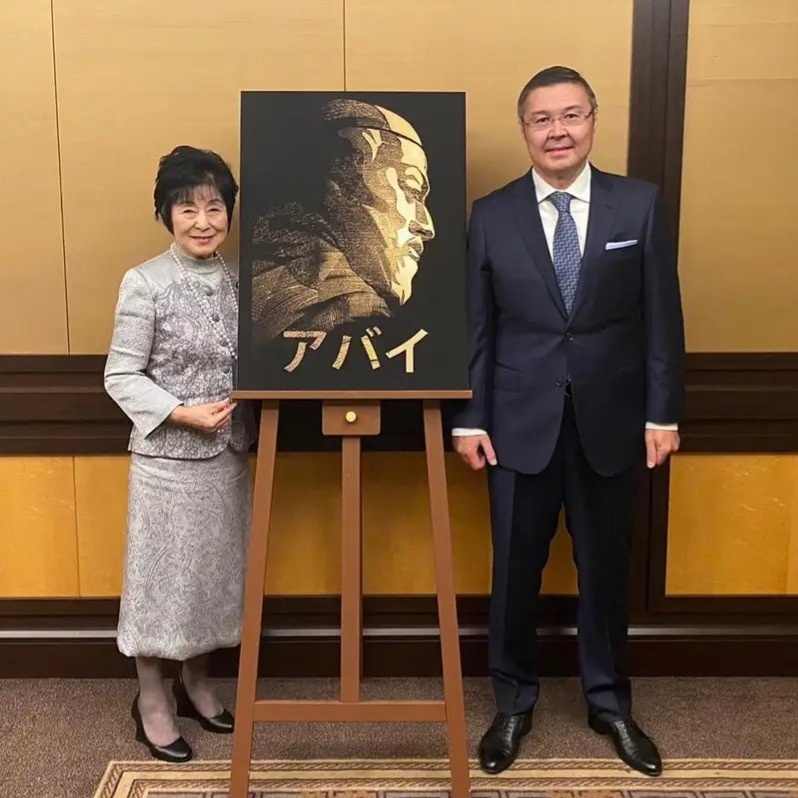
In October 2020, a collection of works by Kazakh poet and thinker Abai Kunanbayuly was presented in Tokyo, marking its first publication in Japanese. In December 2020, the Al-Farabi Center opened to celebrate the 1,150th anniversary of philosopher Abu Nasr al-Farabi.
According to Kazakhstan’s Ministry of Foreign Affairs, the Kazakh Association in Japan was established in 2021 to promote business connections, cultural projects, and information support for bilateral cooperation.
In June 2022, the Kazakh Embassy in Tokyo hosted a concert of traditional Kazakh music, "Silk Road - The Bridge of Culture and Friendship," commemorating 30 years of diplomatic relations. In February 2023, the National Museum of Kazakhstan opened the exhibition "In Search of the Divinity: Japanese Art," highlighting cultural ties between the two countries.
A significant dimension of Kazakh-Japanese relations is their shared historical concern with nuclear issues. The Semipalatinsk Test Site in Kazakhstan and the Japanese cities of Hiroshima and Nagasaki symbolize this tragic history and form a strong basis for dialogue on nuclear security.
Japan is a co-sponsor of the UN General Assembly resolution on the Semipalatinsk region and initiated a major international conference in Tokyo on the legacy of the former test site in September 1999. Since March 1998, the two countries have conducted joint research into the consequences of nuclear testing in Kazakhstan. Today, close cooperation has been established between medical and public institutions in Semey, Hiroshima, and Nagasaki. From 2015 to 2017, Kazakhstan and Japan served as co-chairs of the Ninth Conference on Facilitating the Entry into Force of the Comprehensive Nuclear-Test-Ban Treaty.
In addition, the Japan International Cooperation Agency (JICA) exchanges expertise with Kazakh specialists and participates in research at the Atomic Lake. “This form of cooperation is measured not in numbers but in moral significance,” notes Iskander Akylbayev. He expects that grant support and the roles of JICA and MEXT may expand following President Tokayev’s visit.
The two sides could also discuss collaboration on new educational programs, medical initiatives, and scientific projects.
“We have long emphasized the need for a university in Kazakhstan that becomes a hub for technology and knowledge from East Asia. Opening a campus of a leading Japanese university-Tokyo, Kyoto, Nagoya, or Tokyo Tech-would be a strategic breakthrough. It could serve as a center for future engineering and train specialists for the entire region, from hydrogen energy to robotics and biomedicine,” says Iskander Akylbayev.
Architecture
The history of Kazakhstan’s capital, Astana, would be incomplete without the work of Japanese architect Kisho Kurokawa, who played a defining role in shaping the city’s modern identity as the author of its first master plan.
Kurokawa proposed a long-term vision based on his philosophy of symbiosis, which viewed the city as a living system where tradition and innovation develop together rather than replace one another.
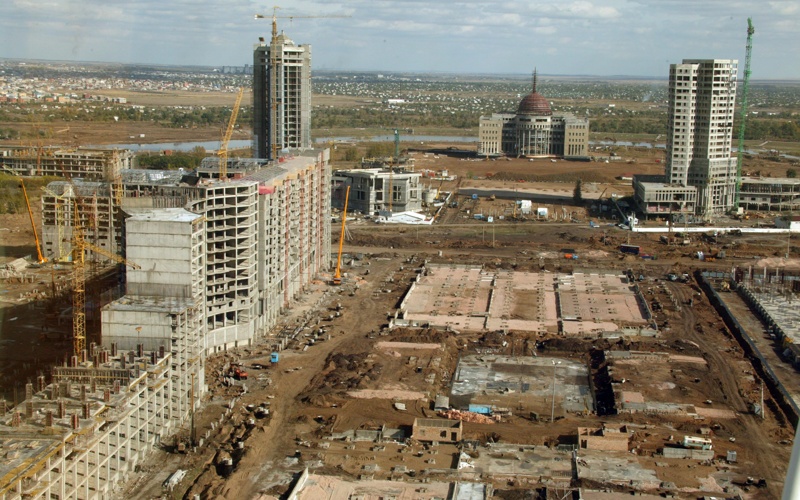
One of Kurokawa’s most symbolic ideas was the Millennium Axis, a conceptual urban line linking key parts of the city and reflecting the continuity of time, culture, and statehood. The axis was meant not only as a planning tool but also as a philosophical statement, connecting the past, present, and future of Kazakhstan within the city’s spatial structure.

Kurokawa also emphasized flexibility and adaptability, arguing that Astana should be able to evolve with social, economic, and climatic changes. His master plan promoted open spaces, clear urban zoning, and harmony between architecture and the natural environment.
While the master plan was later adjusted due to unexpected economic growth and rapid population increase, its core principles continue to shape the capital’s development.
Kurokawa also designed Astana’s international airport, conceived as a national gateway and a visual expression of Kazakhstan’s ambitions. The project was entrusted to him as part of the country’s effort to present itself internationally as a strong and rapidly developing state, and he responded with a futuristic passenger terminal that combined Eastern and Western traditions.
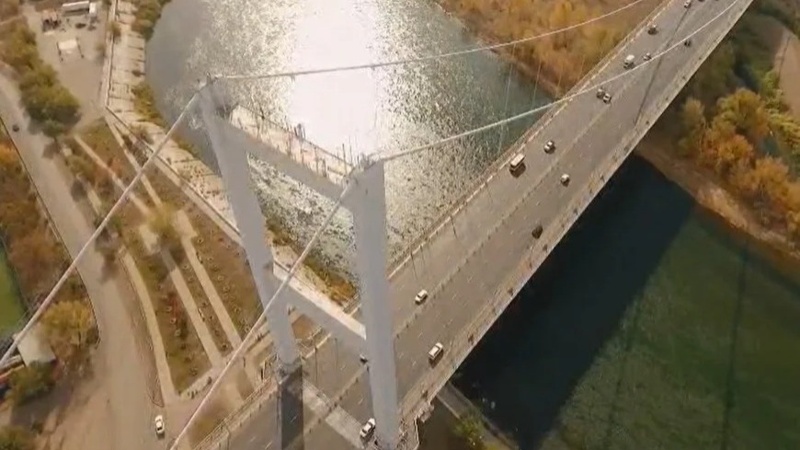
Another notable example of Kazakh-Japanese cooperation is the Semey Bridge, a 1,086-meter suspension bridge across the Irtysh River in Semey. Designed by Japanese firm IHI Corporation and built in cooperation with a Turkish company, construction began in the late 1990s and the bridge opened to traffic in 2000.
Among the most important developments, the agreement signed between Samruk-Kazyna Construction and Japanese Mitsui & Co. Ltd. promises the introduction of earthquake-resistant construction technologies to Kazakhstan, as well as modern building materials. This cooperation aims to raise the safety and quality of new residential and public buildings in Kazakhstan’s regions.
C5 format
Diplomacy between the two countries extends beyond bilateral issues. Japan was the first to propose the C5+1 summit format for Central Asian countries.
“The Central Asia and Japan dialogue started in 2004, long before similar platforms emerged with the US, EU, South Korea, Gulf countries, and other partners. Today, there are about 11 such formats, but Japan’s dialogue remains the earliest and one of the most consistent,” notes Iskander Akylbayev.
The Japan and Central Asia C5+ Summit was initially scheduled to take place in Kazakhstan in August last year but was later canceled. At the time, the government led by Fumio Kishida shifted its focus to responding to an emergency warning over a possible earthquake in the Nankai Trough off the Pacific coast.
Green transformation and industrial cooperation
New areas of cooperation, such as green energy, are also significant.
“Kazakhstan is emerging as a regional hub for green transformation, where Japanese technologies in renewable energy, hydrogen solutions, and carbon management can be tested and later applied across Central Asia. The country’s vast territories, high wind and solar potential, and commitment to decarbonizing the economy make Astana an ideal location for pilot projects that can later be scaled in Uzbekistan, Kyrgyzstan, and other neighboring countries,” says Alibek Tazhibayev.
Earlier, Qazinform News Agency reported that President Kassym-Jomart Tokayev is set to pay an official visit to Japan on 18-20 December, 2025.