Asia unveils 10-year roadmap for artificial life research
A Chinese-led international team of scientists has presented Asia’s first 10-year roadmap for synthetic cell technology development, Qazinform News Agency reports.

The roadmap was outlined in a paper titled “A framework for building a synthetic cell from the SynCell Asia initiative,” published in the scientific journal Nature Biotechnology.
The initiative was led by Liu Chenli, a researcher at the Shenzhen Institutes of Advanced Technology under the Chinese Academy of Sciences. More than 100 laboratories from China, Japan, South Korea, Singapore, Malaysia and Thailand participated in the project through the SynCell Asia Initiative alliance.
According to the study, synthetic cell technology aims to create artificial single-cell life “from scratch” using biological molecules, including phospholipids, proteins and DNA. Researchers believe advances in this field could transform humanity’s understanding of life itself and lead to the development of programmable functional cells for biomedicine and biomanufacturing.
Similar projects are already underway in Europe and the United States, including MaxSynBio, BaSyC, EVOLF and Build-a-Cell. However, researchers note that several key systemic challenges in the field remain unresolved. These include continuous energy regeneration, autonomous ribosome reproduction, coordination of cellular modules, and synchronization of DNA replication and cell division processes.
To address these challenges, the Asian initiative proposes a new research model based on international cooperation, shared infrastructure and AI-driven biofoundries. The framework is built around a “design-build-test-learn” cycle supported by machine learning and large-scale biological data analysis.
The roadmap is divided into two phases over the next decade.
During the first phase, scientists aim to create a “ProtoCell” featuring a stable phospholipid membrane, a minimal genome containing at least 200 genes, and the ability to independently synthesize key metabolites.
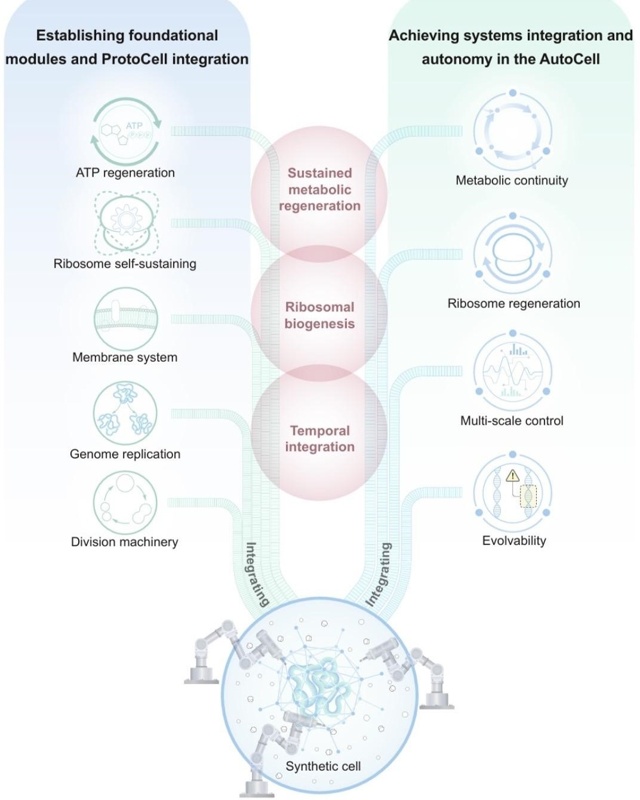
The second phase focuses on developing an “AutoCell” — an autonomous cell capable of self-growth, self-replication and evolution under environmental pressure. Such cells would need to complete at least ten consecutive growth and division cycles without relying on external protein synthesis systems.
The SynCell Asia Initiative alliance was officially established in 2023. In 2024, Shenzhen hosted the first SynCell Asia Workshop and the inaugural SynCell Global Summit, bringing together leading synthetic cell initiatives from Asia, Europe and North America.
Earlier, Qazinform News Agency reported that Japanese scientists had begun the world’s first human trials of a tooth regeneration treatment designed to stimulate the natural growth of missing teeth.