Aida Balayeva: Creative industries are becoming part of Kazakhstan's new economic policy
Deputy Prime Minister and Minister of Culture and Information of the Republic of Kazakhstan Aida Balayeva spoke to Qazaq Culture about the importance of the Creative Industries Development Fund, the development of regional hubs, country branding, and the potential of the creative economy.

President Kassym-Jomart Tokayev's visit to the Creative Industries Development Fund office marked a significant milestone in the institutionalization of the domestic creative sector. Established at the direction of the Head of State, the Fund is intended to become a key support center for the industry, where talent, infrastructure, investment, promotion, and export initiatives are integrated into a single system.
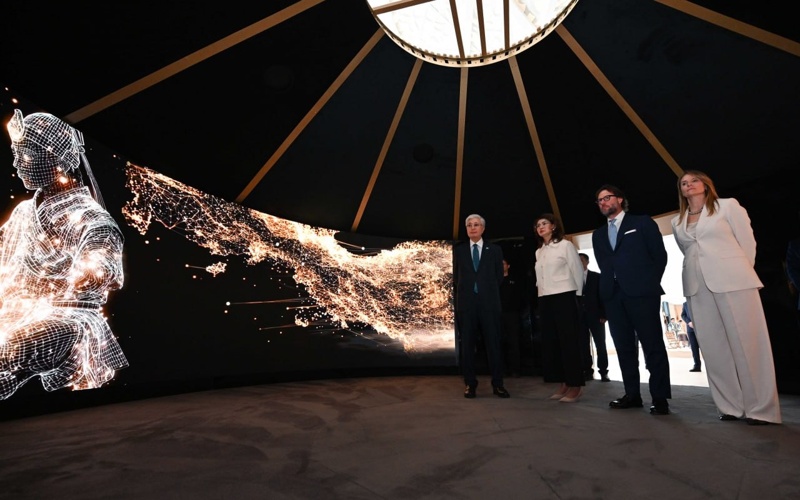
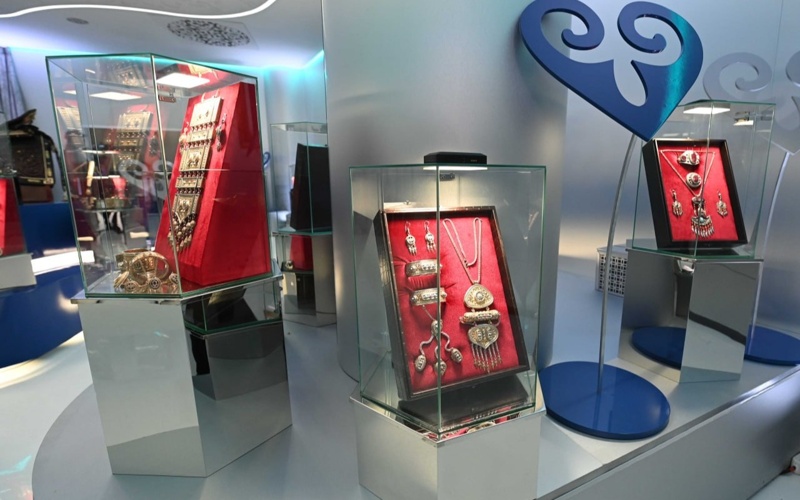
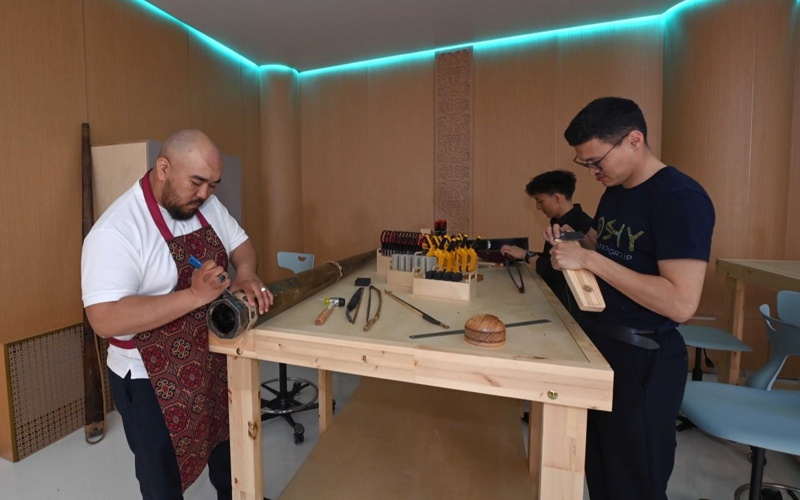
The Fund's new space is presented as a full-cycle showroom, covering everything from conception and production to the sale and promotion of creative products. The President was shown thematic halls, including jewelry and carpentry workshops, music spaces, a carpet art hall, an artists' hall, and a fashion zone. Particularly noteworthy was the Yurt Capsule, an immersive location where the traditional yurt receives a modern technological interpretation through digital art, multimedia content, and cultural storytelling.
– President Kassym-Jomart Tokayev visited the office of the Creative Industries Development Fund. What does this attention to the industry mean?
– The Head of State's visit is of fundamental importance, as it demonstrates that creative industries are no longer viewed as an auxiliary cultural sphere, but as a full-fledged area of economic and social development.
President Kassym-Jomart Tokayev consistently emphasizes unlocking human capital, supporting proactive youth, developing entrepreneurship, and fostering new sources of growth. The creative economy is at the intersection of these objectives. It creates jobs, develops digital content, creates new products, enhances the country's tourism appeal, and helps to express national identity in a modern language.
For us, as the agency overseeing this area, it is important that the industry has received a clear institutional status. The creation of the Fund, at the instruction of the Head of State, signifies a shift from targeted measures to systemic work. The task now is to translate the President's attention into practical support tools for creators, regions, investors, and foreign markets.
– The Fund should become a key institution supporting the creative economy. What are the primary objectives it should address?
– The Fund's primary goal is to overcome the fragmentation of the industry. Today, Kazakhstan already boasts strong creators, designers, musicians, artisans, and representatives of film, animation, fashion, digital art, and other fields. However, many of them are developing separately, without sustainable access to infrastructure, professional expertise, investment, and promotion channels.
The Fund should not be an administrative superstructure, but a systemic operator for the industry. Its role is to connect talent, production, promotion, the market, and external opportunities. In other words, creators must understand where to approach their ideas, how to obtain support, how to package their products, how to find an audience, and how to expand beyond the local market.
It is important that this work is carried out in accordance with the instructions of President Kassym-Jomart Tokayev. The head of state emphasizes the creation of new economic opportunities, and the creative sector has the potential to become one of these areas. The Fund should help transform creative potential into sustainable economic value.
– Kazakhstan's creative economy comprises approximately 48,000 businesses and 160,000 people. What do these figures indicate?
– These figures demonstrate that Kazakhstan's creative economy already has a strong social and economic foundation. These approximately 48,000 businesses and 160,000 people employed represent not isolated initiatives but an entire sector that encompasses various professions, business models, and forms of self-realization.
These figures represent the people who create added value through ideas, knowledge, technology, and cultural heritage. These include designers, producers, architects, artists, musicians, digital content developers, and representatives of fashion, media, film, animation, and folk arts. Their work already impacts employment, entrepreneurship, the urban environment, tourism, and the country's international image.
Kazakhstan's policy in this area is aimed at ensuring that this potential does not remain undeveloped. It is important for us to create the conditions for improving the quality of projects, scaling them up, and promoting them in foreign markets. Therefore, the Fund must work not only with established players but also with those just entering the industry.
– The Fund's new office is presented as a full-cycle showroom. Why is this model important for the industry?
– The creative economy cannot develop solely on the level of inspiration or idea. A strong idea becomes valuable when it goes through the entire process: development, production, packaging, promotion, sales, and reaching the consumer. It is at this stage that creativity becomes an economic product.
The Fund's new office is important because it visually and practically demonstrates this full-cycle logic. It is not just a presentation space. It is a model of how a modern creative ecosystem should be structured. Jewelry and carpentry workshops, music halls, a carpet art space, an artists' hall, a fashion zone-all this demonstrates the industry's diversity and its practical side.
It is important for Kazakhstan to develop a new culture of working with creative products. It is not enough to create a good project; it must be presented, promoted, adapted to the market, and delivered to the consumer. This is where the Fund can close one of the industry's major gaps: talent exists but support, promotion, and commercialization systems are lacking.
– The Fund will coordinate regional hubs in all regional centers. How will this change opportunities for the regions?
– Regional hubs are strategically important because Kazakhstan's creative potential is not limited to Astana and Almaty. Each region has its own cultural codes, craft traditions, young creators, local brands, and contemporary initiatives. The challenge is to ensure these ideas have access to a professional environment and development opportunities.
Today, one of the objectives of Kazakhstan's state policy is to ensure more equal access to growth tools. A regional hub should become more than just a venue for events, but a center of excellence. There, creators will be able to receive consultations, develop projects, find partners, form teams, and integrate into the national support system.
The Fund's coordinating role is particularly important here. If each region develops separately, the impact will be limited. If hubs are linked by a unified methodology, programs, expert support, and promotion, the country will gain a distributed network for creative development. This will not only support local youth but also create new economic hubs in the regions.
– Kazakhstan is promoting country branding through culture, tourism, and creative products. Which areas are most promising?
– The most promising areas are those where national identity can be presented in a modern language understandable to an international audience. These include film, music, animation, design, fashion, digital art, jewelry, carpet art, handicrafts, and cultural tourism.
It's important to understand that country branding isn't limited to a visual image or a tourism slogan. It is formed through the products, experiences, stories, and meanings a country offers the world. This is why projects like the Yurt Capsule are particularly important. They demonstrate that Kazakhstan's traditional heritage need not be a mere museum-like representation of the past, but a living source of modern technological solutions. President Kassym-Jomart Tokayev places great emphasis on unlocking Kazakhstan's tourism potential and promoting the country through culture, heritage, and modern industries. This aligns with Kazakhstan's state policy, where the creative sector is becoming part of national competitiveness.
Our goal is to support projects that combine cultural heritage, quality execution, contemporary form, and export potential. These are the kinds of projects that can increase interest in Kazakhstan, promote domestic artists, and shape the country's sustainable international image.
Earlier, Qazinform reported the Head of State, Kassym-Jomart Tokayev, on Saturday was briefed on the activities of the Creative Industries Development Fund, established on his instruction as a key institution to support the domestic creative sector.