Kazakhstan on track for full electric power self-sufficiency by 2027
Kazakh Prime Minister Olzhas Bektenov held a meeting on the development of the electric power sector on Wednesday, Qazinform News Agency reports, citing primeminister.kz.
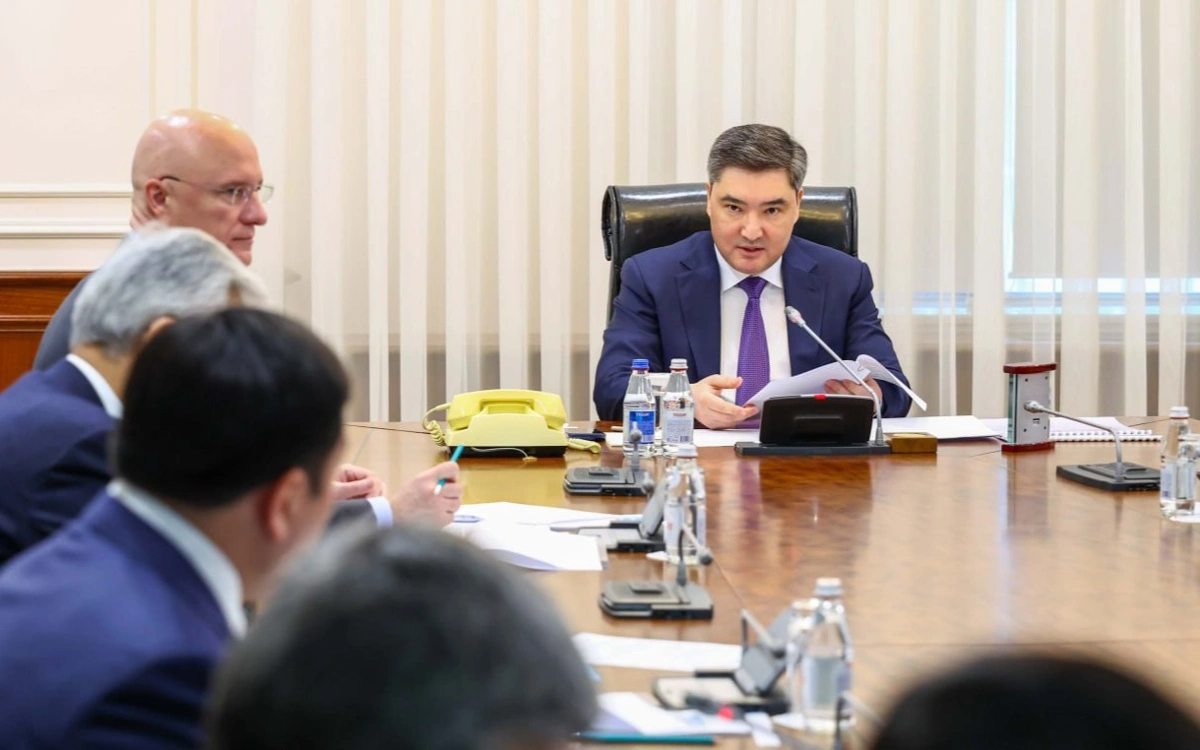
Participants included First Deputy Prime Minister Roman Sklyar, Chairman of the Management Board of Samruk-Kazyna National Welfare Fund JSC Nurlan Zhakupov, Deputy Prime Minister – Head of the Government Office Galymzhan Koishybayev, Deputy Prime Minister – Minister of National Economy Serik Zhumangarin, Minister of Energy Yerlan Akkenzhenov, and heads of national energy companies Samruk-Energo (Kairat Maksutov) and KEGOC (Nabi Aitzhanov).
The meeting reviewed the pace of work by the Ministry of Energy, Samruk-Energo, KEGOC, and power-generating organizations on modernizing existing infrastructure and generating new capacities in line with the tasks set by the President in the Address to the People of Kazakhstan, “Kazakhstan in the Era of Artificial Intelligence: Current Challenges and Their Solutions through Digital Transformation.”
The Ministry of Energy is moving into the practical phase of implementing a large-scale investment plan. At present, work is underway on 81 projects with a total capacity of 15.3 GW and a total investment volume exceeding 13 trillion tenge. A significant portion of the projects is being implemented through direct private investment attracted via the electric capacity market mechanism.
Yerlan Akkenzhenov reported that over the next three years, commissioning is planned primarily in the flexible (maneuverable) generation segment, aimed at covering the deficit of regulating capacity and increasing the flexibility of the Unified Energy System.
“The commissioning of the facilities currently under development will make it possible by the end of the first quarter of 2027 to fully cover the economy’s demand for electricity and remove Kazakhstan from the status of an energy-deficient country. By 2029, we expect to achieve a sustainable surplus of both electricity and regulating capacity, which will create conditions for increasing the country’s export potential,” Minister of Energy Yerlan Akkenzhenov assured. Overall, by 2035, the commissioning of more than 26 GW of additional generating capacity will be ensured.
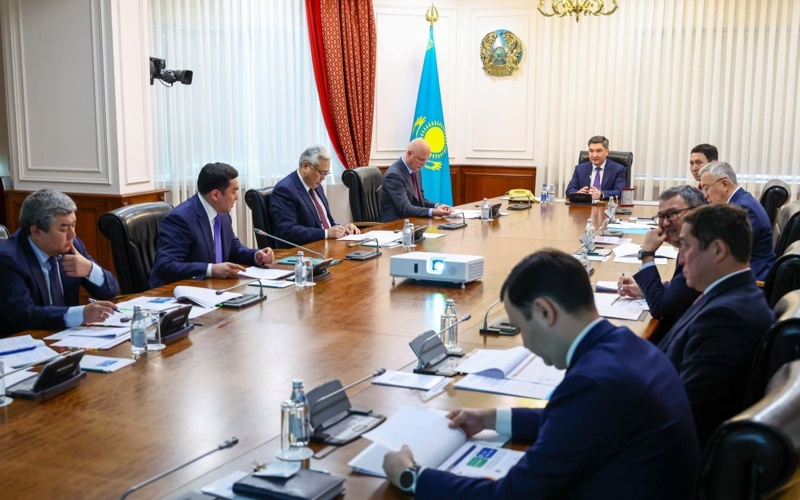
The heads of Samruk-Energo and KEGOC, Kairat Maksutov and Nabi Aitzhanov, also delivered reports.
The Prime Minister criticized the practice of postponing deadlines in the implementation of energy projects.
“The President has repeatedly pointed out the lack of proper momentum in the energy sector. Everyone must be fully mobilized. All planned projects must be implemented within the established timeframes. There must be no disruptions or delays. Minister, heads of Samruk-Energo and KEGOC, you bear personal responsibility for each facility. Your place of work is not in offices, but at construction sites,” Olzhas Bektenov emphasized.
According to the Ministry of Energy, electricity generation in 2025 reached 123.1 billion kWh, while consumption amounted to 124.6 billion kWh. Total installed capacity increased over the year from 25.3 GW to 26.7 GW. Coal-fired power plants continue to form the basis of generation (51.4%), while the share of gas generation (25.6%) and renewable energy sources (13.5%) is growing.
Over the past two years, market liberalization ensured an inflow of KZT 902 billion for capital repairs, which made it possible to reduce the number of technological incidents by 27% and move nine combined heat and power plants out of the “red” zone. At the same time, no dividends were paid to company owners. All funds are reinvested exclusively in the reconstruction and modernization of plant equipment. This has expanded the pool of asset renewal projects and ensured a real inflow of capital into the generation sector.
The meeting also reviewed prospects for the development of coal generation based on clean coal technologies, in line with the instructions of the Head of State. To date, contractors have been identified, and implementation of strategically important facilities has begun. These include Ekibastuz GRES-3 (2,640 MW), a new power plant in the city of Kurchatov (700 MW), as well as combined heat and power plants in the cities of Kokshetau (240 MW), Semey (360 MW), and Ust-Kamenogorsk (360 MW).
Regarding the development of grid infrastructure, KEGOC is working to strengthen the Southern Zone network through the construction of the 500 kV overhead transmission line “Shu–Zhambyl–Shymkent” with a length of 475 km. Furthermore, a project is being implemented to integrate the power system of Western Kazakhstan with the country’s Unified Energy System, covering the construction of the 500 kV overhead line “Olke–Karabatan” with a length of 604.3 km. Both projects are being implemented according to schedule, with completion planned for 2027.
In the long-term perspective up to 2035, the company plans to commission 6,659 km of new 220–500 kV lines and reconstruct 10,591 km of lines. Currently, the national electric grid includes 83 substations and 398 overhead lines totaling 27,900 km, and a total transformer capacity of 38,893.6 MVA.
In Samruk-Energo's project portfolio, the planned commissioning of new capacity by 2035 amounts to 7.4 GW. Key projects include the modernization of Almaty CHP-2 with commissioning scheduled for October 2026, as well as the expansion and reconstruction of Ekibastuz GRES-2 with commissioning of Unit 3 in October 2028 and Unit 4 in October 2030.
Earlier, addressing a ceremonial meeting dedicated to Energy Workers’ Day, the Head of State reminded that the Government had launched the National Project “Modernization of the Energy and Utilities Sectors,” under which at least 200 facilities will be reconstructed, and 86,000 kilometers of power grids will be renewed by 2030.