Why Kazakhstan needs a new Constitution - a lawmaker’s view
Majilis member Pavel Kazantsev shared his thoughts on the future of the proposed single chamber parliament, the Qurultay, in an interview with Jibek Joly, Qazinform News Agency correspondent reports.
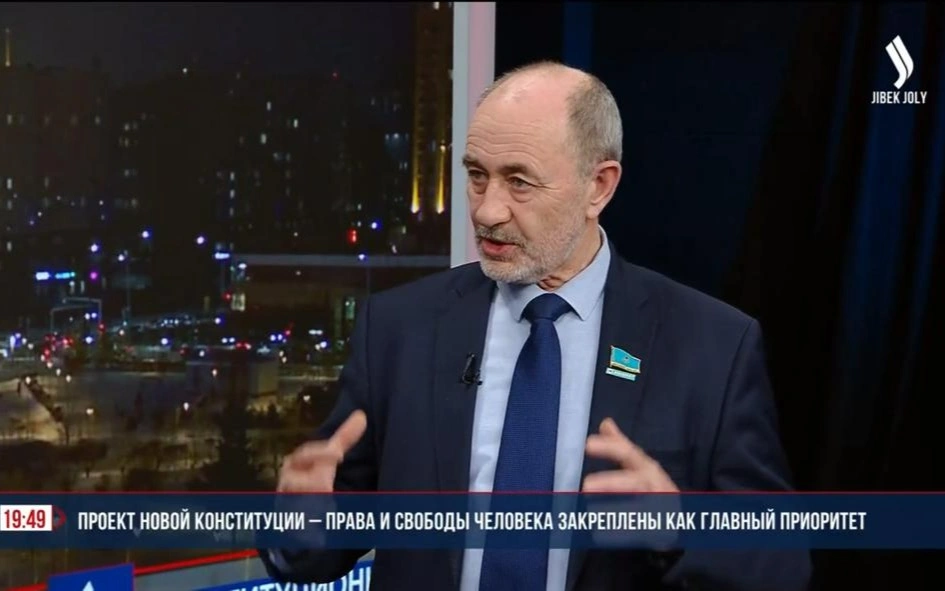
Mr. Kazantsev, if the Constitution is adopted, the current Parliament will have just over 3 months to bring legislation into line with the new provisions. Is that realistic?
Yes, we will manage. We are talking about roughly 50 existing laws that will need amendments. In essence, this is technical work focused on adjusting wording, and much of it is already being prepared in draft form. The procedures are well established, both in the Majilis and in the Senate. Over the past 2 years, we have been working in a fast-paced mode, so a tight schedule does not concern us.
What will happen to the bills currently under consideration that are not related to the constitutional reform?
Until July 1, the bicameral Parliament will continue to operate in full. Priority bills will be adopted. Some initiatives that require further discussion will be handed over to the new composition. There is nothing unusual about that. The transfer of work between convocations has already happened 8 times.
The future parliament will be unicameral and elected under a proportional system. How progressive is this model?
The main goal is to speed up decision making. A unicameral structure reduces procedural stages. There will be no conciliation commissions or back and forth between chambers. A bill will still go through three readings, but within a single chamber. That allows for faster adoption without sacrificing quality.
Could this faster pace affect the quality of legislation?
No. In recent years, the approach has changed. Discussion of draft laws has become as open as possible. Working groups now include regional maslikhat deputies, experts, and representatives of public associations. Where a group once had 30 to 40 members, it can now include up to 150. This culture of broad discussion is already well established and will be preserved.
The draft also provides for legislative initiative by the People’s Council. How realistic is this mechanism?
It is a workable model. The Council will be able to initiate draft legislation, and parliament will be obliged to consider it. At the local level, there are already trained specialists, including maslikhat deputies and representatives of public associations. The professional staff of the Qurultay will ensure the legal refinement of these initiatives.
In your view, why has constitutional reform become necessary now?
The world is changing rapidly, and the state must respond to new challenges more quickly. The 1995 Constitution was drafted for a country that had just gained independence. At that time, the goal was to secure a respected place in the international community. Today, Kazakhstan is an established state with a different geopolitical role.
The new version of the Constitution should formalize the principle of a strong President, an influential Parliament, and an accountable Government as a system that works in practice. That, in essence, is the response to the challenges of our time.
Earlier, in an interview with Jibek Joly TV, Majilis deputy of Kazakhstan Ekaterina Smyshlyayeva explained what the proposed constitutional changes would mean for citizens and businesses.