UNESCO adds Central Asian yurt tradition to its heritage list
The traditional yurt of Kazakhstan, Kyrgyzstan and Karakalpakstan has been added to UNESCO’s Representative List of the Intangible Cultural Heritage of Humanity following a decision adopted on 10 December at the 20th session of the Intergovernmental Committee in New Delhi, Qazinform News Agency reports.
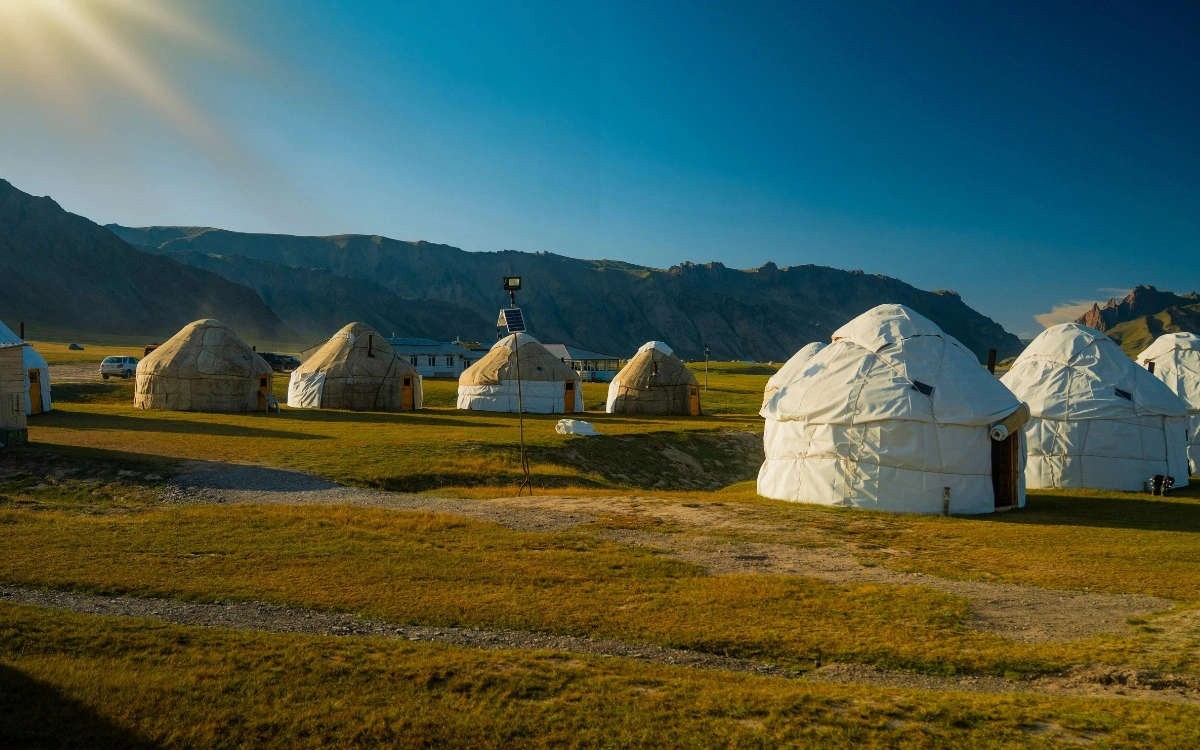
Head of the Presidential Administration of Uzbekistan Saida Mirziyoyeva announced the decision, noting that the original joint nomination by Kazakhstan and Kyrgyzstan dates back to 2014, while Uzbekistan later proposed expanding it to include the Karakalpak yurt.
“The nomination emphasised that for Kyrgyz, Kazakhs and Karakalpaks, the yurt is not only a dwelling but also a symbol of national identity, with its craftsmanship passed down from generation to generation,” she said.
Mirziyoyeva described the inscription as “a historic day” and thanked craftsmen, researchers and tradition-bearers for their contribution to preserving yurt-making knowledge.
“This international recognition confirms the depth of our traditions, the strength of our spiritual heritage and the continuous connection between generations. It is a victory for our entire culture,” Mirziyoyeva added.
According to the nomination file jointly submitted by Kazakhstan, Kyrgyzstan and Uzbekistan in March 2024, the yurt represents not only a home but also a model of the universe and a symbol of national identity.
“The production of yurts involves knowledge and skills to create a portable dwelling traditionally used by Kazakhs, Kyrgyz and Karakalpaks. A yurt is a collapsible wooden round frame covered with felt and braided with ropes. It is an easily transportable, compact, environmentally friendly and practical dwelling. The carriers of knowledge about yurt building are craftsmen (men and women) who make the yurt and its interior decoration. Knowledge and skills are passed on from generation to generation, from master to apprentice, encapsulating the value of heritage acquired genetically or through training,” the file reads.
“Yurts are an obligatory part of all folk festivals, traditional events and funeral and memorial rituals; they are kept within families and passed from parents to children as sacred family relics. For the Kyrgyz, Kazakhs and Karakalpaks, the yurt is not only a dwelling and a model of the universe, but also a symbol of their national identity.”
This year, UNESCO is reviewing 68 nominations, with the organisation’s heritage lists now comprising 812 elements from 153 countries.
Earlier this year, Kazakhstan nominated Ustyurt for inscription on the UNESCO World Heritage List.