State Counselor Karin opens New Discoveries in Archaeology of Kazakhstan - 2025 exhibition
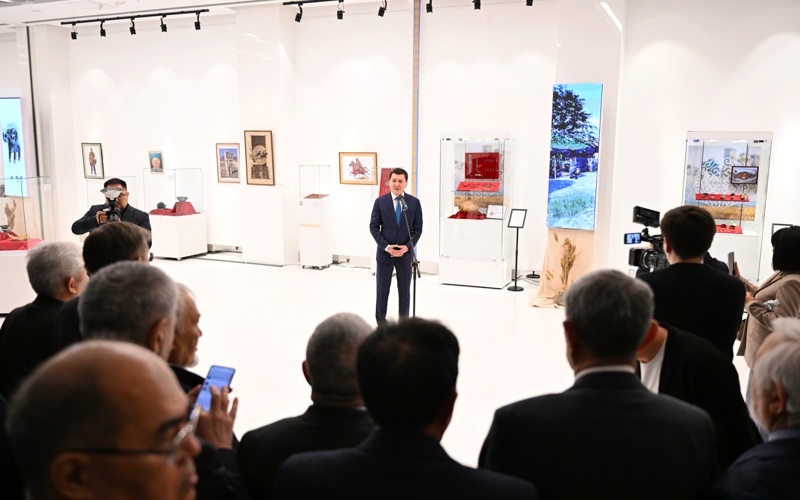
Kazakh State Counselor Erlan Karin on Saturday participated in the opening ceremony of the exhibition New Discoveries in the Archaeology of Kazakhstan - 2025, Qazinform News Agency reports, citing Akorda.

The exhibition, held by the Margulan Institute of Archaeology in cooperation with the Presidential Center, aims to present to the general public artifacts and the results of archaeological field research conducted across the country in 2025.
The exhibition covers a broad chronological range - from the Stone Age to the medieval period - offering a fresh perspective on the country’s ancient history through the lens of the latest scientific findings.
At present, the state pays special attention to national history, viewing it as one of the key foundations of our identity. This is reflected in the inclusion in the preamble of the draft new Constitution of the principle of continuity of the millennia-old history of the Great Steppe, the State Counselor said during the opening ceremony.
Unique Stone Age discoveries, including major scientific findings related to the newly identified Tian Shan Aurignacian culture (Early Paleolithic, Zhetysu), the Shiderty Culture (Late Mesolithic, Irtysh region), as well as Eneolithic-era artifacts discovered in the sands of Taisoigan (Atyrau region) were on display for the first time.
The section dedicated to the Saka–Sarmatian period illustrates, through archaeological finds, the formation of both nomadic and settled cultures on the territory of Kazakhstan.
The medieval section features exhibits associated with the cultures of the Kimek and Oghuz, as well as the Golden Horde period. Visitors can explore materials detailing the history of medieval urban culture and caravan trade routes across Kazakhstan, including segments of the Great Silk Road.
Work is currently underway on a seven-volume academic publication titled History of Kazakhstan from Ancient Times to the Present Day. Many of the artifacts displayed here and archaeological discoveries of recent years will be included in the first volume, which covers the historical period going back up to one million years, Karin said while touring the exhibition.
Through interactive screens, visitors can explore digital models of archaeological sites, excavation stratigraphy, laboratory research results, and international project findings. This format transforms the exhibition into a dynamic scientific and educational space enhanced by modern technology rather than a static display.
The exhibition showcases recent research results of the Margulan Institute of Archaeology, along with unique artifacts from the collections of the country’s leading museums and scientific institutions.