Spain and France detail coronavirus lockdown exit strategies

The announcements from Europe’s second and third-deadliest coronavirus hotspots came a day after the continent’s deadliest, Italy, announced it would gradually reopen its economy from 4 May.
Spain’s coronavirus lockdown will be lifted in stages although the de-escalation could progress at different speeds at a provincial level, Prime Minister Pedro Sánchez said in a televised address Tuesday, without giving fixed dates for each stage.
«By the end of June we will be in a new normality if the evolution of the epidemic is brought under control in all of our territories,» he said.
He warned that until that time travel between the country's 50 provinces will remain prohibited to prevent the spread of Covid-19.
Since the state of alarm came into force in Spain on 14 March, only children have been allowed to go out for a short walk from last Sunday under the supervision of adults.
Adults will be allowed out individually for exercise starting this weekend.
The Transition Toward a New Normality, as Sanchez has billed it, will start on May 11 when small commercial spaces and religious centers will reopen and people over 65 will be allowed to leave their houses.
In the next phases, there will be a partial reopening of restaurants, theaters and cinemas, but the school calendar will recommence only in September, the prime minister said.
«Each one of the three phases of the de-escalation will last at least two weeks, because that is the average incubation period of the virus,» he said, adding that progress onto the next phase will depend on a region’s healthcare capacity and its coronavirus transmission rate.
Spain has registered a total of 210,773 coronavirus cases since the outbreak began, of which 102,548 have recovered and 23,882 have died, 301 in the last day.
The announcement on Spain’s de-escalation plans came just hours after France put a date on the end of its lockdown.
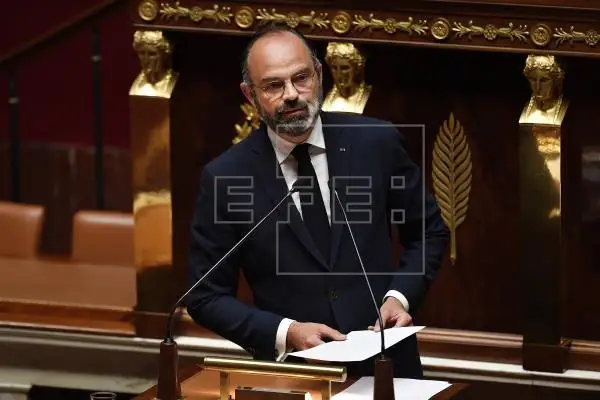
Prime Minister Eduoard Philippe said that all businesses apart from cafes and restaurants would be allowed to open from 11 May but that schools would only reopen gradually.
He warned lawmakers during a speech at the National Assembly, however, that the date for relaxing the country’s coronavirus lockdown could be extended beyond 11 May if the transmission rate was not deemed to be low enough.
«Yesterday I was sent less favorable figures from the director general of health,» he said, adding that it could be down to a variety of factors, including people relaxing their adherence to the lockdown rules.
«These uncertainties should prompt all French people to act with the greatest discipline until 11 May.»
He said France had to «protect, test and isolate.»
France would aim to conduct 700,000 tests per week, with the number of daily infections expected to sit between 1,000-3,000 once the lockdown is lifted.
«We’re going to have to live with the virus, given there will be no vaccine in the short-term and we have yet to find an effective treatment nor what they call herd immunity,» he said.
He said the risk of there being a second wave of infections and even a second lockdown, should be taken seriously, adding that the French economy was at risk of collapse if the lockdown was extended.
France has recorded a total of 128,339 coronavirus cases (of which roughly 60,000 remain active) and 23,293 deaths since the outbreak began.
In Italy, the worst affected country in Europe, the number of new infections grew by 2,091, pushing the overall number detected since the outbreak began in the country above 200,000.
With a total of 27,359 deaths, the population remains confined to their houses, although they are allowed to visit family members.
The government plans to reopen some industries and construction works from 4 May, libraries and museums from 18 May and bars from 1 June.
Meanwhile, German officials said the country’s coronavirus infection rate had increased to R1.0, which means a carrier of Covid-19 would infect one other person on average.
The news of the slight jump in transmission rate comes just after Germany began to relax some of its lockdown restrictions, although most of the population are now required to wear masks in public, the rules for which vary regionally.
«This is a sign for everyone to maintain what we have achieved so far. Working together we have managed to do it well comparatively,» Lothar Wieler, the head of the Robert Koch Institute public health body, told a press conference.
The rate had been down as low as R0.7 on 17 April, having decreased from R3.0 at the beginning of the outbreak in Germany.
Germany has registered a total of more than 158,000 coronavirus cases and 6,128 fatalities, comparatively lower than its European counterparts Spain and Italy.
Elsewhere in Europe, Portugal announced it would lift its state of emergency on 2 May, Greece will allow small shops and beauty parlors to open from 4 May and Serbia announced that gyms and hairdressers could reopen also from Monday.
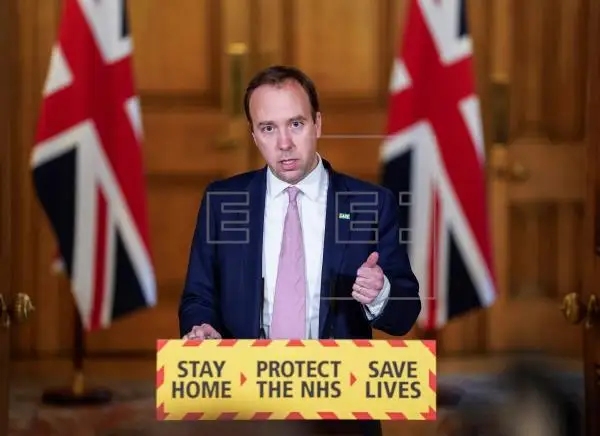
Officials in the United Kingdom have so far not made any plans to relax the national coronavirus lockdown. Data provided by the department for social care showed that the number of hospital deaths linked to coronavirus increased by 586 overnight, bringing the overall total to 21,678.
The official figure omits those who died outside of hospital.